

























































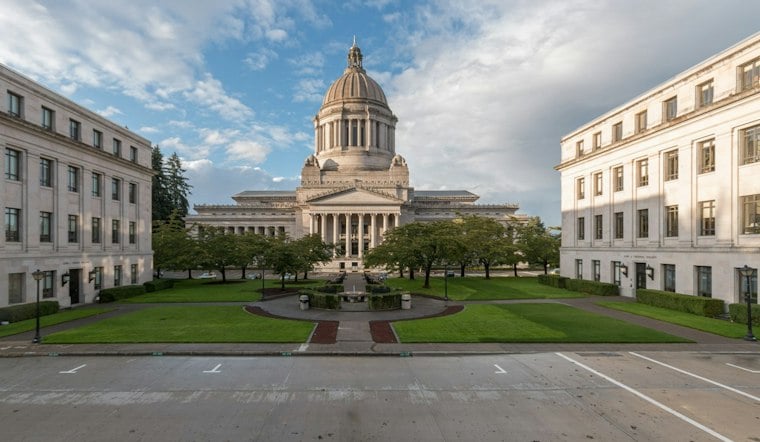
A Washington state committee voted to support legislation that would give eligible retired teachers and public employees a 3% cost-of-living adjustment starting July 1, 2027, capped at $150 a month. At least 50,000 retirees could see an increase if lawmakers pass the bill, though the proposal arrives as the state braces for a multibillion-dollar budget shortfall.
The Select Committee on Pension Policy approved the measure on Tuesday, November 17th, according to the Washington State Standard. The 20-member panel includes House and Senate members from both parties, along with public and private sector representatives and retirees, and four committee members were absent from the vote. If enacted, the increase would cost the state an estimated $20.1 million in the next budget and add roughly $11 million in expenses for local governments, per the committee's own report.
Retirees Describe Struggling to Make Ends Meet
At a public hearing, retirees described the difficulties they have paying their bills and their disappointment in having to beg for assistance after decades of public service, the outlet reported. Many said they appreciate the one-time increase but want changes made to lock in an annual boost in benefits instead, framing it as a matter of basic fairness after careers spent teaching children or serving the public.
Cyndy Jacobsen, a committee member who is unlikely to return to the Legislature after losing her re-election bid, said lawmakers must keep the promises made to retirees. She said she hoped an incoming House Democratic supermajority would do better by retirees than past Legislatures have, adding that the body should support people who spent their careers teaching children and serving the public.
Why Plan 1 Retirees Are Left Behind
The core problem traces back to how Washington's pension plans were structured decades ago. Most public employees who were hired before October 1977 were enrolled in Plan 1 of the Public Employees' Retirement System or the Teachers' Retirement System, and those plans did not automatically provide post-retirement adjustments the way newer plans do. Newer pension plans established after 1977 offer annual increases that Plan 1 retirees never received by default.
Washington lawmakers tried to fix the gap once before, establishing a uniform cost-of-living adjustment known as UCOLA in 1995 that provided locked-in annual increases for Plan 1 members. But the Legislature repealed UCOLA in 2011, leaving those retirees dependent on one-off legislative action ever since. Since then, Plan 1 members have received increases from the Legislature in 2018, 2020, 2021, 2023, 2024 and earlier this year, but none of those adjustments were automatic or guaranteed going forward.
A Pattern of One-Time Fixes, Not Permanent Solutions
Steve Conway, the Democratic state senator from Tacoma who chairs the committee and is retiring from the Legislature at the end of 2026, called the lack of a cost-of-living adjustment a major weakness of these employee plans. He said the draft legislation is meant to provide a benefit increase only until the larger structural issue is addressed. That framing echoes last year's fix: the 2026 session saw the Legislature approve Senate Bill 5862, which Gov. Bob Ferguson signed, providing a 3% increase on July 1, 2026, capped at $110 per month. The Department of Retirement Systems estimated that nearly 70,000 people received that 2026 increase, with eligible members expected to receive an average of $80 more per month. The newly proposed maximum would rise from that $110 cap to $150.
Budget Pressure Looms Over Any New Spending
Any new pension spending will compete with a daunting fiscal picture. Ferguson has forecast a $4 billion shortfall in the fiscal year that starts next July and has directed state agency leaders to find additional spending cuts, according to the Washington State Standard's reporting. That backdrop puts added weight on which lawmakers end up deciding the bill's fate, including Rep. Joe Fitzgibbon, the Democratic House majority leader from West Seattle; Rep. Nicole Macri, the Democratic vice chair of the House Appropriations Committee from Seattle; and Sen. June Robinson, the Senate's lead Democratic budget writer from Everett.
The state's pension COLA policy sits apart from how many other systems handle inflation protection. As of May 2026, Washington's PERS and Teachers Plan 1 still provided adjustments only on an ad hoc basis subject to legislative approval, while PERS, School Employees, and Teachers Plans 2 and 3 offered automatic, compounded COLAs tied to the Consumer Price Index and capped at 3%, according to a NASRA issue brief. The same brief notes that an automatic, compounded 3% COLA is estimated to add 26% to the cost of a retirement benefit, and that since 2009, 17 states have changed COLAs affecting current retirees nationwide.
Other states have taken different approaches to shielding retirees from inflation. CalSTRS, California's teacher pension system, promises that pension income will maintain at least 85% of its original purchasing power for certain retirees, according to the Equable Institute, which also notes that COLA frameworks generally fall into fixed-rate, inflation-linked, or legislature-discretionary categories. Washington's ad hoc model places it firmly in that last, less predictable bucket — the exact arrangement retirees at Tuesday's hearing said they want changed.




