

























































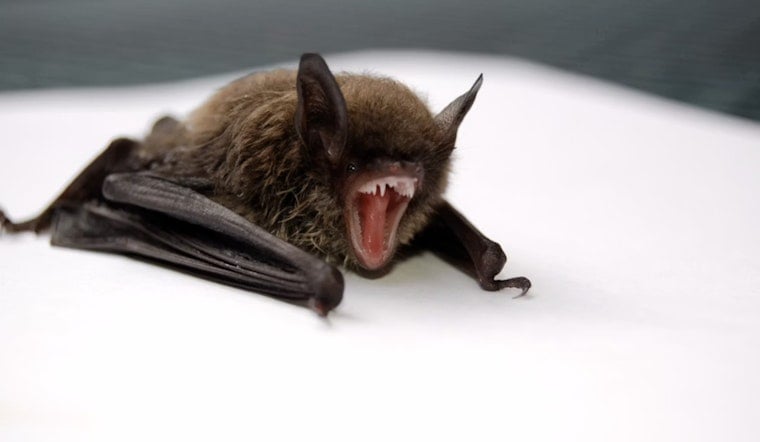
A Seattle-area writer woke up on August 11 to find a bat perched in her unscreened bedroom window, and because the animal escaped before anyone could capture it, she had no way to know whether it had bitten her while she slept. Four days later she called Washington state's communicable disease hotline, and by August 17 she was in a clinic receiving human rabies immune globulin injected into her gluteus muscle, followed by the first of four rabies vaccine doses.
The writer, Christine Clarridge, detailed the ordeal in a first-person account published by Axios, describing how the hotline connected her with her local public health department and doctor's office, both of which urged her to go to an urgent care or emergency clinic rather than wait it out. She told the outlet she felt fine aside from a slight headache before treatment, and reported the same mild headache afterward. Clarridge said she could not determine whether the bat that got away had rabies, nor whether it had bitten her at all.
Why Doctors Don't Wait For Proof Of A Bite
Bat bites can be nearly impossible to detect because bat teeth are so small they may leave no visible marks, and rabies symptoms can take weeks to months to emerge once someone is infected, according to the same Axios report. The Mayo Clinic has said that people who wake up to find a bat in their room should simply assume they were bitten, a standard that explains why Clarridge's local health officials pushed her toward treatment despite the absence of any visible wound. Marcia Merryman, a veterinarian who studied public health, told Axios that people have failed to realize they were bitten by bats before, and that at least one such person died of rabies as a result.
That grim outcome has precedent in Washington. According to the Washington State Department of Health, the state has recorded only two human rabies deaths in the past 75 years, in 1995 and 1997, and both were caused by bat-variant strains of the virus. In the 1995 case, a 4-year-old Lewis County girl died four weeks after a bat was found in her bedroom, even though family members never witnessed a bite or any physical contact, per the Centers for Disease Control and Prevention. Rabies is almost 100% fatal once symptoms emerge, Axios reported, which is precisely why health authorities treat unwitnessed bedroom encounters as presumptive exposures rather than waiting for lab confirmation.
Bats Are Washington's Only Known Rabies Reservoir
Bats are Washington state's only known rabies reservoir, per the Department of Health, and rabid bats have turned up in almost every county statewide. The state has confirmed rabies in at least 14 bats so far in 2026, with three of those detections in King County alone, Axios reported. State surveillance data reviewed separately shows those 14 confirmed cases span 10 counties, including King, Spokane, Whatcom, Snohomish, Jefferson, Island, Kitsap, Lewis, Ferry, and Mason.
The numbers can sound alarming, but the state notes that less than 1% of wild bats in Washington actually carry the virus. The 3% to 10% positive rate seen among bats submitted for laboratory testing is skewed because those animals are disproportionately sick, injured, or already involved in human contact, the Department of Health says. Washington is home to 15 native bat species, most commonly the big brown bat and little brown bat, all of which eat only insects and either hibernate or migrate between October and March — a cycle that helps explain why human-bat encounters cluster in the warmer months.
A Pattern Playing Out Across King County
Clarridge's experience follows a string of rabid bat discoveries in King County's busiest outdoor spaces this summer. A rabid bat turned up along University Way NE, known as “The Ave,” near the University of Washington in mid-July, prompting Public Health – Seattle & King County to trace potential human and pet exposures, as Hoodline reported in its piece on the UW rabies scare. Weeks later, another rabid bat was found near a playground at Gene Coulon Park in Renton, an incident Hoodline also covered involving a waterfront park frequented by families. A separate case in neighboring Snohomish County saw three household members undergo post-exposure prophylaxis after a bat entered their home in early June.
Public health officials can test a safely captured bat for rabies, and a negative result can spare an exposed person from having to undergo the shots at all, according to Axios. That's part of why King County recommends waiting until a bat lands before attempting any capture, then using heavy gloves and a container to trap it rather than risking direct contact. Officials also stress that people should simply avoid contact with bats whenever possible, since capture always carries some risk.
The Cost Of Treatment And The Rules For Pets
The standard course of post-exposure prophylaxis follows a strict schedule set by the CDC: a single dose of human rabies immune globulin alongside the first vaccine dose on Day 0, followed by additional vaccine injections on Days 3, 7, and 14. That regimen doesn't come cheap — a full course of treatment in the United States averages $3,800 to more than $8,000 before insurance, driven largely by emergency room facility charges and the high cost of the immune globulin itself, according to CDC-linked cost data.
The risk isn't limited to people. Washington Administrative Code requires all dog, cat, and ferret owners in the state to keep their pets vaccinated against rabies, a rule aimed at preventing spillover from wildlife into households. Non-bat animal rabies remains extremely rare in Washington; the last confirmed domestic case was in 2015, when a cat in Jefferson County contracted the virus after catching a rabid bat.





