

























































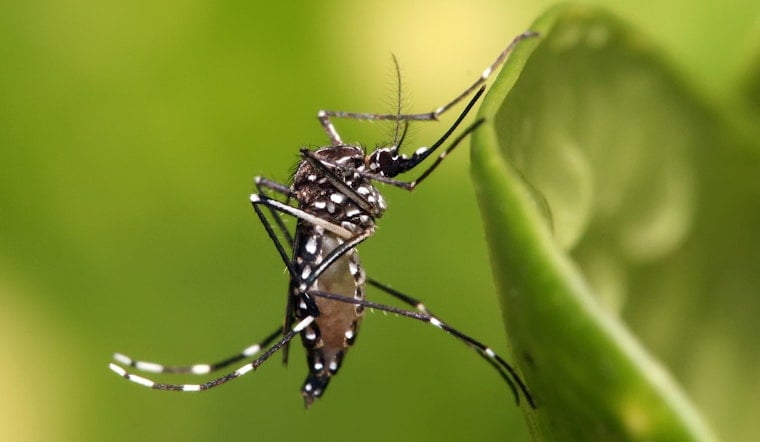
A man in his 60s has become Massachusetts' second confirmed human case of West Nile virus this year, health officials announced, after being exposed to the virus in Middlesex County. The news comes as the state pushes West Nile risk levels to high in seven cities and towns, and as a second, far deadlier mosquito-borne virus has also surfaced just weeks into peak transmission season.
A Second Middlesex County Case in Days
The new patient's infection marks the second human West Nile case confirmed in Massachusetts in 2026, and like the first, it traces back to exposure in Middlesex County, according to WCVB. The state's first case this year involved a man in his 90s, a patient Hoodline previously reported was also exposed in Middlesex County, just days before this latest announcement. Massachusetts Department of Public Health Commissioner Dr. Robbie Goldstein said the risk for many across the Commonwealth is now high, underscoring how widely the virus has spread this season.
In response to mounting mosquito trap data, the department elevated West Nile risk to high in Boston, Cambridge, Newton, Somerville, Brookline, Everett, and Watertown. West Nile-positive mosquito samples have turned up in 13 of the state's 14 counties since mid-June, spanning Middlesex, Suffolk, Norfolk, Essex, Worcester, Hampden, Hampshire, Franklin, Berkshire, Bristol, Plymouth, Barnstable, and Dukes counties. State health officials have reported 184 West Nile-positive mosquito samples so far this year, the same report notes.
Timeline Shows Months of Warning Signs
The virus has been circulating in the state's mosquito population far longer than the two human cases suggest. The department confirmed the season's first West Nile-positive mosquito sample on June 16 in Clarksburg, a Berkshire County community, according to WAMC — putting mosquito vector activity underway more than two months before either human illness surfaced. Massachusetts recorded 19 human West Nile cases statewide in 2024, up sharply from just four cases in 2023, per state figures, giving this year's tally an early baseline for comparison as the season continues.
Massachusetts health officials are urging residents to be aware of peak mosquito hours, apply insect repellent outdoors, and drain standing water around their homes, per the same account. The Centers for Disease Control and Prevention recommends repellents with EPA-registered active ingredients such as DEET, Picaridin, IR3535, or Oil of Lemon Eucalyptus, and specifies that Oil of Lemon Eucalyptus should not be used on children under age three, while permethrin should be applied only to clothing and gear rather than skin.
A Second, Rarer Threat Emerges in Plymouth County
Adding to the concern, the department confirmed the state's first Eastern equine encephalitis-positive mosquito sample of 2026 on August 19 in Kingston, a Plymouth County community, raising EEE risk to moderate in four communities there, as reported by INDIA New England News. EEE is far rarer than West Nile but carries a significantly higher mortality rate. Massachusetts has seen severe multi-case EEE outbreaks in recent years, including 12 human cases and six deaths in 2019, five cases and one death in 2020, and four cases with one death in 2024, the outlet notes.
Most people infected with West Nile virus never know it. Roughly 80 percent of those infected experience no symptoms at all, about 20 percent develop a febrile illness with symptoms such as fever, headache, body aches, nausea, vomiting, swollen lymph glands, or a skin rash on the chest, stomach, and back, and fewer than 1 percent develop severe neuroinvasive disease like encephalitis or meningitis, according to CDC surveillance data cited by the American Medical Association. West Nile virus can infect people of all ages, but older adults and people with compromised immune systems face especially elevated risk, and people over age 50 face higher risk for severe disease.
A National Trend, and a Season That Isn't Over
The Massachusetts cases are unfolding against a broader national backdrop. CDC surveillance data compiled for 2025 documented 1,981 total West Nile virus cases across 46 states, including 1,359 neuroinvasive cases, reflecting a 41 percent increase in severe disease cases and a 32 percent increase in deaths compared to typical national annual baselines, per the American Medical Association's analysis.
August and September represent peak transmission months for mosquito-borne viruses in Massachusetts, with risk remaining active until the season's first hard frost. Mosquitoes will remain present until that point, meaning residents across the high-risk cities and beyond are being asked to keep up precautions for weeks to come. When positive mosquito samples accumulate in urban areas, local vector control projects have previously responded with truck-mounted pesticide spraying after 9 p.m., a step Hoodline detailed when spray trucks rolled through Worcester earlier this summer.
Beyond mosquito bites, which cause the vast majority of human West Nile infections, the CDC notes the virus can also spread through blood transfusions and organ transplants, making routine donor screening essential for protecting surgical and immunocompromised patients. For now, state health officials say the priority remains prevention at the source: avoiding peak mosquito hours, using EPA-registered repellents, and eliminating standing water, as the Commonwealth heads into the heart of its riskiest weeks of the year.





