

























































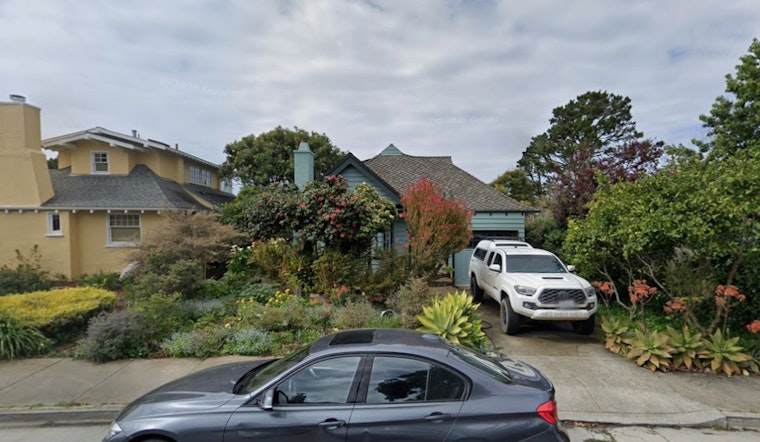
A two-bedroom fixer-upper on Head Street in Ingleside Terrace listed for $1.15 million this summer and walked away with $2.305 million after 21 offers and several rounds of bidding — more than double its asking price. Across town in the Inner Parkside, a three-bedroom home that had sat empty for decades sold all-cash in an eight-day close for $2 million, twice its $1 million list price. Both sales reflect what real estate agents describe as San Francisco's new normal: even the city's most modest starter homes are now routinely fetching bids that would have seemed unthinkable a few years ago.
The trend was first detailed by The San Francisco Standard, which reported that San Francisco starter homes sold for more than twice their asking prices this summer, a pattern showing up across entry-level single-family listings rather than only in the ultra-luxury tier. The 885 Head Street sale — a 1920 storybook craftsman with just over 1,000 square feet, a 1940s-era greenhouse, and a garden the listing described as a botanical wonderland — worked out to roughly $2,200 per square foot, according to the same report. It was, notably, the only single-family home listed in Ingleside Terrace after the July 4 weekend, and its sale price shattered the neighborhood's previous high of $1,300 per square foot.
An Extra-Large Lot With a Century-Old Backstory
Part of what made 885 Head Street unusual was its lot size — extra-large by San Francisco standards, a legacy of Ingleside Terrace's origins. The neighborhood was master-planned in 1912 on the site of the former Ingleside Racetrack, a 1890s horse-racing oval, which left behind unusually deep lot layouts centered around Urbano Drive and a historic 1913 concrete sundial, according to the Open SF History. Sotheby's agent Roger Landry, who listed the home and called for best and final offers before the sale closed, said the result completely annihilated the neighborhood's prior benchmarks, per the Standard's report.
Landry pointed to something other than the AI industry's cash windfall as the real driver behind the frenzy. He identified a lack of inventory as a bigger catalyst than AI IPO cash, the outlet reported — a view that lines up with citywide data showing active single-family listings dropped 40% compared with a year earlier, according to Compass figures cited in the same report. San Francisco had just 156 active single-family listings in July, a scarcity that agents say is forcing buyers into aggressive bidding even for modest homes.
Inner Parkside's Decades-Empty Fixer Draws 15 Rival Offers
The Inner Parkside property at 627 Santiago Street tells a similar story. The 1939 three-bedroom, two-bathroom home had sat empty for decades before its owners spent $45,000 on repairs and staging — clearing out personal effects, painting, and refinishing the floors — ahead of listing it for $1 million. It drew 15 other offers, including multiple bids at $1.8 million and two at $1.9 million, before an owner-user buyer closed at $2 million in an all-cash, eight-day sale, the Standard reported. Agent Nick Honda, who represented the sellers, said the owners were shocked by the number and size of the offers they received.
Honda had initially estimated the house might sell for around $1.5 million before revising that figure upward to $1.6 million or $1.7 million as offers rolled in — still well short of where it ultimately closed. He argued that pricing a home well below what buyers will actually pay does a disservice to sellers, saying an asking price untethered from reality asks too much of the process. Even so, Honda does not foresee a fall full of twice-the-list-price closings, suggesting this summer's results may be an acute spike rather than a lasting baseline. He separately listed another home near 40th and Taraval for just under $1.1 million that ultimately sold for more than $1.9 million.
Underpricing Has Long Been the Playbook
Deliberately setting list prices below expected value isn't new in San Francisco. It's standard practice for agents to underprice homes by 20% to 25% to generate competitive bidding, and citywide MLS data tracked by Redfin found that about 70% of San Francisco homes sold above list price in March, with an average sale-to-list ratio of 113.6%, as Hoodline previously reported. What's different this summer is the scale of the overshoot: sales that land not just above asking, but double it.
The District 4 area covered by the San Francisco Association of Realtors — which includes Ingleside Terrace, Forest Hill, Midtown Terrace, Westwood Park, Balboa Terrace, and St. Francis Wood — had just eight listings after the July 4 weekend, underscoring how thin the supply of entry-level inventory has become in the city's Westside neighborhoods. That scarcity is showing up in sale prices well beyond any single listing.
A Tax and Rate Lock-In Keeps Sellers on the Sidelines
Behind the inventory drought sits a structural incentive for homeowners to simply not sell. Many current owners are reluctant to give up either low fixed mortgage rates locked in years ago or the property tax benefits of long-term ownership under California's Proposition 13. Nationally, that mortgage lock-in effect is expected to prevent roughly 870,000 U.S. home sales in 2026, according to Melissa Menard Homes market analysis.
The Inner Parkside sale illustrates the tax side of that equation vividly. Before its $2 million sale, 627 Santiago Street had been assessed at just $87,034, carrying an annual property tax bill of only $1,029 thanks to 55 years under the same single-family ownership, per PropertyShark records. That kind of tax lock-in helps explain why so much of San Francisco's older housing stock stays off the market until a sale forces a reassessment to current value.
A Citywide Pattern Stretching From Starter Homes to Mansions
San Francisco's median single-family home sale price hit $1.725 million in June, a 15.2% year-over-year jump and roughly $1 million above the market's post-Great Recession floor, according to Redfin. Meanwhile, a Compass market report found more than 140 San Francisco homes sold for at least $1 million above asking in the first half of 2026, including 44 in June alone, compared with just eight during the same span in 2025, as reported by The Guardian.
The extremes aren't confined to entry-level homes. In May, a Cow Hollow mansion at 2512 Union Street sold for $15 million — $7.05 million, or 88.7%, over asking — setting a 26-year record for the highest percentage over asking on an SF home above $5 million, Hoodline reported at the time. A Pacific Heights home on Pacific Avenue similarly jumped from a $7.495 million list to a $12 million close in mid-July, about 60% over asking, after being purchased by a Delaware LLC. And in March, a remodeled Edwardian on 12th Avenue in the Richmond District sold for $4.95 million, nearly $2 million over its asking price, following an all-cash bidding war.
Taken together, the sales suggest San Francisco's overbidding phenomenon has spread from the ultra-luxury tier into the city's most ordinary housing stock. Whether that continues into fall remains uncertain — even agents closest to the action, like Honda, aren't predicting a repeat wave of twice-the-list-price closings anytime soon.



