

























































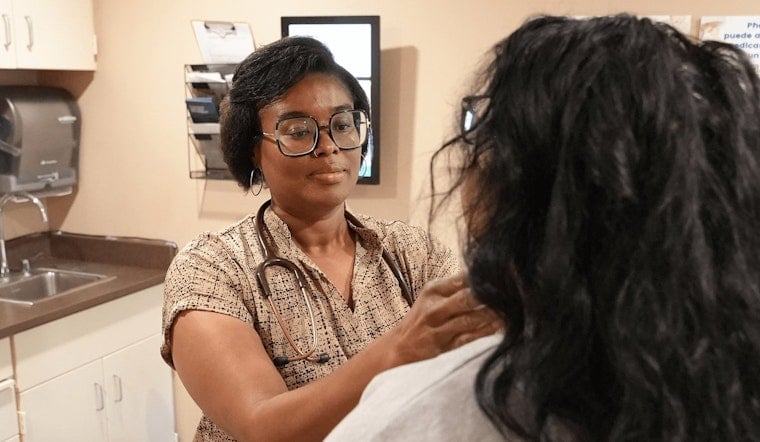
A Shawnee safety-net clinic just picked up $225,000 in combined grants to finish a second phase of construction that clinic leaders say will let them double the number of patients they serve by the end of 2026. Mercy & Truth Healthcare Ministry currently serves 4,000 unique patients, and the expansion is meant to close some of the gap left by the roughly 67,000 people without medical insurance across Johnson and Wyandotte counties.
The funding includes contributions from the Ronald D. Deffenbaugh Sr. Foundation and AdventHealth, according to FOX4KC. Mercy & Truth CEO Brent Morris put it simply: “Big visions need big partners.” Phase two of the Shawnee clinic will add a bathroom, a conference room, three offices, and expand exam room capacity to nine total rooms — upgrades the clinic says will let it increase both staff and services while shortening wait times for patients.
A Federally Recognized Safety Net With a 30-Year Track Record
Mercy & Truth is a 501(c)(3) Federally Qualified Health Center Look-Alike, a designation meaning it meets all federal health center requirements to serve patients regardless of ability to pay, even though it does not receive direct federal operating grants, per the organization's own account of its history and federal status. The clinic, founded in 1995, cannot turn away any patient based on beliefs or ability to pay, and it describes its approach as whole-person care — physical, mental, and spiritual support offered when a patient requests it.
That model has drawn national recognition. In 2026, the organization received the U.S. Health Resources and Services Administration's Advancing Health Information Technology for Quality Award, following its 2025 High-Value Care Award. In 2024, the clinic provided medical and behavioral care to 4,989 unique patients across 17,613 total visits, according to figures the clinic has published documenting its operational scale.
Suburban Poverty Hiding in Plain Sight
Johnson County has a reputation for prosperity, but health data tells a more complicated story. Working-age adults and Hispanic and Latino residents are part of the county's uninsured population, according to the Johnson County Department of Health and Environment. The clinic serves patients within that broader service population Mercy & Truth already serves. According to the Kansas Department of Health and Environment, 10.2% of Kansans ages 0 to 64 are uninsured, with rates of 11.8% in rural counties and 9.6% in urban counties.
The article also considers low-wage suburban workers who hold down steady jobs. AdventHealth, one of the two grant funders, is part of the broader local healthcare landscape.
A Wider Web of Local Support
The Deffenbaugh Foundation's $100,000 contribution carries its own local history. Ronald D. Deffenbaugh Sr. died in 2014, according to his obituary.
Mercy & Truth's expansion also connects to a broader network of community partners that stretch its resources further. The article also mentions local nonprofit Pharmacy of Grace, but the available information does not establish the details of its relationship with Mercy & Truth or any planned Shawnee pharmacy. Beyond its physical clinics, Mercy & Truth also runs a Mobile Health Unit offering free blood pressure, blood sugar, cholesterol, and A1c screenings, plus Narcan distribution and health education across both counties — outreach that brings screenings and education to residents across the region.
For care beyond primary treatment, patients can be referred through Wy/Jo Care, a coordinated network managed by the Medical Society of Johnson and Wyandotte Counties that connects safety-net physicians with volunteer specialists willing to donate medical and surgical services. In Wyandotte County, transportation access is another part of the local safety-net picture, helping patients get to medical appointments.
Together, those partnerships form the backbone of a system Mercy & Truth is now working to scale up. With phase two of the Shawnee clinic underway, the goal, as clinic leaders describe it, is straightforward: more room for lifesaving care, more staff, and expanded affordable healthcare for insured, underinsured, and out-of-pocket-paying families across the metro.




