

























































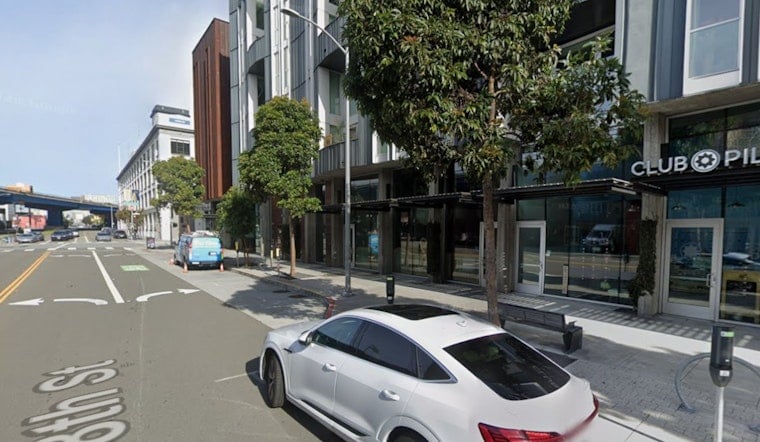
Studio Montessori, a SoMa childcare center that charged families up to $4,000 a month, closed abruptly in May 2026 after founder Zoe Paul emailed parents that the school would shut its doors the very next day. Behind that sudden announcement, according to former teachers, sat nearly eight years of staffing turmoil, state citations, and fear among foreign educators whose legal status in the country depended entirely on keeping their jobs.
The center, which opened in 2021 and served children as young as a few months old, had operated in SoMa for nearly eight years before it closed permanently the week after May 7, according to The San Francisco Standard. Paul told parents she was closing because continuing through the originally planned end of the school year was no longer sustainable, citing significant operational and financial challenges, staff absences, repeated staffing disruptions, financial pressures, and declining enrollment. The Standard's reporting shows that Studio Montessori's two locations received 13 state inspection visits between May 2022 and May 2026, including seven routine inspections or incident follow-ups, and additional visits in response to anonymous reports of alleged staffing and care issues.
Those inspections, conducted under the California Department of Social Services Community Care Licensing Division, turned up five substantiated allegations and three Type A offenses across the two campuses. A Type A deficiency is the state's designation for a violation posing an immediate risk to children's health, safety, or personal rights, a classification serious enough that providers must post the finding publicly at the facility for 30 days and give copies to parents, according to the California Department of Social Services. State licensing records list Studio Montessori's main 8th Street site at a capacity of 31 children with a separate infant care component licensed for 12 infants, per Winnie.
A Lawsuit Alleges Chronic Understaffing
Former teacher Valentina Paz Araya Diaz has filed a lawsuit against Paul and Studio Montessori, alleging the center is chronically understaffed in classrooms and failed to meet state teacher-to-child ratios. California Code of Regulations Title 22 requires one teacher for every four infants and one teacher for every six toddlers in a toddler component, standards that childcare centers must maintain under state law. The Standard reports that Studio Montessori cut its six-person teacher staff in half after a string of firings and a resignation, leaving the center with half its teaching staff to cover its two rooms.
Diaz alleges she was fired by Paul the day after she spoke with state investigators, a sequence her lawsuit ties directly to her cooperation with licensing officials. Paul denied every allegation in Diaz's lawsuit, according to court filings cited in the Standard's reporting. One substantiated finding predates the lawsuit by years: a May 2022 complaint investigation by the state found an assistant teacher supervising nine napping children in an unauthorized play area while off-site staff ratios were breached, an incident the school never reported to licensing, according to a California Department of Social Services report.
Foreign Teachers Feared Losing More Than Their Jobs
Paul recruited teachers from Europe, South America, and North Africa to work at Studio Montessori under J-1 exchange visas sponsored by the Montessori Consortium of California, a designated J-1 Exchange Visitor Program sponsor authorized to place international Montessori teachers in U.S. classrooms, according to official State Department sponsor rosters. Former employees told the Standard they feared that losing their jobs could cause them to lose their legal status in the United States entirely — a fear grounded in federal rules that require J-1 exchange visitors whose program ends early to leave the country immediately, with only a 30-day grace period allowed solely for travel arrangements, per guidance from NYU's Office of Global Services.
That vulnerability sits uneasily alongside federal BridgeUSA program rules, which explicitly prohibit visa sponsors and host organizations from threatening program termination or retaliating against exchange visitors who file complaints or seek help from regulators. Teachers described a stressful and unpredictable workplace and reported being encouraged to skip breaks and work past scheduled hours, according to the Standard's account. During one teacher's year-and-a-half tenure, the school saw four employees fired and five employees quit.
The Hot Tea Incident and Its Aftermath
One flashpoint involved a child burned by spilled hot tea. Paul fired the teacher involved one week after the incident, and Studio Montessori's third teacher quit in protest shortly after the firings, leaving Paul to operate one classroom herself alongside the school director. Separately, a state allegation that the center had restrained children was found unsubstantiated, while an allegation that Studio Montessori operated an unlicensed facility at its second campus was found substantiated. The center had also operated an unlicensed facility before eventually receiving a state license for its second location on April 2, 2026 — a location Paul had planned to open less than a mile from the original site, though its opening was delayed by two years. In 2023, the school had two separate incidents in which children were found outside alone.
Financial Collapse Leaves Parents Owing Money
Studio Montessori liquidated its assets on June 8, 2026, and Paul's lawyer said at the time that the company would pay out what it could to creditors. Paul told the Standard she intended to file for personal bankruptcy and disputed personal liability for the majority of Studio Montessori LLC's debt. Parents were left owing several thousand dollars after the liquidation and scrambled to find other daycare centers or babysitters once the school shut its doors. Ankit Gupta, a parent quoted in the Standard's reporting, said parents did not know the extent of the school's financial trouble before the closure. Paul has said she helped some families connect with other preschools afterward, and the Standard notes Studio Montessori continued running virtual Montessori teacher training classes even after the physical center closed.
Studio Montessori's $4,000 monthly tuition sat at the top of an already expensive local market — full-time infant care at a licensed San Francisco center typically runs $2,500 to $3,200 a month, with annual costs exceeding $31,000 citywide, according to Children's Council San Francisco. The city's Early Learning For All initiative offers tuition credits of up to $3,027 monthly per infant for middle-income families earning up to 150% of the Area Median Income, a potential resource for parents now searching for replacement care. Paul, who founded the school in 2021, has held credentials as an Association Montessori Internationale auxiliary trainer for ages 0 to 3 and has led international lectures and virtual teacher-training programs, a reputation that stands in contrast to the years of citations documented at her San Francisco center.





