

























































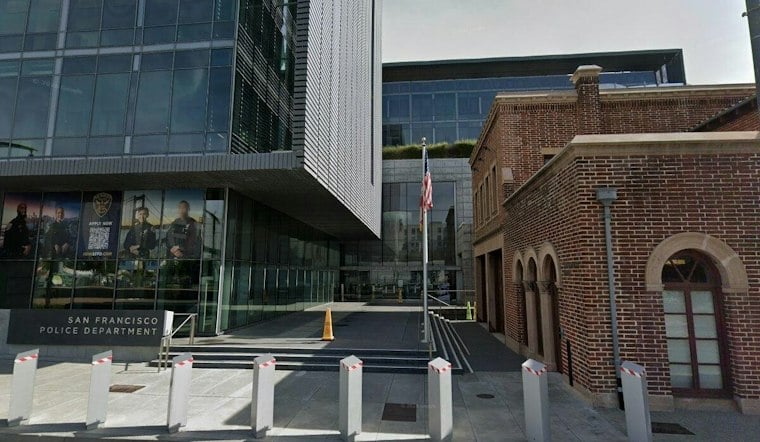
Chris Larsen, the Ripple co-founder who has backed San Francisco's police surveillance buildout, is facing scrutiny over support for surveillance technology like Flock Safety's automated license-plate readers.
The debate over surveillance technology is playing out amid scrutiny of one of the tech industry's prominent surveillance benefactors. Larsen funded office space for San Francisco's Real-Time Investigations Center, according to Business Insider's reporting cited by Peninsula Press. The center pairs automated license-plate readers, drones, cameras, and real-time video feeds to assist police responses to crimes.
A Billionaire's Bet on Cameras Meets Family Skepticism
Larsen has praised San Francisco's approach of deploying drones only when there is a report or ongoing situation, rather than constant blanket monitoring. The debate over using Flock to fight crime involves a real trade-off between public safety and privacy. That scrutiny has hit the Atlanta-based company and its municipal customers across California over the past year.
San Francisco police have defended the surveillance system as helping identify suspects and contributing to crime reductions, per the seed reporting attributed to Larsen and city officials. Flock Safety maintains that its technology is a critical public safety tool. But the technology has also faced scrutiny over wrongful targeting and past license-plate misidentifications.
Audits Reveal Unauthorized Access to San Francisco's Camera Data
The trust problem is not hypothetical in San Francisco. An internal SFPD compliance audit released in June 2026 found that out-of-state and federal agencies made 299 improper queries into the city's Flock license-plate database over a one-year period, funneled through regional intelligence hubs, according to The San Francisco Standard. SFPD officials characterized the 299 unauthorized searches as roughly 0.005 percent of all queries made during that period and moved to disable outside agency access in response. Public-records data showed more than 1.6 million searches of SFPD camera feeds by federal agencies, The Standard reported in September, with public records referencing ICE's Fugitive Operations program.
Any such sharing would run against California Civil Code Section 1798.90.5, the 2015 law known as SB 34, which bars California public agencies and police departments from sharing automated license-plate reader data with out-of-state or federal entities, as detailed by KQED. San Francisco's own surveillance rules loosened considerably after voters passed Proposition E in March 2024, which let police pilot new surveillance equipment for up to a year without prior sign-off from the Board of Supervisors or Police Commission, bypassing the city's community oversight process, according to San Francisco's city government. The city's changing surveillance rules provide context for Larsen's private gift.
Bay Area Cities Are Cutting Ties With Flock
San Francisco is far from alone in wrestling with the fallout. Santa Cruz's City Council voted 6-1 on January 13, 2026, to terminate its Flock contract entirely, becoming the first California city to sever ties with the company after discovering local plate data had been improperly accessed by out-of-state agencies and federal immigration authorities, per KQED. The following month, Mountain View's City Council voted unanimously to cancel its own 30-camera Flock contract after an audit found unauthorized federal access, according to the Mayors Innovation Project. The broader debate over Flock extends beyond California: Florida's Department of Transportation ordered automated license-plate readers removed from state highways last month.
Flock Safety announced last month that it was tightening its privacy and accountability safeguards, and the company has said its technology has helped law enforcement agencies across the country. The company stores data for seven days by default. A statewide push to force the issue, Senate Bill 1013, would have set a 30-day retention cap on license-plate data and required mandatory state audits; its amended version allowed data to be archived after 60 days, and the measure was blocked in the Assembly without a floor vote amid opposition from nearly 40 law-enforcement organizations, according to the Hemet & San Jacinto Chronicle. Governor Gavin Newsom had already vetoed a similar bill, citing its 60-day retention requirement.
Protesters Show Up at Larsen's Doorstep
The backlash has also gone physical. Protesters gathered outside Larsen's home last month, with one organizer saying Larsen felt entitled to watch them and that they came to watch him. The action reflects the broader defLock movement, a grassroots effort that has grown alongside DeFlock, an open-source mapping project built on OpenStreetMap data that lets residents log and route around license-plate readers. More than 80 percent of the cameras mapped nationwide through the project are identified as Flock Safety devices, as reported by Mashable.
Flock Safety separately drew scrutiny last month after it emerged the company had quietly obtained a California private investigator license under an employee who is a former police officer, granting company personnel legal authority to investigate camera theft and vandalism, as previously reported by Hoodline. Police officers, meanwhile, have used Flock technology to track an ex-partner, one of several documented misuses cited in Business Insider's reporting on the company's law-enforcement customers, including its investigation into wrongful targeting in San Francisco. For Larsen, who has publicly backed cameras and drones as a way to make San Francisco safer, the sharpest challenge yet may be coming from someone who grew up in his own house.




