

























































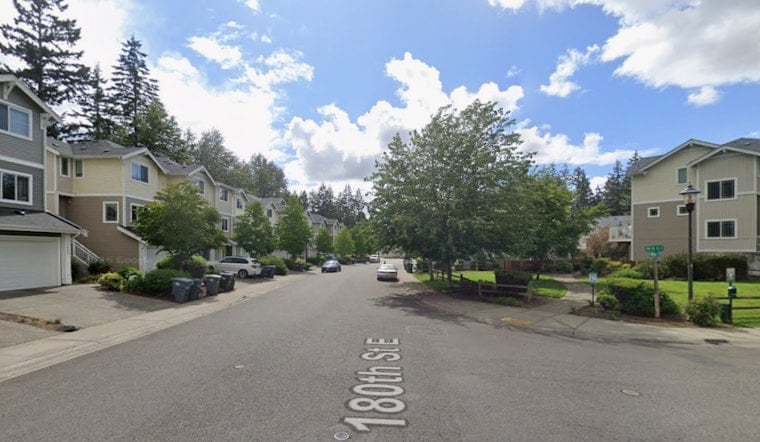
Nathaniel Johnson, a 26-year-old South Hill man with autism, has been missing since he walked away from his home on foot around 2:15 p.m. on August 2, and the Pierce County Sheriff's Office is still asking the public to help find him. He was last seen near the 7600 block of 180th Street East in the South Hill/Puyallup area, wearing a gray “Tokyo” shirt, dark blue pants, and bright orange shoes with no laces.
The sheriff's office renewed its public appeal for Johnson this week, more than three weeks after he disappeared, describing him as a Black male standing 6 feet 3 inches tall and weighing 275 pounds, with black hair, a beard, and brown eyes. In a post shared by Pierce Co Sheriff, deputies wrote that they are “asking the community to keep an eye out for Nathaniel and help us get him home,” and urged anyone who spots him to call 911 immediately rather than contacting the department's social media accounts, which the office noted are not monitored around the clock.
Why the Search Has Taken Weeks
The gap between Johnson's disappearance and this week's renewed appeal reflects a broader pattern in how missing autistic adults are searched for under Washington law. Under state law, adults with developmental or cognitive conditions who wander qualify for what is known as an Endangered Missing Person Advisory, but unlike an AMBER Alert, that system relies primarily on social media, email broadcasts, and news media rather than automatic wireless push notifications to cell phones, according to KREM. Highway message board alerts under that same advisory are only triggered when a vehicle is involved, which does not apply in Johnson's case since he left on foot.
State law and law enforcement guidelines also make clear that police cannot impose any mandatory waiting period, such as 24 or 48 hours, before accepting a missing person report and beginning an active search for someone considered endangered. Agencies are required to enter missing endangered persons into state and national databases immediately once a report is filed. The Pierce County Sheriff's Office does, however, require that an official report first be filed through 911 or non-emergency dispatch before deputies can deploy specialized assets like Search and Rescue teams, K-9 units, or state-level advisories, according to the Pierce County Sheriff's Office.
The Risks Facing an Autistic Adult on Foot
Federal health officials say Johnson's situation reflects a common and dangerous pattern. Research published in Pediatrics and cited by federal health authorities found that nearly 49% of individuals on the autism spectrum attempt to wander or elope from safe supervision after age 4, a phenomenon the CDC notes can occur regardless of the quality of adult supervision. That risk carries life-or-death stakes: data compiled by the National Center for Missing & Exploited Children and the National Autism Association shows that accidental drowning accounts for between 70% and 88% of wandering-related fatalities among missing autistic individuals, which is part of why search teams treat these cases with urgency around retention ponds and waterways common in the South Hill area.
The National Center for Missing & Exploited Children also notes that autistic individuals who wander may not respond when searchers call their name, may hide in small or enclosed spaces due to sensory overload, and are often drawn toward high-interest features like roads or bodies of water. Searchers in cases like Johnson's are sometimes guided to use non-traditional strategies, such as playing familiar music or avoiding noisy crowds, rather than relying solely on calling out a missing person's name.
Federal and State Efforts to Close Alert Gaps
Johnson's disappearance comes amid growing scrutiny of how alert systems serve missing autistic adults. On August 21, the U.S. Department of Health and Human Services, working with the Department of Justice and FEMA, launched the National Autism Missing and Endangered Person Alert Initiative, aimed at strengthening nationwide emergency coordination and standardizing response protocols when autistic children or adults go missing, according to HHS.gov. The initiative builds on existing Missing and Endangered Persons alert channels and FEMA's Integrated Public Alert and Warning System.
In Washington, lawmakers held hearings in January on Senate Bill 6070, a proposal to create dedicated “Purple Alerts” that would streamline public messaging and speed emergency response for missing adults with cognitive or developmental disabilities. The bill was inspired by family advocacy following a prolonged search for a missing autistic man in Snohomish County, per KREM's earlier reporting.
Search efforts around South Hill, an unincorporated Pierce County community south of Puyallup where corridors like 180th Street East and Meridian Avenue East cut through residential neighborhoods, retention ponds, and wooded pockets, can draw on Pierce County Explorer Search and Rescue, a volunteer group that trains year-round alongside sheriff's deputies in ground tracking and urban search methods. Hoodline previously covered a stalled search for another missing vulnerable adult in the same Puyallup/South Hill area earlier this year.
Anyone who sees Nathaniel Johnson is asked to call 911 right away rather than message the sheriff's office directly online, since the department has said its social media accounts are not continuously monitored.



