

























































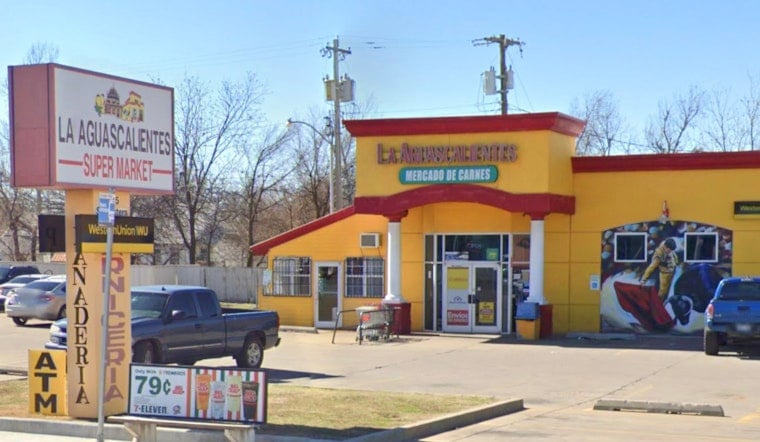
A pair of unassuming grocery stores on Oklahoma City's south side just earned a spot alongside some of the country's most celebrated Mexican restaurants. La Aguascalientes Mercado de Carnes, with locations at 3005 S Western Ave and 5800 S Western Ave, was named among the 41 best Mexican restaurants in the United States in a new list from the New York Times.
The distinction is notable because La Aguascalientes isn't a traditional sit-down restaurant at all. As described by The Oklahoman, the New York Times characterized the market as having overfilled aisles of sundries, a vibrant panadería case, a carnicería, a check-cashing and money-transfer window, and a kitchen behind steamer trays of Mexican stews. Reporters Brett Anderson and Bill Esparza spent more than a year traveling the country to compile the list, according to Mouth by Southwest, structuring it as an unranked snapshot of regional diversity rather than a conventional ranking.
Two Markets, Five Minutes Apart
La Aguascalientes operates as a pair of mid-sized markets five minutes apart in Oklahoma City's SW 29th district, per the Oklahoman's reporting. Beyond the meat counter and hot food kitchen, the market also functions as a broader community hub, offering check-cashing, international wire transfers, freshly baked pan dulce, and imported dry goods, according to Visit Oklahoma City. Shoppers can also find produce, coffee, handmade crafts, stews, rice and beans on the shelves.
What caught national critics' attention most was the food tied to a specific place: Aguascalientes, one of Mexico's smallest states. The market is known for fresh Aguascalientes-style sourdough bread called birotes, which it serves stuffed with ham, pickled jalapeño and crema mexicana. Birote bread is traditionally used in the torta de albañil sandwich, and Milenio reports that this crusty sourdough and the market's traditional stews are foodways rarely found in the U.S. outside of central Mexico.
Part Of A Bigger South OKC Cluster
La Aguascalientes wasn't the only Oklahoma City name in the Times' feature. The same August feature also praised nearby spots along the Western Avenue and SW 29th corridor, including drive-thru grilled-chicken spot El Primo Loco and seafood market Crudoolandia, which operates out of a converted drive-through oil-change shop, according to Milenio. The list itself spanned the country, also naming Alebrije in Nashville, Acamaya in New Orleans, Bacanora in Phoenix, and Mariscos Jalisco in Los Angeles among the 41 honorees.
The Times report also drew a contrast between Oklahoma City's history as the birthplace of Sonic Drive-In and mid-century carhop culture and the recent transformation of Western Avenue commercial strips, where former fast-food and service bays now host specialized Mexican panaderías, carnicerías, and michelada counters, Milenio noted. The SW 29th corridor, known locally as La 29, extends roughly three miles between May Avenue and Shields Boulevard and is officially recognized by the City of Oklahoma City's Commercial District Revitalization Program as a primary economic hub for the region's Hispanic community, according to Visit Oklahoma City.
A Market With A Civic Track Record
The recognition comes after the Greater Oklahoma City Hispanic Chamber of Commerce issued a statement celebrating local entrepreneurs at La Aguascalientes, El Primo Loco, and Crudoolandia for driving economic growth and elevating the city's national profile. La Aguascalientes has also stepped outside its role as a food business before: in May 2024, owners and employees temporarily closed their doors to join hundreds of community members at the Oklahoma State Capitol protesting House Bill 4156, a state immigration enforcement bill, according to KGOU. That rally was organized in partnership with local minority business chambers.
The Times' spotlight on La Aguascalientes follows a run of national dining recognition for Oklahoma City, including the paper's inclusion of Lao noodle restaurant Bar Sen on its 2025 “50 Best Restaurants in America” list and Ma Der Lao Kitchen in 2022. The pattern reflects a broader shift in national food criticism toward hyper-local, community-rooted spots rather than fine dining alone. It also lands as Oklahoma City continues investing in its south-side Latino cultural infrastructure — last September, the city opened Plaza Calle Dos Cinco in the adjacent Historic Capitol Hill neighborhood, a permanent public space for Latino cultural events and small business gatherings.





