

























































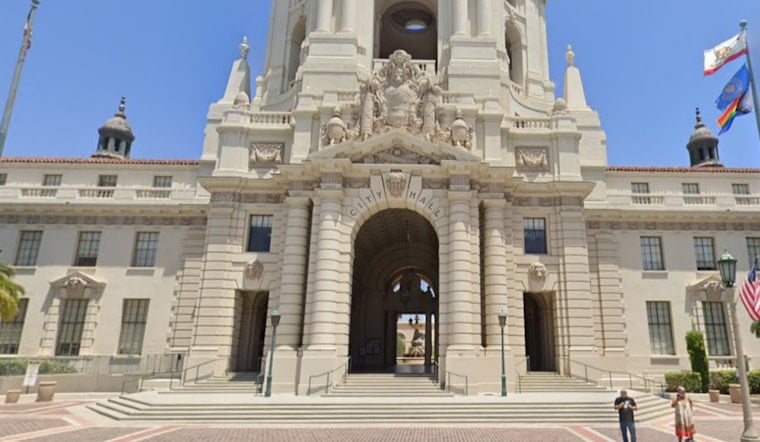
A newly formed committee in South Pasadena is campaigning for passage of an $80 million bond measure aimed at fixing the city's crumbling streets, arguing that years of deferred maintenance have left roadways in worse shape than any other city in the San Gabriel Valley. The measure, known as Save Our Streets or Measure SOS, will appear on the Nov. 3 general election ballot and requires approval from two-thirds of those voting on the item to pass.
Committee co-chairs Yuki Cutcheon, Karie Reynolds and Dean Serwin filed measure documents and an argument in favor of Measure SOS on Aug. 12 at South Pasadena City Hall, according to Outlook Newspapers. Independent engineers have rated more than 63% of South Pasadena's streets as fair, poor or very poor, placing local conditions far below those of neighboring cities. That assessment lines up with separate reporting from The South Pasadenan, which found the city's overall Pavement Condition Index score sits at 54 out of 100 — the lowest average street rating among San Gabriel Valley municipalities, where neighboring cities average scores in the 70s and 80s.
A Down Payment, Not a Full Fix
Even at $80 million, the bond would not solve South Pasadena's entire infrastructure backlog. Independent engineering assessments cited by the same outlet indicate that bringing the city's full 69-mile street network into good repair would actually cost $150 million to $200 million, meaning the bond functions as a down payment intended to raise average PCI scores to roughly 70 over a decade rather than eliminate all deferred maintenance. City officials have noted that general fund revenues alone cannot cover the total capital repair needs without borrowing.
Measure SOS would fund street, sidewalk, gutter and storm-drain repairs over a 10-year period, and would also allow the city to replace water and sewer lines when necessary. Reynolds described the measure as “a financially responsible, carefully planned and independently audited way to fix streets and protect neighborhoods,” per Outlook Newspapers. Spending would be guided by a detailed, engineering-based pavement management plan that prioritizes projects based on independent assessments, and would be subject to annual independent audits and public reporting.
The Cost of Waiting
Committee members argue the financial case for acting now is stark. Street maintenance performed today costs approximately $50,000 per mile, according to the committee, while delayed repairs may run $1 million per mile or more, and complete reconstruction of failed streets can reach $2.5 million per mile. Those figures roughly match separate cost benchmarks prepared for the city, which put preventative slurry seals at about $50,000 per center-lane mile, full rehabilitation of fair-condition streets at $1 million per mile, and full reconstruction of failed streets at $2.5 million per mile.
Serwin said timely repairs will save South Pasadena millions of dollars, while Cutcheon said the measure “focuses on repairing streets before they fail, helping protect neighborhood access and saving the city money in the long run,” according to Outlook Newspapers. The stakes go beyond potholes and pavement grades. City records show that since 2016, South Pasadena has received more than 200 liability and property damage claims tied to poor street and sidewalk conditions, resulting in over $7 million in total claims costs paid out by the city.
Where the Money Would — and Wouldn't — Go
Measure SOS funds are legally restricted to street rehabilitation, pothole repair, storm-drain, curb and sidewalk improvements, and related safety projects, and cannot be diverted by the county, state or federal government. That restriction matters given the scale of routine maintenance already underway: South Pasadena municipal crews fill an average of more than 1,000 potholes annually, a cost that consumes tens of thousands of dollars in labor hours and materials each year without extending the long-term structural life of degraded road beds. The city currently draws about $2.5 million annually from its local return share of state fuel taxes and county transportation taxes, funding city officials say is insufficient to keep pace with continuous road degradation.
The South Pasadena City Council voted unanimously on June 17 to declare the necessity of the bond, then formally enacted Resolution No. 8019 on July 7, sending the measure to the November ballot. If approved, funding the bond is estimated to require an average annual property tax levy of $32.33 per $100,000 of assessed valuation over the duration of the debt service, according to an official tax rate statement filed with the city council.
Broad List of Local Endorsers
The argument supporting Measure SOS carries signatures from a range of local figures beyond the committee's three co-chairs. South Pasadena Councilmember Janet Braun signed on, along with school district board president Michele Kipke, former South Pasadena Mayor Bob Joe, Oneonta Club president Kris Maines, and Shireen Chang, past president of the Chinese-American Club and current vice president of the Senior Citizens' Foundation of South Pasadena. The argument will appear in the Los Angeles County official sample ballot ahead of the November election.
This is not the first property-tax-funded bond South Pasadena voters have weighed this year. In June, voters approved Measure SP, a school facilities improvement bond for the South Pasadena Unified School District, meaning Measure SOS will share space on voter radars following that recent school funding approval, according to Ballotpedia. Measure SOS, if passed, would provide funding to repair almost half of South Pasadena's streets, sidewalks, gutters and storm drains.
Routine Repairs Continue in the Meantime
Street work in South Pasadena isn't waiting on the ballot outcome. The city contracted with pavement company PCI to restripe Mission Street between Fair Oaks Avenue and Garfield Avenue from Monday through Sept. 4, refreshing lane lines, crosswalks and bike lanes using retro-reflective glass bead paint to improve night visibility along the commercial corridor, according to the City of South Pasadena. Residents with questions about the ballot measure can reach the committee at [email protected], and more information is available at yesonsos.com.





