

























































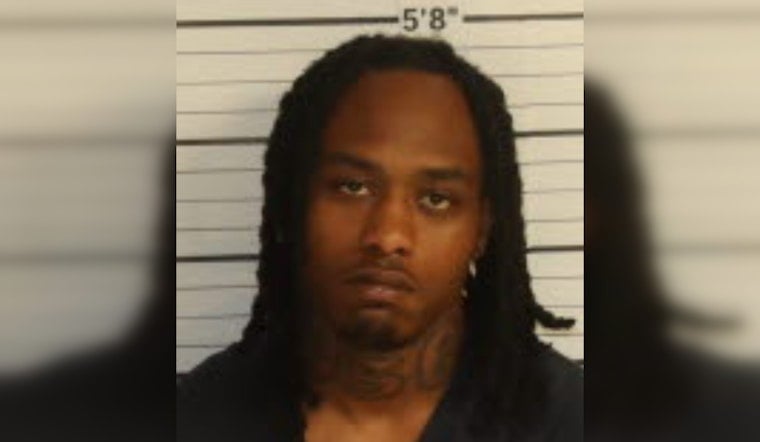
A Southeast Memphis man is facing second-degree murder charges after his girlfriend died from a gunshot wound and he gave investigators three different explanations for how it happened. Rontavious Jerome Dillard, 23, was arrested one day after Nyla Howell was fatally shot inside a home in the 5800 block of Jardin Place, with charges filed after she was pronounced dead at St. Francis-Park Hospital.
Memphis police responded to a shooting call at the Jardin Place address on August 30, according to WREG. Dillard called 911 to report that his girlfriend had been shot, per the police report cited in that account, and Howell was transported to St. Francis-Park Hospital, where she later died. Hoodline reported on the initial police response to the scene earlier the same day, before murder charges were filed and before Howell was pronounced dead, in its earlier Jardin Place shooting report.
Three Different Accounts
Dillard's story to investigators shifted repeatedly, per the same report. He initially told investigators he was in a back room when he heard a noise and then saw that Howell had been shot. He later recanted that account, telling MPD that Howell picked up a black handgun while he picked up another firearm from a box in the attic, and separately told investigators that Howell was playing with the black handgun and it discharged as he tried to take it from her.
In a third version, Dillard said Howell had asked who could “up a gun” the fastest, according to the report. He also said the firearm discharged and struck Howell, and separately stated that he pointed the firearm he held in her direction. The shifting accounts intersect with a felony evidence-tampering charge, since Dillard also admitted to hiding both weapons after the shooting.
Hidden Guns and a Shaved Serial Number
Authorities executed a search warrant at the Southeast Memphis home and found blood smears leading from the first floor to a second-floor walk-in attic. Investigators discovered a firearm in a box in the attic, which Dillard said he placed there, and located a black handgun with its serial number shaved off between the backyard fence, which he also admitted to hiding. Dillard told investigators he hid the guns because he is a convicted felon.
The obliterated serial number carries its own federal exposure. Under 18 U.S.C. § 922(k), knowingly possessing a firearm with an altered or removed serial number is a federal felony carrying up to 10 years in prison, according to Bravo Store Systems. Serial number obliteration is often treated as circumstantial evidence tied to illegal firearm trafficking or theft.
Charges and Sentencing Exposure
Dillard was charged with second-degree murder, employment of a firearm during the commission of a dangerous felony, tampering with or fabricating evidence, and two counts of being a convicted felon in possession of a firearm. Police records identify him as a convicted felon; he pleaded guilty in October 2025 to theft of property valued between $2,500 and $10,000.
Under Tennessee Code § 39-13-210, second-degree murder is a knowing killing without premeditation, classified as a Class A felony punishable by 15 to 60 years in state prison, per FindLaw. Layered on top of that, Tennessee Code § 39-17-1324 makes employing a firearm during a dangerous felony a separate charge carrying mandatory minimum prison time served day-for-day and consecutive to any underlying sentence, according to Freeman & Fuson. The evidence-tampering charge alone, under Tennessee Code § 39-16-503, is a Class C felony punishable by three to 15 years, per the Kevin Kennedy Law Firm.
The felon-in-possession charges add further exposure. Under Tennessee Code § 39-17-1307, possessing a firearm as a convicted felon is a Class C or Class E felony carrying up to 15 years in state prison depending on prior convictions, while federal law under 18 U.S.C. § 922(g)(1) allows for up to 10 years in federal prison, according to N. Cate Law. Felon-in-possession cases in West Tennessee frequently draw federal review, raising the possibility that federal prosecutors could pursue supplemental charges alongside the state case.
Dillard has no bond set at this time and is expected to appear in court Tuesday morning. It remains unclear whether a bond amount will be formally evaluated at that hearing, and medical examiner findings regarding the shooting's distance and trajectory have not been made public.
A Domestic Violence Case Amid Falling Crime Numbers
The case lands during a period when overall violent crime in Memphis has been falling sharply. Major violent crime dropped 31.5% during the first half of 2026, following a 2025 trend in which homicides fell 26% to under 200 for the first time since 2019, according to the Tennessee Bar Association, which credited joint task force operations for the reductions.
Domestic violence, however, has proven far more resistant to that broader decline. Shelby County recorded 7,828 domestic violence offenses in the first half of 2026, including 6,913 in Memphis, with that category falling just 5.7% compared to drops of more than 30% in other violent crime categories, per data from the University of Memphis Public Safety Institute. In response to recurring domestic abuse cases, the Memphis Police Department established a Domestic Violence Prolific Offender Initiative in 2025 to prioritize tracking repeat offenders, and in August 2026 the Memphis Shelby Crime Commission and the University of Memphis Public Safety Institute announced a coordinated community response strategic plan aimed at improving victim support services, released just weeks before Howell's death.




