

























































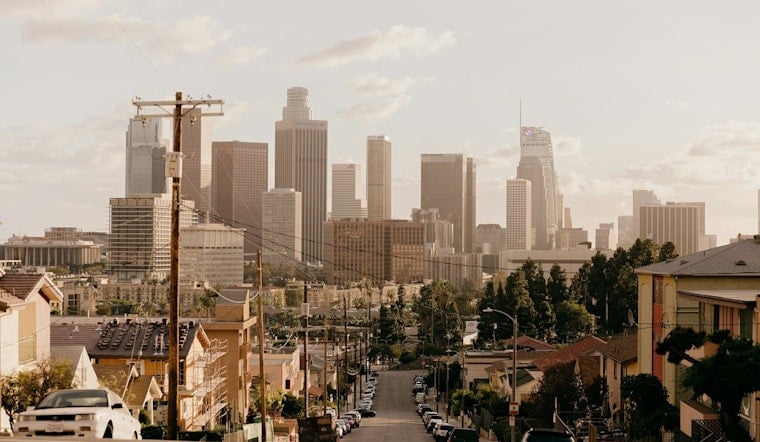
Southern California is heading into what the National Weather Service says will be its hottest stretch of 2026, with an extreme heat watch running from 10 a.m. Tuesday through 8 p.m. Friday and downtown Los Angeles expected to see highs of 96 to 98 degrees straight through the week. Inland valleys could climb even higher, with forecasters projecting readings between 100 and 110 degrees, while even the coast won't get much relief, with highs expected in the 80s and 90s.
Ryan Kittell, a National Weather Service meteorologist based in Oxnard, said the heat this time is not being driven by Santa Ana winds, as reported by the Los Angeles Times. Instead, the culprit is a strong area of high pressure parked over the region, a setup Kittell said will likely give much of Los Angeles its hottest week of the year. Downtown LA already hit 96 degrees Sunday, with a run of 96- to 98-degree days forecast through Friday before a slight cooldown brings Saturday's high back down to 94.
Why the Air Itself Is Getting Squeezed Hot
The mechanism behind that stubborn high pressure has a name: compressional warming. As descending air gets squeezed under strong high pressure sinking toward the surface, its temperature rises and cloud formation gets suppressed, according to the National Weather Service. That trapped air mass is effectively a lid on the region, blocking out cooler ocean air or rain systems that might otherwise break the cycle. Kittell said conditions will be very hot or extremely hot from Wednesday through Friday, and he warned that the hot days demand great care, adding that the region has a history of large fires erupting during stretches of extreme heat.
Out in Death Valley, the numbers get even more extreme. Furnace Creek recorded a high of 121 degrees, and the National Weather Service projects temperatures of 119 to 120 degrees through Friday, with overnight lows stuck in the mid-90s and offering little chance for bodies or buildings to cool down. The National Weather Service has urged people to check on relatives and neighbors, stay out of the sun, stay in air-conditioned rooms when possible, and drink plenty of fluids, warning of a high risk of heat-related illness during an extreme heat warning, which the agency defines as meaning dangerous heat is happening or about to happen and puts everyone at risk.
A Death Valley Tragedy Underscores the Stakes
The warnings carry extra weight after a 68-year-old traveler from France died in Death Valley National Park on August 17. Hoodline previously identified the victim as Pierre Michel Formosa, who died from extreme heat after his car became stuck in mud near West Side Road and he attempted to walk for help in 116-degree conditions. Death Valley National Park regularly sees summer temperatures exceeding 115 degrees, a threshold at which a simple vehicle breakdown in a remote area can turn fatal within hours.
Statewide, the health toll of extreme heat is well documented. Los Angeles County recorded 14.4 emergency department visits per 100,000 residents for heat-related illnesses in 2023, and state records show at least 460 heat-linked fatalities across California between 2013 and 2022, according to CalMatters. Health experts note official tallies likely undercount the true toll, since heat often worsens underlying cardiovascular and respiratory conditions rather than appearing as a direct cause of death. To track this in closer to real time, the Los Angeles County Department of Public Health launched a Heat-Related Illness and Mortality Dashboard in May, monitoring emergency department visits and death certificate data across county regions.
Workplace Rules and Grid Strain During the Heat Watch
California employers face clear legal obligations once conditions like this week's set in. Indoor workplace heat protections under Title 8 Section 3396, which took effect in July 2024, require action once indoor temperatures reach 82 degrees in spaces like warehouses and commercial kitchens lacking air conditioning, according to UC Davis Safety Services. Outdoor rules under Section 3395 separately require shade once temperatures hit 80 degrees and mandatory high-heat procedures once they reach 95.
The statewide power grid also comes under pressure during heat waves like this one, as the California Independent System Operator issues voluntary Flex Alerts asking residents to conserve energy between 4 p.m. and 9 p.m., the window when solar generation ramps down just as air-conditioning demand stays high. Even when the broader grid holds up, local distribution equipment can still fail: during an August heat wave earlier this month, residents in parts of the Hollywood Hills and Brentwood went without power and air conditioning for more than 17 hours after neighborhood transformers overheated. Southern California Edison has since restricted scheduled maintenance outages to a maximum of five hours once desert temperatures hit 105 degrees and cancels non-emergency outages entirely above 113 degrees.
Cooling Centers and Shade Offer Some Relief
Los Angeles County and the City of Los Angeles have activated cooling centers in public libraries, community parks, and senior centers during the advisory, extending hours at designated locations for residents without air conditioning at home. Unusually warm overnight lows during multi-day heat waves raise health risks especially for those in un-air-conditioned housing, per the County of Los Angeles.
Community-level infrastructure projects are also being tested. Urban shade experiments in South Los Angeles conducted by the ShadeLA coalition, a group of USC and UCLA researchers focused on heat-vulnerable neighborhoods, found that temporary shade structures can lower temperatures underneath by up to 44 degrees compared with unshaded, direct-sun areas, according to Blue Shield of California. As the extreme heat watch runs its course through Friday, forecasters expect winds to shift and become more northerly, though Kittell predicted many residents will simply be filling a kiddie pool in the backyard to cope with the days ahead.





