

























































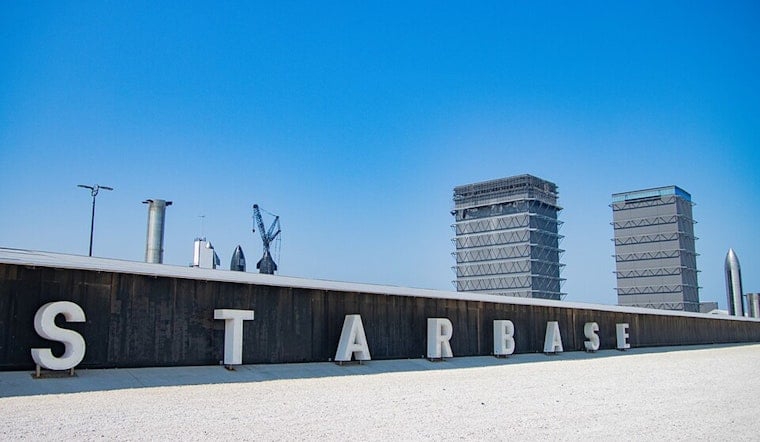
A SpaceX Starship upper stage that splashed down intact in the Indian Ocean is now riding a heavy transport ship on a roughly 13,000 nautical mile voyage back to its Texas home. The vehicle, known as Ship 40, spent 24 days floating in swells as high as 14 feet near Christmas Island before crews lifted it out of the water and loaded it onto the deck of a specialized recovery vessel.
The recovery, completed off the Australian territory of Christmas Island roughly 800 miles from Western Australia, required the 48,000-ton Boskalis heavy transport ship Forte to partially submerge its own deck so the 52-meter spacecraft could float into a custom-built cradle, according to The West Australian. Crews then pumped out ballast water to raise Ship 40 clear of the ocean. SpaceX said the recovery team battled challenging conditions to give engineers access to extensive data, according to ClickOnDetroit, which cited an Associated Press report on the recovery effort.
Before the transport ship arrived, engineers used the extended time at sea to their advantage. SpaceX crews conducted in-water inspections and extracted core samples directly from the ship's thermal heat shield tiles during those 24 days adrift, Space.com reports. It marks the first time engineers have had physical hardware to study after a Starship upper stage survived atmospheric reentry and splashdown intact, rather than relying solely on telemetry beamed back during flight.
A Mixed Result for Flight 13
The recovered vehicle flew on July 24 as part of Integrated Flight Test 13, launched from Starbase in Texas. Per SpaceX, the mission was the first Starship test flight to deploy operational payloads, successfully releasing 20 next-generation Starlink V3 satellites into suborbit before completing an in-space Raptor engine relight. The vehicle survived an hourlong, space-skimming test flight before its splashdown, ClickOnDetroit notes.
The mission was not a complete success across the board. The Super Heavy first-stage booster, designated Booster 20, failed its ocean landing burn over the Gulf of Mexico when only 10 of its 13 designated Raptor engines re-ignited, according to a Wikipedia entry citing SpaceX data on the flight. The booster hit the water at high velocity and was destroyed, a stark contrast to SpaceX's longer-term goal of catching both boosters and upper stages with mechanical arms on its launch towers.
Two-Month Trip Back to Starbase
Now loaded aboard the Forte, Ship 40 faces a sea voyage of nearly 13,000 nautical miles back to Starbase in Texas, a trip The West Australian reports could take up to two months depending on whether the ship transits the Panama Canal or routes around the Cape of Good Hope. ClickOnDetroit reports the return is expected to take several months in total. SpaceX shared photographs of the recovery effort near Christmas Island as the vessel began its journey.
Why NASA Is Watching Closely
The stakes extend well beyond a single test flight. NASA is counting on Starship, alongside Jeff Bezos's Blue Moon lander, to return astronauts to the lunar surface as early as 2028, per ClickOnDetroit's report. Elon Musk intends to eventually use Starship to transport people and equipment to Mars, part of his broader ambition to build a city there.
That timeline depends heavily on both landers clearing orbital rendezvous and docking tests planned for 2027, a milestone Hoodline has previously tied to NASA's Artemis III schedule. NASA selected two commercial lander providers specifically to ensure redundant access to the lunar surface, underscoring why the agency needs both companies to succeed rather than just one.
Trump Honors Artemis II Crew in Houston
The recovery news landed the same day President Donald Trump presented the Congressional Space Medal of Honor to each of the four Artemis II astronauts — Reid Wiseman, Victor Glover, Christina Koch and Jeremy Hansen — at NASA's Johnson Space Center in Houston, according to NASA. It was the first time the medals had been presented since 2023. Trump used the ceremony to endorse future missions to Mars and the Moon, ClickOnDetroit reports.
The Artemis II crew flew around the Moon in April, a mission that set a human distance record of 252,756 miles from Earth during its lunar flyby, breaking the mark Apollo 13 set in 1970, per NASA. It was the first crewed mission beyond low Earth orbit since Apollo 17 in 1972. Hoodline previously covered Trump's planned Houston visit ahead of the ceremony.
SpaceX's Growing Footprint on Two Coasts
SpaceX's ambitions aren't confined to the water or the launch pad. The company filed state environmental permit applications in August under what it calls “Project Ignition” to build a dedicated Starship static fire test stand at NASA's Kennedy Space Center in Florida, a move Hoodline detailed in earlier reporting on the permit filings. The proposed stand would let SpaceX verify rocket engines and hardware locally before Florida launches, rather than shipping everything back to Texas.
Back at Starbase itself, SpaceX has also been investing in the ground around its Boca Chica launch site. The company filed plans earlier this year to construct a $14 million, 115,000-square-foot “Starship Park” monument and amenities complex along Texas State Highway 4 in Cameron County, according to Hoodline's coverage of the project. Starbase remains the primary assembly and test site for Starship prototypes, even as the company expands testing capacity to Florida.





