

























































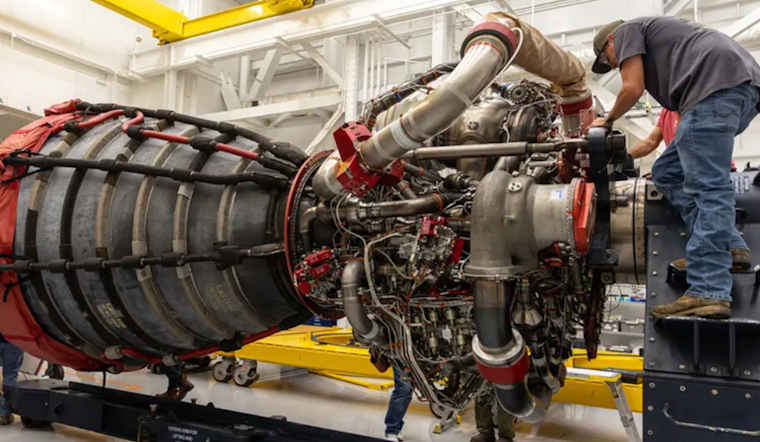
Moonshot Muscle Rolls Into Town: First Artemis III Engine Hits Kennedy
The first of four RS-25 main engines that will power NASA’s Artemis III Space Launch System rolled into the Vehicle Assembly Building at Kennedy Space Center on Thursday, a very visible sign that the next moon-era rocket is quietly coming together on Florida’s Space Coast. Technicians will fit and test the engine on the SLS core stage as stacking and checkout work continues for a mission currently targeted for 2027.
According to FOX 35 Orlando, NASA said the unit, the first of four Aerojet Rocketdyne RS-25 engines assigned to the Artemis III core stage, was offloaded and moved into the VAB on Thursday for inspection and integration. FOX 35 Orlando notes the engines will be installed on the SLS core stage, which, together with the solid rocket boosters, provides the bulk of the vehicle’s liftoff power, citing information shared by NASA about the arrival and next processing steps.
NASA recently named the Artemis III crew and lists Randy Bresnik as commander, Luca Parmitano as pilot, and Andre Douglas and Frank Rubio as mission specialists, with the agency targeting a 2027 flight for the test mission. As outlined by NASA, Artemis III will carry out the rendezvous and docking operations that future lunar landings will rely on.
Where the power comes from
The RS-25 engines are upgraded shuttle-era hardware that, working together, produce roughly 2 million pounds of thrust in flight. The two five-segment solid rocket boosters supply more than 75% of the thrust in the first two minutes of ascent. Combined, the core and boosters generate more than 8.8 million pounds of thrust at liftoff, according to FOX 35 Orlando. That is the kind of muscle needed to push Orion and its crew out of Earth’s gravity well and into the test profiles engineers have planned.
Next steps at the Cape
Teams at Kennedy will complete engine installation and system checkouts inside the VAB, then stack the full SLS on the mobile launcher for pad testing and a future rollout. The SLS core stage, built by Boeing at the Michoud Assembly Facility in New Orleans, holds roughly 730,000 gallons of liquid hydrogen and liquid oxygen, and booster segments are manufactured in Utah and transported to Kennedy for assembly, as outlined by NASA. NASA and contractor teams say finishing engine integration at Kennedy helps streamline final verification and prepares the vehicle for stacking operations.
What this test will do
Artemis III itself is not planned as a lunar landing; it is intended to validate rendezvous, docking, and other systems that future surface missions will rely on, AP News reports. By bringing engines and boosters together in the VAB and moving through integrated checkouts, NASA is stepping through the milestones needed to keep the Artemis cadence on track.
With the first RS-25 now at Kennedy, engineers and contractors across the country will move into a period of focused engine and systems work over the summer and fall, the kind of behind-the-scenes effort that eventually leads to the big rollouts and launches that keep the Space Coast at the center of American spaceflight.





