

























































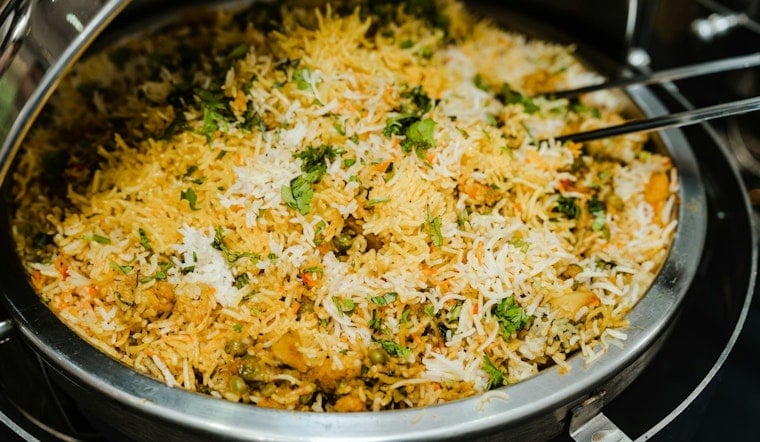
Shawarma, biryani, hand-pulled Uyghur noodles, Turkish ice cream and Yemeni coffee filled more than 120 stalls this past weekend as the fourth annual Chicagoland Halal Fest set up shop at the Kane County Fairgrounds in St. Charles, a fresh venue for an event that has outgrown its origins in a Naperville high school parking lot. Organizers estimated roughly 7,000 people turned out Saturday, August 8, while heavy thunderstorms slowed Sunday morning attendance before the skies cleared in the afternoon.
The festival began behind Neuqua Valley High School in Naperville and has grown steadily since, according to the Chicago Tribune, which reported that the event drew about 22,000 people over its two-day run in 2025 and became a two-day event that year after participating businesses asked organizers to expand it. This year marked the first time the festival relocated to the Kane County Fairgrounds, a move organizers made to accommodate more space. The fairgrounds' Prairie Events Center spans 36,000 square feet and regularly hosts large regional gatherings such as the monthly Kane County Flea Market, according to the Kane County Fairgrounds.
Shafeek Abubaker, president of the Illinois Muslim Chamber of Commerce, has led the event's growth from a single-day showcase into a regional draw. The Chamber he leads was founded to empower Muslim entrepreneurs, expand access to capital and promote small business networking across the state, according to the US Healthcare Chamber. This year's fest featured more than 100 halal food and shopping vendors representing Middle Eastern, African, Eastern European and American Muslim cultures, plus American, Italian and Mexican food options, per the Tribune's reporting.
Families Flock to Rides, Petting Zoo and a Camel Named Cyrus
Beyond the food stalls, the festival offered a carnival, petting zoo and live entertainment, including cultural performances and music. Interactive attractions included pony rides and camel rides on a 7-year-old camel named Cyrus, along with inflatables, as detailed by the Daily Herald. Parking lots filled quickly soon after the gates opened, the Tribune reported.
Mina Khalil brought her daughters, 9-year-old Elinna and 4-year-old Elminna, to the festival for the first time this year. Mahwish Kidwai of Naperville came with friends, planning to try different foods and shop among the vendor stalls. Saima Haque, also of Naperville, and Erum Asif of Aurora were among the attendees, alongside Mohamed Elvably, who said he had attended the event many times before.
A Community Shaped by Youth and Diversity
The festival's expansion tracks with broader demographic shifts across Illinois. A 2022 study by the Institute for Social Policy and Understanding found that Illinois has the highest per-capita Muslim population of any U.S. state, with Muslims making up 2.8% of the state's total population, as reported by Interfaith America. That same study found that half of Illinois Muslims are between 18 and 35 years old, and the community is racially diverse — 35% Asian, 35% non-Hispanic Black, 23% non-Hispanic white and 8% Hispanic.
That youthful, diverse population helps explain both the festival's family-oriented programming and its sprawling international food lineup. Roughly 12% of Illinois Muslims are self-employed or business owners, supporting an estimated 350,000 jobs statewide, according to a 2022 UIC/ISPU study cited by the Wisconsin Muslim Journal — a statistic that underscores why the Illinois Muslim Chamber of Commerce built an entire festival around small-business vendors in the first place.
Halal Food's Growing Reach Beyond the Community
The festival's crowds also reflect a national commercial trend. The U.S. halal food market was valued at $733.6 billion in 2025 and is projected to grow at an 8.94% annual rate through 2034, driven by a national Muslim population of 3.5 million, according to the IMARC Group. Non-Muslim consumers account for roughly 30% of U.S. halal product purchases, drawn by clean-label positioning, transparent sourcing and strict Zabihah processing standards, per industry research cited by Industry Research.
That crossover appeal was visible on the Kane County Fairgrounds this past weekend, where the festival drew attendees from a range of cultural and religious backgrounds. Between the record vendor count, the storm-shortened Sunday and the debut of a much larger venue, organizers now face new questions about how the move to St. Charles will reshape attendance patterns from the western and southern suburbs in years ahead.





