

























































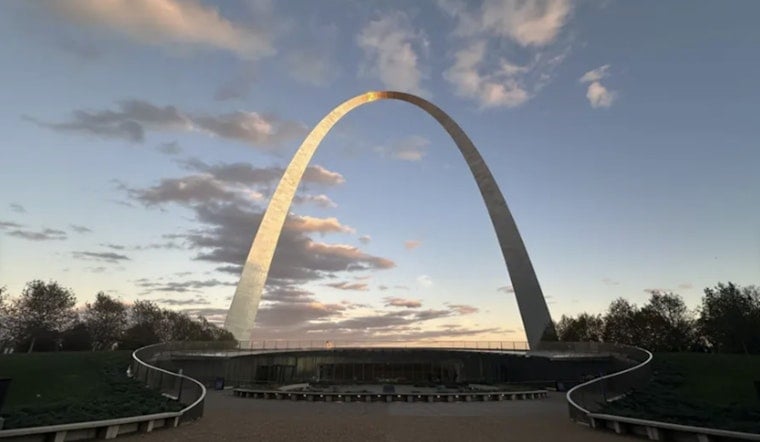
St. Louis could soon have an easier way to turn its most recognizable landmark into a backdrop for weddings, corporate gatherings and other private events. A bipartisan bill moving through Congress would give the Gateway Arch Park Foundation a formal role in organizing those events at Gateway Arch National Park.
The proposal reached another key stage this summer, with the Senate Energy and Natural Resources Committee holding a hearing on July 21 and placing the measure on its July 29 business-meeting agenda. The St. Louis Post-Dispatch reported Monday that the bill is now closer to becoming law, though it still needs action by the full Senate and the president.
The Arch Already Hosts Private Events
The Gateway Partnership Act would not create private events at the Arch from scratch. The National Park Service already advertises private gatherings at the Gateway Arch and Old Courthouse, while the Foundation’s event guidelines describe evening rentals inside the Museum at the Gateway Arch.
What the bill would do is authorize a formal, one-time agreement lasting up to five years between the National Park Service and the Gateway Arch Park Foundation. The arrangement would allow the Foundation to handle more of the event execution and marketing, rather than leaving each gathering to navigate the process as a standalone permit.
Sen. Eric Schmitt, R-Missouri, and Rep. Wesley Bell, D-Missouri, are leading the Senate and House versions. In announcing the legislation, Schmitt’s office said the partnership could make use of the Arch Visitor Center, Old Courthouse and other National Park Service buildings.
Five-Year Pilot Would Come With Guardrails
The House-passed version sets up a pilot project rather than a permanent blank check. The agreement would have to protect park resources, preserve public access, limit event timing and locations, provide appropriate National Park Service staffing, and include liability insurance.
The bill also requires the federal government to recover costs tied to the events, including maintenance, utilities, security, administrative work and personnel. The House committee report says the pilot would be limited to activities consistent with the park’s purpose and could not degrade the site’s appearance or interfere with ordinary public use.
That language matters because the Arch grounds are not simply another downtown rental hall with a dramatic ceiling. They are a national park, a working public attraction and a heavily visited civic space, so any private-event expansion has to coexist with visitors who did not book a wedding package.
Supporters See Downtown Economic Upside
Supporters say the Foundation’s philanthropic partnership with the park has already helped fund improvements to the visitor experience, including the CityArchRiver project and renovated public spaces. The Foundation has projected that a more formal event operation could generate as much as $780,000 annually, with revenue reinvested into the park.
The Foundation’s current event materials show that private gatherings can already use spaces such as the Museum’s mezzanine and tram lobby, with capacity ranging from smaller receptions to events involving hundreds of guests. The Gateway Arch’s event information also lists the Old Courthouse and Arch facilities as available venues.
Senate Vote Would Be The Next Big Test
The House passed its version by voice vote on March 16, after lawmakers amended it into a five-year pilot with additional reporting and cost-recovery provisions. The measure was then sent to the Senate, where the July hearing featured testimony from Schmitt and National Park Service Associate Director Charles Cuvelier.
The Senate committee’s July 29 agenda included both Schmitt’s S. 2767 and Bell’s House bill, H.R. 5254. The committee’s posted agenda shows the Arch measure alongside other pending public-lands legislation, leaving full Senate consideration as the next major step before the proposal could reach the White House.



