

























































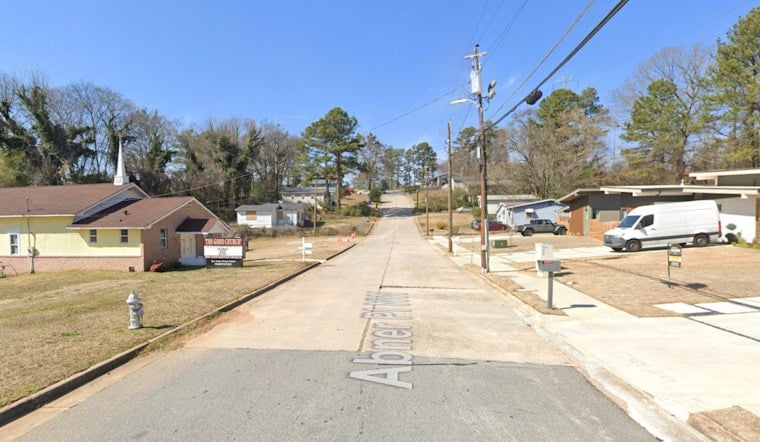
Strong storms tore through metro Atlanta overnight, toppling trees onto parked cars, snapping power lines, and leaving thousands of Georgia Power customers in the dark by Tuesday morning. A large tree crashed onto several parked vehicles, including a van, on Abner Place in northwest Atlanta, while power lines were knocked down along Browns Mill Road. Elsewhere, a tree fell into the yard of a home on Pierce Street, though the extent of damage to the house was not immediately clear.
The overnight damage was first documented by FOX 5 Atlanta, whose photojournalists surveyed scenes across the city, including large branches covering vehicles on Abner Place and storm damage reported along Browns Mill Road. The outlet reported that downed trees and power lines were scattered across the broader metro area, and that thousands of Georgia Power customers were affected by the storms. Rain and storm chances are expected to decrease over the next couple of days, according to the report.
A Storm Watch Issued Hours Before Trees Started Falling
The damage came after the National Weather Service in Peachtree City issued a Hazardous Weather Outlook late Monday, warning that thunderstorms advancing southward across north and central Georgia overnight would bring wind gusts of 40 to 50 mph, frequent lightning, and heavy downpours. That timing lines up with the trail of snapped limbs and downed lines FOX 5 Atlanta crews found scattered from northwest Atlanta to Browns Mill Road and Pierce Street. Climatological data from the same weather service office shows damaging thunderstorm winds strike north and central Georgia an average of 19 days a year, with severe weather activity peaking in July and August.
This is not an isolated pattern for the region this summer. In July, a storm-downed tree at the main entrance of Six Flags Over Georgia in Austell injured four people during a sudden thunderstorm, as Hoodline reported. Earlier this month, a fallen tree severed power lines near Sagamore Hills Elementary in DeKalb County, forcing students to be bused to Lakeside High School while Georgia Power crews repaired the grid.
Why Atlanta's Trees Keep Coming Down
Atlanta's identity as the “City in a Forest” has run into a structural problem: aging trees and a shrinking canopy that make the city more vulnerable to storm damage rather than less. A Georgia Tech study released this month found Atlanta's urban tree canopy coverage has dropped to 45.7%, documenting an average loss of a quarter-acre of trees daily between 2008 and 2023, according to WABE. That decline is pushing the city further from its own 50% canopy target even as summer storms continue to snap limbs and topple trunks across metro neighborhoods.
Georgia Power, for its part, maintains an active Vegetation Easement & Clearance Program that seeks 15- to 30-foot clearance corridors along overhead lines, pruning or removing tall-growing trees that threaten grid stability during severe weather. During widespread outages like the one reported Tuesday, the utility and state electric cooperatives typically follow a prioritized restoration hierarchy, repairing high-voltage transmission lines and regional substations before moving on to neighborhood distribution lines and individual home connections, per the Georgia Electric Membership Corporation.
What Property Owners Should Know Before Cutting
For residents like those on Pierce Street now facing a downed tree in the yard, the City of Atlanta's storm-emergency guidelines offer a faster path than the city's normally strict tree rules. Property owners removing fallen or imminently hazardous trees are not required to obtain a pre-removal permit, provided they photograph the tree's condition before removal and submit that documentation to the Arborist Division. That flexibility does not extend to the public right-of-way, where trees along Atlanta streets are managed by the Department of Parks and Recreation; the city does not clear fallen trees on private property or assume financial liability for private structure damage unless right-of-way access is blocked.
The stakes for getting removal wrong have also grown. Atlanta's 2026 rewrite of its Tree Protection Ordinance raised replacement recompense fees 4.5-fold, from $30 to $140 per inch of trunk diameter for non-exempt removals, a jump enacted to slow canopy loss and push property owners toward replanting. For now, metro Atlanta residents assessing damage from Abner Place to Browns Mill Road are left waiting on Georgia Power crews and drier skies, with storm chances expected to ease over the next couple of days.





