

























































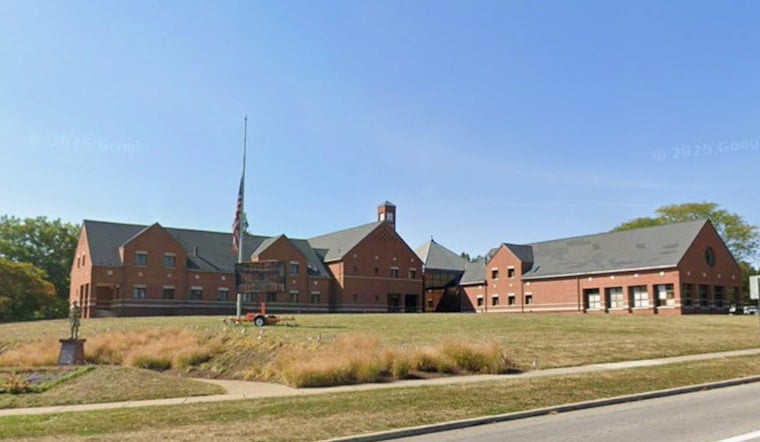
Stow City Council is moving to lock in permanent zoning rules for data centers before a single developer has even filed an inquiry. The ordinance, introduced by council member Kim Young, has already passed two readings and would require data center buildings to sit at least 75 feet from property lines next to residential uses, while forcing applicants to disclose their estimated daily and annual water consumption before breaking ground.
The measure, formally known as Ordinance 2026-118, would amend Section 1104.03 of Stow's Codified Ordinances to create official land-use definitions and standards for data centers, according to the City of Stow. As cleveland.com reports, the Stow Planning Commission has already recommended approval, and the full council has scheduled a public hearing for September 10 at 5 p.m. in council chambers at 3760 Darrow Road.
If passed, the ordinance would define a data center as a facility primarily used to store, manage, process and distribute data and information, folding those facilities — including their computer systems, servers, cooling equipment, backup power and network gear — into the city's list of industrial uses. Data centers would become a conditional use within Stow's industrial district, meaning the city could require changes, attach conditions, or deny a proposal outright if necessary, per the same report.
What the Proposed Rules Would Actually Require
The draft ordinance sets specific technical thresholds rather than a blanket ban. Applicants would need to show sufficient utility capacity exists without hurting surrounding areas, provide one parking space for every 1,000 square feet of building, and limit noise affecting adjoining nonresidential and residential districts. New facilities also could not install diesel-powered backup generators unless no feasible alternative exists, and the ordinance gives preference to battery storage and renewable-backed power systems.
City officials have been candid about the fact that none of this is reactive. Stow's Planning Director noted in May that no areas of the city are currently zoned for data centers and that no developers have made formal inquiries, according to a statement from council member Kyle Herman. Herman noted that state-level discussions have floated preempting local municipal moratoriums, which is part of why Stow is choosing permanent standards over a temporary freeze.
Neighbors Chose Pauses, Stow Chose Permanence
Stow's approach stands apart from a wave of temporary moratoriums adopted across Northeast Ohio this year. Per cleveland.com's reporting, Twinsburg City Council approved a one-year moratorium on new data center development, with officials there using the pause to study energy demand, environmental effects and zoning regulations, while residents raised concerns about electricity demand, water use and environmental effects. Speakers at Twinsburg meetings urged officials to focus on regulation rather than outright bans, the same report notes.
Hudson City Council approved its own six-month freeze on new data center development in July, using the pause to study effects on its electric grid, water and sewer systems, telecommunications infrastructure and noise, while also examining potential tax revenue from future projects. Akron took yet another path, passing an ordinance on July 27 that requires conditional-use approval for data centers alongside mandatory utility studies covering electricity demand, water consumption, wastewater discharge and noise, according to Citizen Portal. Cleveland City Council went further still, voting 14-1 on July 16 to enact a three-month citywide moratorium on data center permits and utility approvals, a pause that was scaled back from an initial one-year proposal after the city rejected a $1.6 billion data center project in Slavic Village, per Signal Cleveland. New Franklin, which already listed data centers as a conditional use, approved a separate six-month moratorium in May to refine its own definitions, according to Akron.com.
Why Stow Is Racing State Lawmakers
Stow's push for permanent code rather than a pause comes as Ohio lawmakers debate legislation that could strip cities of that flexibility altogether. Ohio House members introduced House Bill 983 in August, which would require mandatory voter approval for any new data center or expansion exceeding one megawatt of peak electrical load within five miles of a municipality or township, according to BG Independent News. The bill would also establish new air emission and water discharge standards.
Governor Mike DeWine has already ordered a pause on new sales-and-use tax exemption applications for data centers effective June 1, while a legislative joint committee evaluates the industry's energy footprint and fiscal impact, per Ideastream Public Media. That state sales tax break cost Ohio roughly $1.6 billion in 2025, up from $555 million the year before. National tracking data from Interconnected Capital shows more than 200 local data center moratoriums or land-use pauses have been enacted across 42 states as of July, reflecting a surge of local pushback tied to grid stability, water consumption and noise concerns.
The financial stakes for residents are part of the backdrop too. Central Ohio residential electricity bills are projected to average roughly $800 this summer, a 17% year-over-year increase partly attributed to rising grid demand from hyperscale computing facilities, according to a report cited by Spectrum News 1 Ohio. At the same time, the industry carries real economic weight statewide — an Ohio Chamber of Commerce Research Foundation study estimated Ohio was home to roughly 203 data centers in 2024, supporting about 95,000 jobs and $11.8 billion in state GDP, a footprint clustered in Central Ohio but expanding into Summit County and Northeast Ohio.
Stow joins other Ohio towns acting early to get ahead of an industry that, per cleveland.com, has expanded rapidly in Northeast Ohio alongside the growth of artificial intelligence. With no applications pending and no site currently zoned to accommodate one, council members say the goal is simple: have the rulebook finished before anyone shows up wanting to build.





