

























































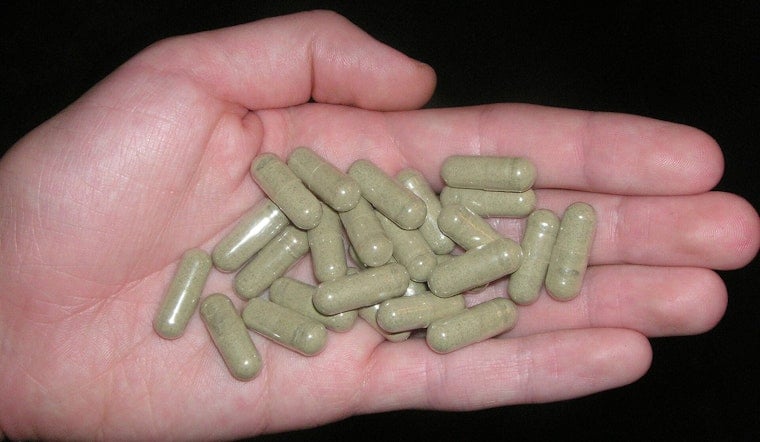
Five nurses from OSF HealthCare's emergency rooms and intensive care units stood before the Streator City Council this week and asked for a retail ban on kratom and 7-hydroxymitragynine, the concentrated compound known as 7-OH. Among the accounts they shared was one nurse's statement that kratom addiction had contributed to a patient's suicide. The council is now weighing whether to schedule a special meeting as soon as September 2 to consider an ordinance.
Samantha Rivers, who has worked as a nurse for 14 years and treats patients in the ER and ICU, told council members that kratom and 7-OH use can trigger anxiety, rapid heart rate, agitation, nausea, vomiting, tremors, dependence and withdrawal, according to Shaw Local. “Natural doesn’t necessarily mean that it’s safe,” Rivers said. Patients using concentrated kratom or 7-OH products present with unpredictable symptoms that are difficult to treat, she added, and often require prolonged emergency care along with intensive monitoring.
Rivers told the council it could create an ordinance banning kratom outright, and the nurses came prepared with sample language. The Shaw Local report notes that OSF nurses provided the council with copies of ordinances already adopted in Normal and Ottawa to use as templates. Kratom itself is described in the report as an unregulated product sold at gas stations and smoke shops, available with no testing standards attached.
A Substance That Shifts From Stimulant to Depressant
Katilynn Raspen, another nurse who spoke to the council, said patients struggling with kratom or 7-OH withdrawal require prolonged hospital admissions and long ICU stays. Kratom starts as a stimulant and ends as a depressant, the nurses explained, according to the same report, and there is no FDA-approved treatment or reversal agent for kratom withdrawal. Medical staff can manage the symptoms, but the lack of a standard treatment protocol leaves ER teams navigating each case largely on their own.
Sarah Armstrong, one of the nurses who addressed the council, said some patients withdrawing from heroin turn to kratom as a substitute, only to later need help fully withdrawing from kratom products themselves. Bryan Park, who supported looking into a kratom ban, said Streator has seen an increase in emergency calls tied to the substance. Streator emergency-room staff are seeing wide swings in patients’ behavior, per the same account, complicating diagnosis and treatment.
The Numbers Behind the Push
The nurses cited data showing 7-OH is 13 times more likely than regular kratom to cause severe outcomes, and per data presented Wednesday, a notable share of recorded kratom exposures resulted in severe outcomes. They also pointed to 53 7-OH-related poison-center cases reported over a three-month span. The nurses further noted that states with retail kratom bans have seen lower poison-center exposure rates, severe medical outcomes and hospitalizations, framing the ordinance as a public-health measure rather than a criminal one.
The federal backdrop adds urgency to the local debate. The Drug Enforcement Administration announced its intent to classify high-concentration 7-OH products as Schedule I narcotics, the same category that includes heroin, LSD and MDMA, according to a DEA announcement. Federal officials determined that concentrated synthetic 7-OH has no accepted medical use and carries abuse potential similar to traditional opioids, a finding rooted in the compound's action as a potent mu-opioid receptor agonist, per axialHealthcare. While natural kratom leaves contain only minor trace amounts of 7-OH, chemically synthesized or concentrated products deliver dramatically higher doses, the same research notes.
A Region Already Moving to Ban Sales
Streator isn't acting in isolation. Seneca's village council unanimously banned retail sales of kratom, 7-OH, nitrous oxide and tianeptine in March, categorizing the items as “gas station drugs” carrying significant addiction and overdose risks, according to Shaw Local's coverage of that vote. Ottawa followed in April, unanimously approving its own ban after local police notified 25 retail establishments, citing public health risks from unregulated products mixed with unlisted ingredients. Marseilles banned the products in June, and Normal's town council voted in June to prohibit retail kratom sales effective July 15, setting daily fines between $100 and $750 for business violators while explicitly excluding criminal penalties for personal possession.
Naperville has kratom on its agenda this month too, with its city council debating a proposed retail ban recommended by its liquor commission, according to the Daily Herald. That council heard testimony from residents describing severe addiction requiring hospital detox alongside seniors who credit kratom with helping manage chronic pain. Pontiac is also moving toward a ban, and Hoodline previously reported that Minooka banned kratom sales overnight in late March, part of a growing list of northern and central Illinois communities restricting over-the-counter sales in towns including Pike County, Bloomington and Elk Grove Village.
Illinois Law Leaves a Regulatory Gap
The wave of local ordinances stems from a gap in state law. Illinois's 2014 Kratom Control Act keeps kratom legal statewide for adults 18 and older but includes no testing mandates or alkaloid concentration limits, according to Rehab Seekers. State lawmakers introduced competing bills in 2026 to either impose statewide consumer protections or ban kratom entirely, leaving cities like Streator to act on their own in the meantime.
National data underscores how widespread kratom use has become even as safety concerns mount. An estimated 1.7 million Americans aged 12 and older used kratom in 2021, according to the FDA, with many users reporting they take botanical kratom to self-treat chronic pain, anxiety or opioid withdrawal. That same federal agency previously issued seven warning letters to companies selling unapproved 7-OH products between June and July 2025, and later assisted federal marshals in seizing roughly $1 million worth of illegal inventory, according to a notice in the Federal Register.
For now, Streator's council has not voted on an ordinance. Members discussed scheduling a special meeting for September 2 to take up the question, following the model set by neighboring communities that moved from public testimony to a ban within weeks.





