

























































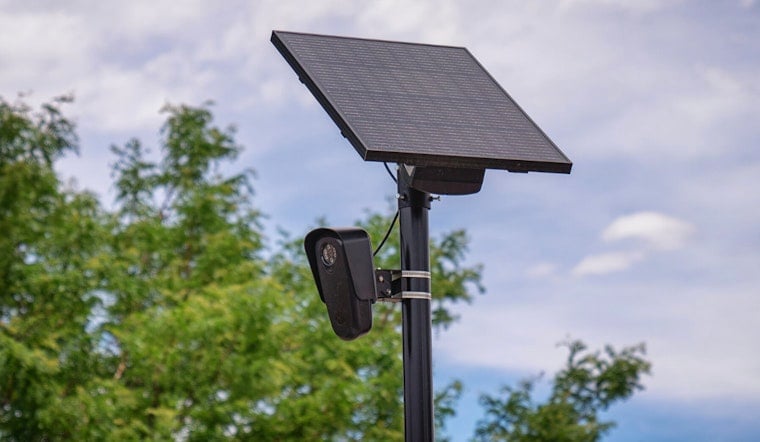
Suffolk County has quietly locked in a five-year, $3.79 million contract with Flock Safety to install acoustic gunshot detection sensors across 23.5 square miles of Long Island, and the deal never went before the county legislature for a vote. Installation began earlier in August 2026, with the system expected to be fully operational by September 6.
The arrangement was approved not by elected lawmakers but by Suffolk County's RFP Waiver Committee, which voted 3-0 in April 2026 to grant a sole-source exemption that let the county skip the usual competitive bidding and legislative review process, according to the New York Post. Jed Painter, who led the contract negotiations for the county, called it “a very good deal,” per the same report, and said Suffolk may eventually negotiate for Flock's automated license plate readers or cameras down the road.
The new Flock Raven sensors are replacing ShotSpotter, the SoundThinking acoustic gunshot detection system Suffolk County had relied on for more than a decade, including a January 2023 rollout across ten specific communities — Bellport, Coram, Mastic Beach, Shirley, Bay Shore, Brentwood, Central Islip, Huntington Station, North Amityville, and Wyandanch — according to the Atlas of Surveillance. County officials expect the switch to save roughly $800,000 a year.
What the Contract Does and Doesn't Cover
Despite Flock's reputation as a license-plate-reading camera company, Suffolk County's current contract is limited strictly to audio-based gunshot detection — it does not include Flock's AI-powered cameras, and the county does not currently operate any Flock cameras of its own. The Raven system uses machine-learning sensors to pinpoint gunfire to within roughly 90 feet and alert police within 60 seconds, far faster than a typical 911 call, according to information from the National League of Cities. The sensors also report loud community disruptions such as car crashes.
Even without cameras of its own, Suffolk County law enforcement can still track vehicles when a shot is detected by cross-referencing Flock cameras already operated by local municipalities, villages, and private housing communities across Long Island that have separately contracted with Flock Safety, per the Post's reporting. The Suffolk County Sheriff's Office, for its part, was already running 24 Flock automated license plate readers in Riverhead as of September 2025, according to Atlas of Surveillance records reviewed by the Electronic Frontier Foundation.
Vandals Keep Striking Flock Hardware Across the County
The rollout comes against a backdrop of open community hostility toward Flock's cameras elsewhere in Suffolk County. Southold Town Police spent July and August investigating a string of attacks on Flock cameras, including two Greenport units splattered with paint and stripped of wiring, one camera destroyed when a vehicle struck it on July 27, and a Peconic camera physically turned away from traffic, as reported by The Suffolk Times. Southold Town Police Chief Steven Grattan has acknowledged public concerns over Fourth Amendment rights and data privacy tied to the cameras.
Suffolk County Police reported a related arrest on Saturday, taking a Huntington Station man into custody and charging him with damaging a Flock camera in Hauppauge that had first been targeted in July. The county has seen multiple Flock cameras vandalized since July, including at least one run over by a car and another doused in paint, though those specific incidents were separate from the Hauppauge arrest.
National Backlash Follows Flock's Expansion
Flock Safety's rapid growth — the company now partners with more than 5,000 law enforcement agencies across roughly 6,000 U.S. communities, per Newsweek — has drawn scrutiny even as Suffolk expands its footprint. Kentucky Republican Rep. Thomas Massie introduced federal legislation that would strip federal grant funding from local governments and police departments that contract with Flock Safety or similar mass surveillance systems, arguing the technology tracks law-abiding citizens. Flock has countered that restricting federal funds would hamper more than one million public safety investigations annually.
Massie's push echoes broader retreats elsewhere in the country. The Los Angeles Police Department suspended its Flock partnership in July 2026, and Monroe County, Indiana voted to end its contract a year early, according to reporting from Northeast Times. Flock's AI-powered cameras specifically — as opposed to the audio-only system Suffolk is installing — have been criticized nationally as a Big Brother-style surveillance tool and have raised Fourth Amendment concerns in multiple states.
Flock itself has already made one concession to privacy critics this year: in July, the company officially dropped a pilot feature called Distress Detection, which had been designed to listen for human voices and screaming, after warnings from civil liberties groups including the Electronic Frontier Foundation that the microphones posed eavesdropping risks. Flock has since clarified that its sensors record only short audio clips triggered by specific acoustic events like gunfire, fireworks, car crashes, or street takeovers, according to the Electronic Frontier Foundation. The New York Post said it had requested comment from Flock Safety about the Suffolk County deal.
Hoodline has previously covered Massie's push to defund Flock cities, part of a wider pattern of local governments across the country reassessing their relationships with the surveillance company even as Suffolk moves ahead with its own expansion.





.jpg)