

























































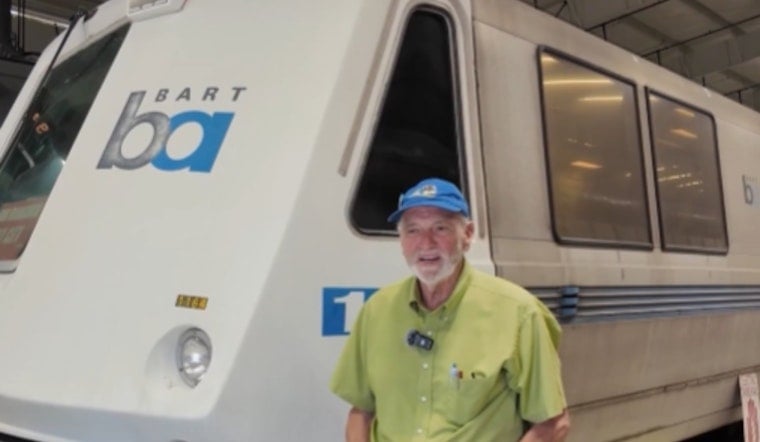
Three retired BART railcars now sit open for exploring inside a museum building in Suisun City, giving Bay Area transit fans a rare chance to walk through the system's original 1970s rolling stock. The new interactive exhibit opened during Transit Month and the week of BART's 54th anniversary, letting visitors board the cars and dig into the technology, design, and history behind the region's first automated rapid transit system.
According to a post from BART, the exhibit at the Western Railway Museum allows guests to step aboard three legacy cars rather than just view them behind glass. The museum's display, per the Western Railway Museum, consists of A Car 1164, B Car 1834, and C Car 329 — together forming the only complete preserved three-car train from BART's original 669-car fleet.
A new interactive exhibit at the Western Railway Museum in Suisun City lets visitors step aboard three legacy BART cars and explore the technology, design, and history of the system.
— BART (@SFBART) August 24, 2026
The opening arrives during Transit Month and the week of BART’s 54th anniversary. pic.twitter.com/bwqSEilgLM
A Car That Helped Build BART's Automated Future
The exhibit's lead cab car, A Car 1164, carries a particularly deep backstory. It was originally built by Rohr Corporation as Car 164 and served for decades as BART's primary Engineering Test Car during the system's early developmental era, according to BART, before later being rebuilt into revenue service. That test car played a role in troubleshooting the automated controls and transit technology that defined BART's earliest years.
Rohr Corporation, an aerospace manufacturer, built BART's original fleet in Chula Vista and debuted the cars when passenger service began on September 11, 1972, as the nation's first fully automated rapid transit system with central computer control, the museum notes. The Space Age-inspired aesthetic of the slanted A-car cabs became something of an icon of 1970s industrial design, a style still visible in the cars now parked in Suisun City.
Moving 64,000-Pound Cars Onto the Wrong Size Tracks
Getting the railcars to the museum wasn't simple. BART operates on a nonstandard 5-foot-6-inch broad track gauge, designed in the 1960s for high-wind stability, which meant the Western Railway Museum had to use custom wheel-dolly adapters to transport and maneuver the 64,000-pound railcars onto the museum's standard-gauge tracks, per BART. The museum raised public donations to fund hauling the cars from BART's Hayward yard to Solano County, and the exhibit now represents the first phase of a planned Rapid Transit History Center that will eventually add third-rail electrical equipment, automated train control antennas, and other historical artifacts.
The cars themselves are rare survivors. Of BART's original 669 legacy railcars, 660 were scrapped and recycled for aluminum, while only nine were spared and awarded through a competitive 2021 proposal process to nonprofit and commercial upcycling projects, according to Passenger Transport. Federal depreciation rules allowed BART to donate the fully depreciated, 50-year-old cars for community reuse once they were retired.
The End of an Era for BART's Original Fleet
BART officially retired its entire 52-year-old legacy fleet on April 20, 2024, marking the end of the Rohr-built era with a public ceremonial final ride from MacArthur Station to Fremont Station that drew more than 3,000 riders. That farewell run closed out more than five decades of service dating back to BART's opening day in September 1972. BART finalized its fleet modernization in July with the delivery of its 775th Fleet of the Future car built by Alstom, completing a $2.19 billion fleet overhaul that came in $394 million under its original budget forecast, per Hoodline. All active BART passenger service now runs exclusively on the new Alstom fleet.
Not every retired legacy car ended up in a museum. Other surviving BART cars have found second lives as Bay Area landmarks, including a downtown Hayward restaurant and arcade and a park concessions stand for the Oakland Ballers baseball team at Raimondi Park. BART awarded the retired cars for free, but recipients had to fund the complex transportation and permitting costs themselves.
Linking BART's Legacy to Earlier Bay Area Rail
The Western Railway Museum's exhibit connects BART's history to an even older chapter of East Bay transit. The museum also operates historic Key System Bridge Units, which carried commuters over the San Francisco-Oakland Bay Bridge until rail service ended in 1958 — a closure that directly motivated regional planners to design BART in the late 1950s and 1960s, the museum notes. The Solano County institution has also become a home for other retired Bay Area rolling stock, having received Muni's Breda light-rail trains after they were phased out following 30 years of service.
For now, the three-car BART train sits inside the museum's Loring C. Jensen Car House, giving visitors a hands-on look at the machines that once defined Bay Area commuting for more than half a century — and a preview of the larger transit history center the museum hopes to build around them.





