

























































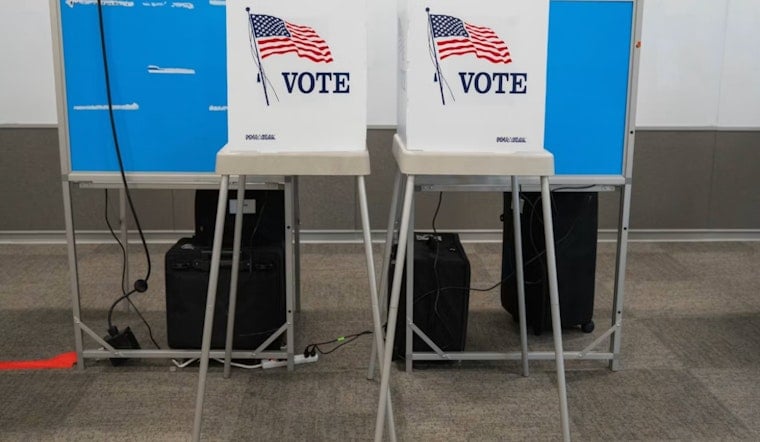
Sumpter Township voters said no to a police tax increase in the August primary, and now the township is asking again — this time with the stakes spelled out in stark terms. If the revised proposal fails again in November, officials warn the police department could face a 41% cut to its operating budget, a reduction they say could threaten whether the department stays open at all.
The Sumpter Township Board of Trustees voted unanimously on Monday to approve revised ballot language that will go before voters in the November 2026 general election, according to ClickOnDetroit. The new proposal asks for the same increase voters rejected weeks earlier: raising the police levy from 3 mills to 5 mills, a 2-mill jump, per the station's report.
The August 4 defeat was not close. Sumpter Township voters rejected the Police Protection Millage Renewal by a margin of 57% to 43%, with 1,284 residents voting no and 982 voting yes, according to CBS News. That original ballot measure would have increased the tax rate to $5 per $1,000 of taxable value for four years, from 2026 through 2029, generating an estimated $2,428,884 in its first year, according to VOTE411.org.
A Department That Hasn't Asked in 15 Years
Sumpter Township Police Chief Eric Luke has framed the request as overdue rather than excessive. Local officials have not requested a police millage increase in 15 years, even as department operating expenses have steadily climbed over that period, Luke said, as reported by FireRescue1. The department serves roughly 12,500 residents with up to 18 sworn officers and has relied on the existing 3-mill levy along with royalties from the local Carleton Farms Landfill, per the same account.
Township Trustee Tim Rush has warned of what comes next if voters reject the request a second time. Severe budget cuts or a department closure would force the township to lean on outside law enforcement such as the Michigan State Police, which Rush said would mean delayed emergency response times for residents, the station's report notes.
Turnout Could Swing the Outcome
Part of what makes November uncertain is how few voters decided August's outcome. Township officials estimated primary turnout at only about 24% to 25%, meaning roughly 14% of the total registered voter population effectively determined the millage's failure, per the same account. A general election typically draws far more voters than an August primary, leaving open the possibility that a broader electorate could produce a different result in November.
Sumpter Township was not alone in feeling voter pushback this summer. It was among at least six Metro Detroit townships — including Brandon, Orion, Independence, Highland, and Waterford — where voters rejected police or fire millage proposals in the August primary, according to FireRescue1. The pattern reflects a wider regional standoff in which local governments face rising operational and personnel costs while residents resist compounding property tax increases.
Why Millage Rates Keep Coming Back to Voters
Hoodline reported Michigan's Headlee Amendment tax rollbacks force these repeat votes in communities across the state. Under that framework, millage rates can automatically ratchet down over time through rollback calculations, which is part of why municipalities like Sumpter Township periodically must ask voters to restore or raise rates just to maintain existing service levels.
For now, the question facing Sumpter Township residents is unchanged from August, just moved to a different ballot: whether to fund the same 2-mill increase that failed by double digits weeks ago. Township leaders are betting that a bigger November turnout, paired with a clearer warning about what a second defeat would mean for the department, produces a different outcome than the primary did.





