

























































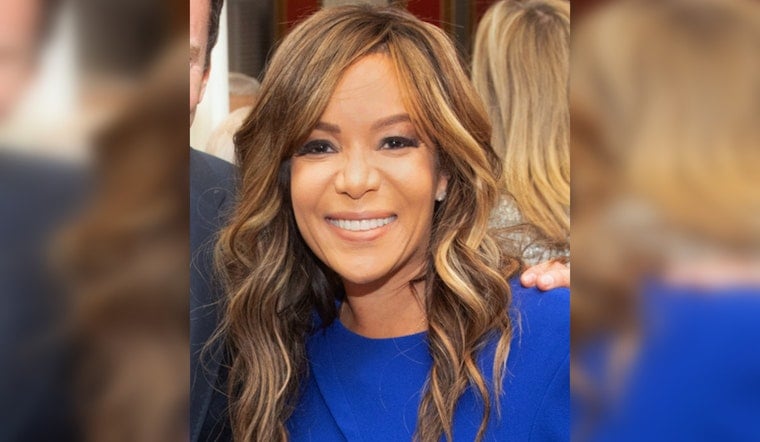
Sunny Hostin, who has co-hosted The View since 2016, has signed a licensing agreement with AI entertainment company Fountain 0 to adapt her bestselling novels into films using her digital likeness. The deal, struck in August 2026, places her among a growing group of established stars turning to generative AI as a way to bring their creative projects to screen without waiting on traditional studio financing.
According to the Los Angeles Times, Hostin said bringing her novels to life in movie and TV form with her image inserted is incredibly exciting. Fountain 0 plans to make film adaptations of her novels, giving the author a way to control how her literary work reaches audiences while sidestepping the budget constraints of a conventional studio deal.
Fountain 0 is not a newcomer to generative filmmaking. The studio produced Dreams of Violets, a 75-minute film inspired by anti-government protests in Tehran, which was accepted at the Tribeca Film Festival as the first fully AI-generated film in the festival's lineup. Fountain 0 co-founder and CEO Ash Koosha called Hostin a talent pioneer taking advantage of a new form of creative expression, per the Times' reporting.
A Festival Milestone Built on a Tiny Budget
Dreams of Violets was made with a $2,000 budget, according to the seed reporting, a striking contrast to the multimillion-dollar costs typical of independent live-action or CGI features. That cost profile is central to the pitch AI studios like Fountain 0 are making to writers and performers: proponents argue the technology allows creators to make blockbuster-scale films without the financial constraints that have long gated who gets to produce ambitious work.
Fountain 0 is also preparing to release Odysseus: The Fall later in 2026, a project that uses the likenesses of many people and stars Koosha himself as the title character. The studio's growing slate signals an attempt to move beyond festival novelty and into a broader production pipeline built entirely on generative tools.
Unions Push Back With New Contract Rules
The push toward likeness licensing has not gone uncontested. SAG-AFTRA, which represents about 160,000 actors and other performers, has demanded informed consent, fair compensation, control and transparency for digital replicas, and the union signed its latest agreement addressing these issues in June 2026.
That agreement requires studios to notify actors before using their voices to create replicas, and it mandates that performers sign off after a project is complete if their replica was used. It further requires actors to be paid the equivalent of an in-person performance when a replica appears in a project, and it obligates studios to pay residuals for digital replicas used in reruns. The deal also bars replicas from being used during a strike, and producers must notify SAG-AFTRA in advance when deploying fully AI-generated characters, proving that such a character brings significant additional value to its role.
Hoodline previously reported on related fronts in this fight, including how studios and SAG-AFTRA cut a tentative deal covering AI protections and streaming compensation, and how tech investment is reshaping the industry through Hoodline's coverage of Google's filmmaking AI bet on A24.
A-Listers Cash In While Newcomers Worry
The economics of this moment are lopsided. A-listers are gaining millions from cloning deals struck with safeguards in place, while early-career actors complain that their likenesses are being misappropriated and that opportunities are being driven away by synthetic replacements. Many creators more broadly oppose AI on the grounds that it could replace human workers and that some tools have relied on unauthorized scraping of creative works for training.
That tension exists inside Hostin's own workplace. Her View co-host Whoopi Goldberg has publicly warned against digital avatars, arguing that synthetic characters lack genuine human expressiveness and unfairly capitalize on scraped performances of real actors, a criticism that places two co-hosts on opposite sides of one of entertainment's most contentious debates.
Voice Marketplaces and a Push for Federal Rules
The licensing trend extends beyond film. ElevenLabs' voice marketplace features clones of dozens of personalities, packaging digital voices as a commercial product performers can license the way Hostin has licensed her image and likeness to Fountain 0. Hollywood's video game performers raised similar alarms over unauthorized voice cloning, a fight Hoodline covered in its report on video game performers threatening to strike.
A lobbying effort is now underway to establish a uniform standard protecting voices and likenesses as property rights nationally, rather than leaving the issue to a patchwork of state laws. Hoodline has tracked the federal side of that effort in its coverage of Senator Schatz's push to label deepfakes. Whether that standard arrives before more stars follow Hostin's lead into AI-driven filmmaking remains an open question for an industry still negotiating the terms of its own reinvention.




.jpg)