

























































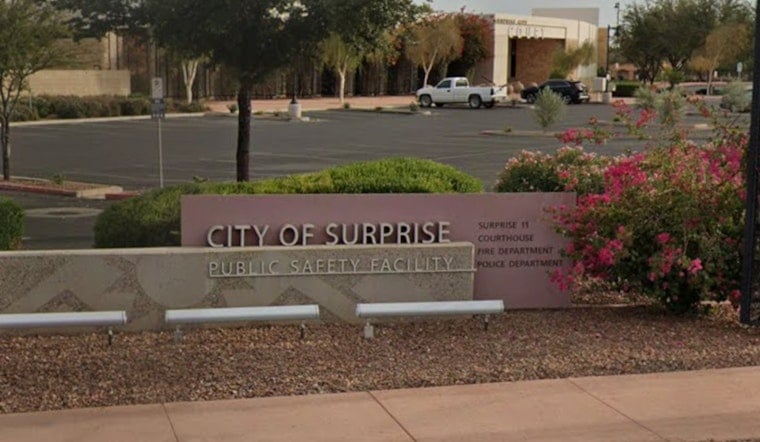
The City of Surprise has suspended all 28 of its automated license plate reader cameras after a routine audit turned up a possible policy violation by one of its own police officers. City officials say the officer has been placed on administrative leave while the investigation continues, and the cameras will stay offline until they know more.
According to 12News, the audit identified an anomaly in how the Flock system was being used, prompting Surprise officials to open a formal investigation into a potential violation of the city's ALPR policy. The officer in question was placed on leave as a result, and the city says it will release more information once the investigation wraps up. Surprise first signed on with Atlanta-based Flock Safety in October 2023, allowing the vendor to install cameras across city infrastructure that capture license plates along with a vehicle's make, model, and color, storing the data in a cloud database, as detailed by the Sun City Independent.
Surprise is far from alone. The same 12News report notes that Goodyear opened its own investigation into possible Flock misuse by an officer just a day before the Surprise suspension became public, while Pinal County, Chandler, and Tempe have all suspended or investigated their own ALPR programs in the same stretch of days. Not every department has found trouble — Gilbert, Avondale, Mesa, and Scottsdale police all told 12News they have no reports of camera misuse within their ranks.
A Wave of Suspensions Across the Valley
The Surprise case lands in the middle of what's turning into a regional reckoning over Flock technology. Chandler announced on August 7 that it was ending its contract for 40 Flock cameras after a routine audit flagged unexplained queries by an employee, a move that came just days before the city was set to consider renewing the contract, according to the Daily Independent. The city immediately suspended access for 200 police personnel while it sorted out what happened.
Pinal County Sheriff Ross Teeple went further, announcing on August 5 that his office was canceling its Flock contract for unincorporated areas entirely, citing Fourth Amendment concerns about automated pattern tracking and mass surveillance, per Pinal County officials. That cancellation affected 45 cameras operating across unincorporated Pinal County and San Tan Valley. Cochise County Sheriff Mark Dannels and Supervisor Tom Antenori took a different but related stance, telling the Daily Independent they had deliberately opted out of deploying Flock cameras at all, arguing that permanent surveillance infrastructure carries unacceptable long-term risks to civil liberties.
The Case That Started It All
The clearest example of what can go wrong surfaced in Apache Junction, where Officer Joshua McDaniels resigned this month following an internal investigation into how he used the department's Flock system. Hoodline previously reported that McDaniels used the ALPR network in April to track his wife's vehicle during a personal dispute, then reported a welfare check in Casa Grande after using the system to pinpoint her location, according to KTAR News.
Apache Junction Police Chief Michael Pooley has publicly acknowledged a major gap in the law: accessing ALPR databases for personal reasons is not currently a crime under Arizona statute, which limits what agencies can do beyond internal discipline or accepting a resignation. Pooley, per KTAR, is now urging state lawmakers to create criminal penalties specifically for ALPR data abuse. That legal vacuum helps explain why so many of the responses across the Valley this month have come in the form of contract cancellations and data lockdowns rather than criminal charges.
Local Governments Try to Fill the Legal Gap
Some municipalities aren't waiting on the state legislature. The Town of Queen Creek announced on August 12 that its town council will consider an ordinance on September 2 making improper or non-official misuse of ALPR technology a local misdemeanor, according to the Town of Queen Creek. The town is also weighing policy changes that would restrict its ALPR data sharing exclusively to Arizona law enforcement agencies.
Tempe Police Chief Ken McCoy separately announced on August 11 that Tempe would immediately stop sharing its Flock camera data with out-of-state law enforcement agencies, a step aimed at maintaining tighter control over who can access the department's footage, as reported by FOX 10 Phoenix. Tempe also launched a live transparency portal displaying system metrics and audit compliance for public viewing.
Weighing Investigative Value Against Privacy Risk
The pushback isn't happening in a vacuum. Queen Creek Police Department statistics published this month show ALPR cameras provided critical leads in more than 2,400 criminal investigations during the 2025/2026 fiscal year, a figure law enforcement advocates point to when arguing the technology helps locate stolen vehicles, missing persons, and wanted felons. That utility is part of why the current wave of suspensions is notable — agencies aren't necessarily rejecting the technology's value, but reacting to how easily it can be turned toward personal ends.
An Institute for Justice report updated this month documented at least 24 cases nationwide since 2024 in which law enforcement officers allegedly misused ALPR systems to stalk or track spouses, ex-partners, or family members, according to the Institute for Justice. The organization's research found that many of those abuses were only uncovered through victim complaints rather than internal audits, raising questions about how much misuse routine oversight actually catches. For now, Surprise officials say the city's own cameras will remain offline until the investigation into its officer's conduct is complete.





