

























































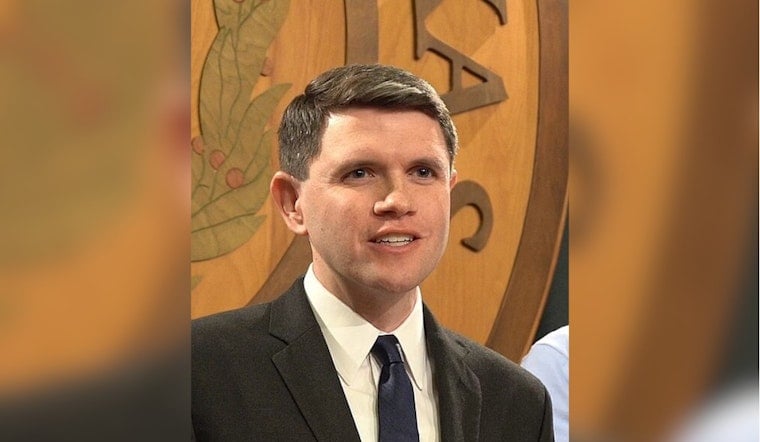
James Talarico's U.S. Senate campaign has asked a Collin County court to unseal two depositions Ken Paxton gave in 2019 and 2022, arguing Texas voters deserve to see what the attorney general said under oath before they cast ballots in November. The petition, filed in Collin County, targets sworn testimony tied to a long-running civil dispute over an energy investment fund called Unity Resources.
The filing revives a feud that has simmered for a decade. As San Antonio Current reports, Talarico's campaign lawyers argue that Paxton's testimony “raises substantial ethical questions” and that Texans should see what he said under oath before voting. Charles Loper III, who oversees Paxton's blind trust, accused Unity Resources and investors Byron Cook and Joel Hochberg of defrauding him, while Cook and Hochberg countered that Loper and Paxton conspired to sully their names — and separately accused Paxton of misleading them into investing in a McKinney technology company without disclosing a commission.
A Legal Fight Rooted in Paxton's Own Fraud Case
The Unity Resources dispute did not arise in a vacuum. According to the same account, Loper's 2016 lawsuit alleging fraud by Unity, Cook, and Hochberg came as Cook and Hochberg were also key witnesses against Paxton in his own pending criminal securities fraud prosecution — a case in which he had been indicted years earlier. Cook and Hochberg maintained the civil suit was retaliation meant to discredit them before Paxton's trial.
Paxton served as a lawyer and board member for Unity Resources and was also an investor in the fund, which is why the Texas Fifth Court of Appeals ruled he had to be joined as a responsible third party in the litigation despite not being named an original defendant, per the outlet's reporting. That ruling opened the door to the two sworn depositions — in 2019 and 2022 — that Talarico's campaign now wants made public.
Wheless Has Kept the Records Sealed for Years
Collin County District Judge Cynthia Wheless, a Republican, has kept the depositions hidden from public view for more than four years, the outlet notes. Talarico's lawyers argue that under Texas law, the public is entitled to access discovery concerning matters with a probable adverse effect on public office administration or government operation — the same presumption of openness the State Bar of Texas says requires anyone seeking secrecy to show a specific, serious interest that clearly outweighs transparency.
Talarico's campaign lawyers say they have not seen the deposition transcripts themselves, but argue the issue carries immense public importance because Paxton is running in a competitive U.S. Senate race, and that reporting on the depositions directly implicates his fitness for office. Talarico is the Democratic nominee facing Paxton, the Republican attorney general, in the November 3 general election.
Wall Street Journal Report Raises Privilege Questions
Central to the campaign's push is a Wall Street Journal report that found Paxton may have violated attorney-client privilege during his 2019 deposition, according to the outlet's account of that reporting. Paxton reportedly acknowledged providing internal records from Unity — his former legal client — to attorney Mitch Little, who represented Loper in the suit against Unity.
Little, now a Republican state lawmaker from Lewisville who also defended Paxton during his 2023 impeachment trial, disputed any wrongdoing, saying there was no conflict of interest and that the records Paxton shared were not privileged. Nick Maddux, responding on Paxton's behalf, called the Wall Street Journal's reporting “blatant lies” and said it violated a court order.
Political Stakes Frame the Timing
The push to unseal the depositions lands as Talarico holds a narrow lead in the race. According to Hoodline, an August Texas A&M/ReconMR poll showed him ahead of Paxton, 47% to 43%, with voters split on questions of candidate integrity. Paxton won the Republican nomination in May by defeating four-term incumbent Senator John Cornyn in a primary runoff, running largely on his alignment with Donald Trump.
Talarico's team has made Paxton's legal history a central campaign theme, previously hammering him over his fraud-filled past at a Plano event and rallying supporters in San Antonio as the race tightened after the primary. Talarico attended a town hall at the International Center for Trade in Eagle Pass on July 13, part of a broader effort to keep Paxton's legal troubles in front of voters.
How Paxton's Fraud Case Was Resolved
Paxton's original securities fraud indictment — the same case that made Cook and Hochberg key witnesses — was resolved through a 2024 deal in which special prosecutors agreed to drop the felony charges in exchange for restitution and ethics training, a resolution detailed by The Texas Tribune. Paxton paid $271,000 in restitution to Cook and the estate of Hochberg and completed 100 hours of community service along with 15 hours of legal ethics training, with the case formally dismissed in June 2025. He made no admission of guilt under the pretrial intervention agreement.
That case was separate from Paxton's 2023 impeachment, in which the Texas House voted to impeach him on 20 articles alleging bribery and abuse of office before the Republican-controlled state Senate acquitted him on all charges. The House later voted in April 2025 to grant Paxton $64,000 in back pay for his suspension period, a move Hoodline previously covered alongside scrutiny of Paxton's Frisco cell tower dealings.
Whether Wheless's court will grant Talarico's request before Election Day remains an open question. For now, the two depositions Paxton gave under oath in 2019 and 2022 remain among the rare instances of the attorney general answering questions about his conduct on the record — and whether Texans get to read them before they vote could depend on how quickly Collin County acts.





