

























































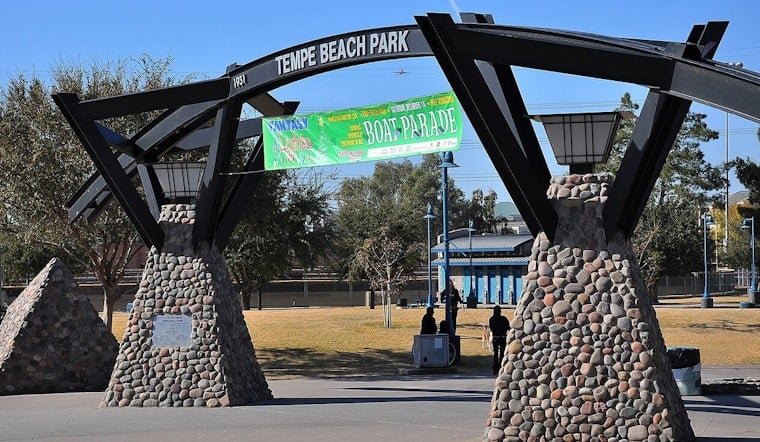
Families across the Valley will gather at Tempe Beach Park on Sunday, October 25, for the sixth annual YES Day Walk for Autism, a free community celebration running from 9 a.m. to noon with the walk itself kicking off at 9:30 a.m. The event brings together families, educators, businesses and community partners for what organizers describe as a morning of connection, encouragement and hope, complete with live entertainment, a carnival with crafts and face painting, and a resource fair featuring more than 60 autism and community organizations.
The walk is hosted by the Southwest Autism Research & Resource Center, better known as SARRC, with Sprouts Farmers Market serving as the presenting partner, according to ABC15. Registration is free at yesdayforautism.org, and attendees can expect a Sprouts pumpkin patch offering a free pumpkin and no-carve decorating supplies alongside food available for purchase from local food trucks. SARRC President and CEO Dr. Daniel Openden said the organization is proud to celebrate its sixth year and looks forward to welcoming everyone, adding that the walk brings the community together to show what is possible through acceptance, opportunity and support.
A Calming Space Built Into the Celebration
Organizers have designed the event with sensory needs in mind, including a designated quiet zone offering quieter activities and a calming space for attendees who need a break from the crowds. The gathering is meant to celebrate the autism community broadly, honoring both autistic individuals and the people committed to helping them thrive, per the station's report. Proceeds from the fundraiser help expand SARRC's research, programs and services for autistic individuals and their families.
From a Coffee Shop Idea to a Statewide Fixture
SARRC's roots trace back to 1997, when Phoenix mothers Denise Resnik and Cindy Schneider joined developmental pediatrician Dr. Raun Melmed to found the organization after informal planning sessions at a local coffee shop, according to Arizona PBS. The trio started SARRC to fill a gap they saw for families who had few reliable resources after receiving an autism diagnosis. Nearly three decades later, SARRC operates as an entrepreneurial nonprofit that draws less than 3% of its annual operating revenue from state and federal funding, relying instead on facilities like its 18,000-square-foot Campus for Exceptional Children and on private philanthropy to sustain its work.
The YES Day model itself is a relatively recent creation. In 2021, SARRC stepped away from its long-running walk partnership with Autism Speaks to launch its own independent event, and that inaugural YES Day Walk raised nearly $400,000 that stayed entirely within Arizona, according to a SARRC video announcement. Hoodline previously covered the fifth annual walk held at the same Tempe Beach Park location last October.
State Policy Momentum Backs Local Fundraising
The Tempe walk lands amid a run of state-level developments aimed at supporting autism resources across Arizona. In April 2025, the Arizona Department of Transportation released the state's first autism specialty license plate, called Driving Support for Autism, which sends $17 of every $25 fee directly to SARRC and First Place AZ, as reported by KTAR News. The plate was authorized under Senate Bill 1561, signed by Governor Katie Hobbs in 2024, and features artwork created by autistic advocate Joe Bradley.
Separately, Hobbs signed Senate Bill 1590 into law in May 2025, eliminating former annual caps of $50,000 and $25,000 on insurance-covered behavioral therapy for autistic youth under state-regulated plans, according to BillTrack50. The changes come as CDC surveillance data released in April 2025 found that 1 in 31 U.S. 8-year-olds, or 3.2%, were identified with autism spectrum disorder in 2022, with Arizona's rate reaching 3.13%, per the autism center's data. Public health researchers attribute the rising identification rates to enhanced screening tools and greater community awareness.
Why Phoenix Leans on Community Fundraising
Phoenix has carried a reputation as a hub for autism-friendly infrastructure since 2016, when PBS NewsHour designated it the most autism-friendly city in the world in a two-part broadcast series, citing the supportive systems SARRC and First Place AZ built across the Valley, according to the City of Phoenix. Phoenix Mayor Kate Gallego reinforced that legacy in October 2024 by honoring SARRC co-founder Denise Resnik with the Global Citizen Award, recognizing her advocacy work and her founding of First Place AZ in 2012 to develop supportive housing for autistic adults, as Hoodline reported in its coverage of the award ceremony.
That civic backing matters because SARRC's funding model leaves it more insulated than many providers from turbulence elsewhere in the autism services market. Between late 2025 and early 2026, Arizona's Medicaid applied behavior analysis market went through significant upheaval tied to managed care contract terminations and rate cuts targeting large providers, according to Acuity News. SARRC's diversified nonprofit funding helped shield its patient services from that regional disruption, the outlet reported, even as Dr. Openden, who has led SARRC since 2013, guides a strategic plan to expand the organization's clinical footprint statewide by 2030, including inclusive preschools, adult employment bootcamps and new clinical services reaching into Southern Arizona.



