

























































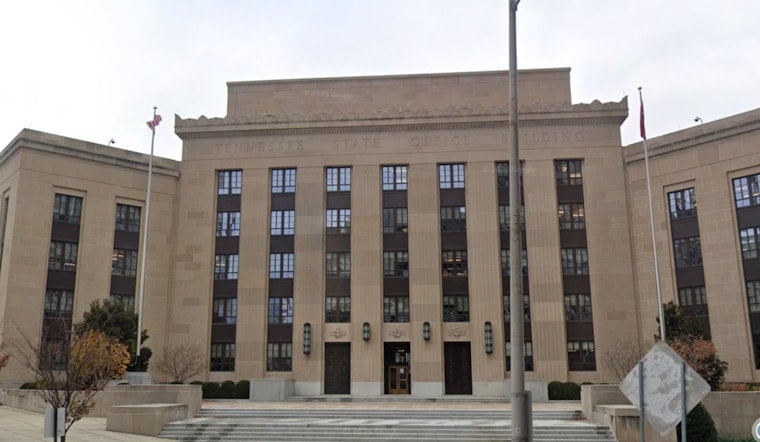
One year after Tennessee replaced its independent Human Rights Commission with a Civil Rights Enforcement Division inside the attorney general’s office, the new unit is closing only a sliver of the cases its predecessor handled — and leaving a messy trail of unfinished business. The change was sold as a way to give civil-rights enforcement more legal muscle. So far, the numbers look more like a dramatically narrower funnel.
According to Nashville Banner, CRED opened 122 cases and closed 22 after taking over on July 1, 2025. THRC, by comparison, opened between 279 and 542 cases and closed between 278 and 424 annually from 2018 through 2024, making CRED’s first-year closures less than 8% of the commission’s lowest recent annual total.
The handoff was required by HB 910, signed in May 2025, which terminated THRC effective July 1, 2025, and moved discrimination duties involving employment, housing, public accommodations and education to the attorney general. The law also created a civil rights enforcement division inside the attorney general’s office, according to the Tennessee General Assembly. Hoodline previously covered the planned closure and the scramble for complainants to move pending matters into the new system.
A Smaller, Attorney-Led Civil Rights Operation
That structure is a clear break from the old model. The attorney general’s current description says CRED enforces Tennessee’s anti-discrimination laws in employment, education, housing and public accommodations, with the division operating inside the office rather than as an independent commission, according to the Tennessee Attorney General’s Office.
The former commission had a statewide footprint. Its 2024 sunset materials described a 33-member staff, a Nashville headquarters and regional offices in Knoxville, Chattanooga and Memphis, along with work-sharing agreements with the Equal Employment Opportunity Commission and the U.S. Department of Housing and Urban Development that allowed a single complaint to be investigated under both federal and state laws, according to the Tennessee General Assembly’s review materials.
CRED is not claiming that matching THRC’s old volume is the right benchmark. Staff told Nashville Banner that the new division is intentionally opening fewer cases, using an attorney-centric process and screening for matters it believes are viable; Attorney General Jonathan Skrmetti said he was proud of the division’s inaugural-year work. In its first 22 closed cases, the division reported more than $120,000 in settlements, alongside roughly $6,000 in fines payable to the state. At the same time, the transition left a bruising paper trail: an estimated hundreds of open discrimination cases were lost, about 100 remain open, and former THRC staffer Lynn Cothren said he lacked faith in the attorney general’s commitment.
The Next Test Comes At A Sunset Hearing
A sunset hearing scheduled for Aug. 19 will give Tennessee lawmakers their first formal chance to examine whether the new structure is delivering what supporters promised. The state’s Government Operations Committee oversees reviews of state agencies and major structural changes.
The basic tradeoff is now hard to miss. CRED says fewer, more carefully screened cases can produce stronger legal results, while critics see a system that has become less accessible and less capable of absorbing the volume of complaints Tennesseans bring forward.
Whatever lawmakers decide, Tennessee’s civil-rights enforcement system is no longer the same agency with a new sign on the door. It is a smaller, lawyer-led operation — and the Aug. 19 review will help determine whether that looks like efficiency or lost access to justice.





