

























































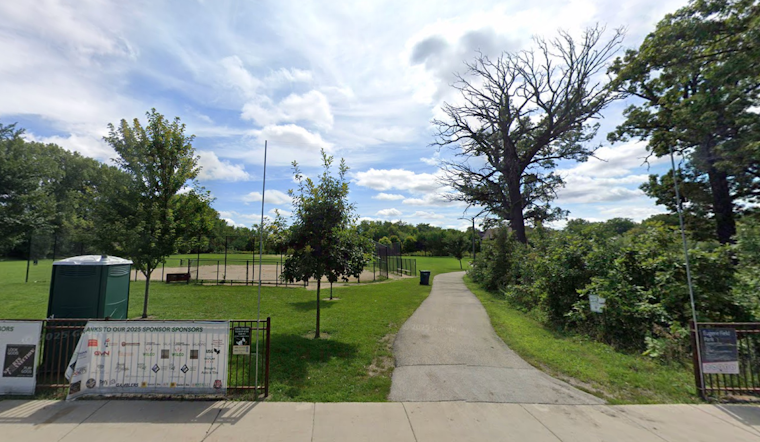
A homeless encampment at Chicago’s Eugene Field Park will remain in place for now, even as nearby residents raise alarms about garbage, sanitation and the condition of the heavily used Northwest Side park. The standoff highlights the Park District’s new effort to balance public-space rules with its housing-first approach to people living outdoors.
At an April meeting, Chicago Park District General Superintendent Carlos Ramirez-Rosa said Eugene Field had not been identified as a priority for enforcement, and that position had not changed as of this week, according to Nadig Newspapers. The park is near Pulaski Road and Foster Avenue and includes encampment residents on both sides of Foster, with residents estimating that roughly 30 people live there.
Why The Tents Can Remain For Now
The Park District’s January 2026 policy technically prohibits overnight stays and unpermitted tents, but allows officials to use discretion while outreach workers try to connect encampment residents with services and housing. The policy says enforcement should take priority when there are public-safety threats, persistent fires, drug activity, dangerous structures, propane tanks, blocked programming or tents within 100 feet of homes or businesses, according to the Chicago Park District.
That list is why Eugene Field’s situation has not automatically produced a closure order. A February 10 cleaning at the park removed one non-allowable structure and three collapsed tents, but the encampment itself stayed open, CBS Chicago reported.
Cleanups Remove Debris Without Clearing Residents
Under the Park District’s rules, coordinated cleanings are different from encampment closures. Crews can remove general debris and abandoned or collapsed tents, while the Department of Family and Support Services is supposed to help identify personal property that should be preserved, including identification cards, medication, phones and legal documents.
Those cleanups are also where the local frustration becomes expensive. The Restore Gompers Park Coalition told Nadig that Eugene Field receives two cleanups a month and that an average cleanup costs about $8,410 in labor and equipment, or roughly $235,000 annually before restoration expenses. The coalition also pointed to about $799,000 in inflation-adjusted public investment in park improvements completed in 2018.
Residents told Nadig that bottles of urine have become common around the area and that used toilet paper has been found near the lagoon at nearby Gompers Park. The Park District has provided electrical access at Eugene Field, and residents said a portable washroom is available, but those measures have not resolved complaints about debris or the broader lack of shelter and housing options on the Northwest Side.
Chicago’s Broader Encampment Policy Fight
Eugene Field is one of roughly 60 encampments in Chicago parks, according to Ramirez-Rosa, and the city’s approach is being shaped by a larger fight over whether governments can penalize people for basic survival activities. House Bill 1429, which would restrict fines or criminal penalties for life-sustaining activities by people experiencing unsheltered homelessness, was re-referred to the Illinois House Rules Committee on April 17, according to the Illinois General Assembly.
The contrast with Legion Park is telling: that encampment was closed earlier this year after multiple fires, a situation that officials said created a direct safety threat, as WTTW News reported. At Eugene Field, Chicago is instead leaving the tents in place while relying on cleanups, outreach and a housing system that officials acknowledge does not currently have enough resources to match everyone with a home.



