

























































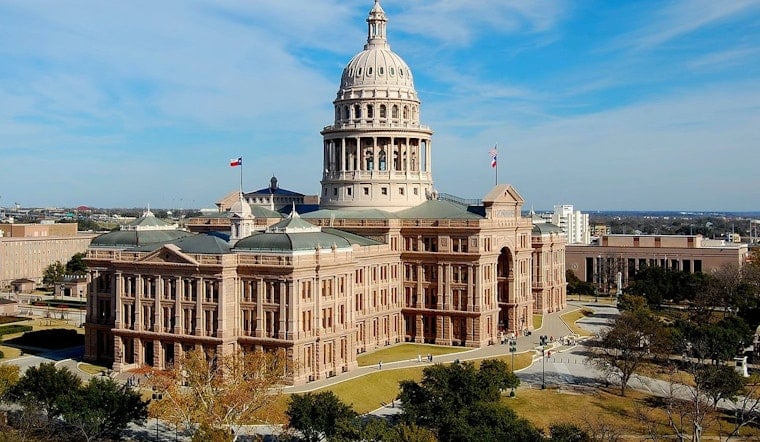
Texas has landed near the very bottom of a new national ranking on women's equality, trailing only Oklahoma and Utah among all 50 states. The state pulled a women's equality score of just 41.89 on a 1-to-100 scale, driven largely by poor marks in health, education, and political representation.
The ranking comes from a new WalletHub study, as reported by the San Antonio Current, which found Texas ranked 49th in education and health, with a higher-than-average earnings gap between men and women, a larger work-hours gap, and a larger gap in executive-level positions. WalletHub used 17 factors to rank each state, including workplace environment, education and health, and political empowerment, according to the outlet's reporting.
Texas also has a greater political representation gap between men and women than most states, per the same account. That imbalance shows up in official numbers, too: women hold just 61 of the 181 seats in the Texas Legislature, or 33.7%, as of 2025, according to the Center for American Women and Politics at Rutgers University — despite women making up more than 51% of the state's population.
Why Health Outcomes Keep Dragging Texas Down
Chip Lupo, a WalletHub analyst, said women's equality requires more than giving men and women the same fundamental rights — states need to ensure women receive equal treatment in financial opportunities, education, and politics, he said, according to the San Antonio Current's report.
Kristal Gerdes, a professor in the University of Wisconsin-Stout's department of hospitality, told the outlet that health outcomes in the study extend beyond a woman's right to choose, noting that Texas has one of the nation's most restrictive abortion bans. Gerdes said caregiving responsibilities, child care burdens, and a lack of workplace flexibility can all cause women to postpone routine healthcare.
That warning tracks with hard numbers on the ground. Texas has one of the highest rates of residents lacking health insurance, and according to KFF, 20% of nonelderly Texas women ages 19 to 64 lacked health coverage in 2024 — double the national average of 10%, and far above Massachusetts's low of 3%. Texas remains one of nine states that has not expanded Medicaid under the Affordable Care Act, which has significantly limited public coverage options for low-income women.
Childcare Costs and Wages Compound the Squeeze
Gerdes said closing the health gap requires expanding preventive and maternal healthcare, supporting affordable childcare, and strengthening paid family and medical leave, so that workplaces allow employees to attend to health and family responsibilities without jeopardizing their careers or financial security.
The cost of that childcare is steep in Texas. Full-time infant care at a licensed center in the state averages $12,684 a year, or $1,057 a month, in 2026, making Texas the 15th most expensive state for daycare relative to income, according to figures from the Daycare Cost Calculator. In the Dallas-Fort Worth area, infant center care averages even higher, at $1,180 a month.
Meanwhile, a typical Texas family of three needs $74,614 a year — or $17.66 an hour — just to cover basic living needs without public or private assistance, according to the Texas Workforce Commission's 2026 Self-Sufficient Wage report, up 2.8% from the year before largely due to rising healthcare costs. That threshold swings wildly depending on where in Texas a family lives, from $58,153 in rural Calhoun County to $90,635 in Collin County.
A Persistent Pattern, Not a One-Time Snapshot
This isn't a new problem for Texas. In WalletHub's August 2024 Women's Equality report, the state ranked 49th out of 50 with a score of 39.75, performing best in workplace environment at 23rd but lagging in political empowerment at 40th and education and health at 49th, according to CultureMap Dallas. That report also flagged regional disparities, including a gender earnings gap in Frisco that topped $52,000 annually.
Utah has held WalletHub's title as the single worst state for women's equality for 11 consecutive years through 2025, with Texas consistently clustering near the bottom alongside Oklahoma, Idaho, Arkansas, and Louisiana, per News From The States. Researchers cited in that reporting pointed to structural factors including conservative cultural norms, a lack of state-mandated paid family leave, and lower public healthcare investment as drivers of the persistent rankings.
Wage gaps play into the picture nationally, too. U.S. women earn 75 to 76 cents for every dollar paid to men, a disparity that costs the country an estimated $1.7 trillion to $1.9 trillion annually, according to analysis from the National Partnership for Women & Families reported by FOX 4 Dallas. That gap is widest for women of color and widened further in 2023 due to occupational segregation, unpaid caregiving demands, and inflation.
In Texas specifically, nearly two-thirds of minimum-wage workers are women, while the state's minimum wage has remained frozen at the federal floor of $7.25 an hour since 2009, according to Progress Texas. Full-time minimum-wage work generates just $15,080 a year — below the poverty line for a mother with a child — and more than half of Texas's low-wage female workers are Latinas, the group notes.
The state's struggles also echo on the international stage. The World Economic Forum's 2025 Global Gender Gap Report ranked the United States 42nd out of 148 countries in gender parity, according to Quartz, showing the U.S. still lags behind many advanced economies in female political representation and parental leave policies even as its global standing improved slightly. Hoodline previously reported on a new Arlington clinic for uninsured patients, one local effort aimed at narrowing the healthcare gap researchers say continues to hold Texas women back.





