

























































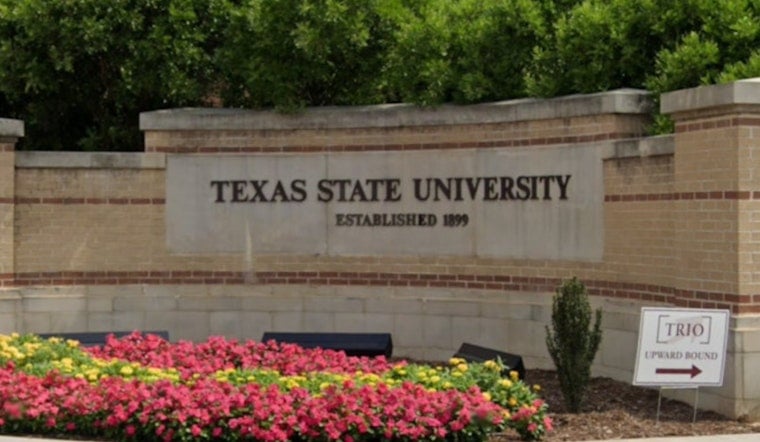
Texas State University has until Thursday to hand over detailed hiring records after U.S. Rep. Chip Roy demanded the San Marcos school explain why it plans to renew an H-1B visa for a public relations specialist rather than hire an American graduate. The employee, who has worked full time at the university since August 2023 and is himself a Texas State graduate, holds a visa the university originally filed in 2023 and now intends to renew before the current status expires in January 2027.
Roy's August 20 letter, addressed to Texas State President Kelly Damphousse, asked the university to disclose its current H-1B workforce, including occupations, work locations, education, specialized skills, salary histories and applicable prevailing wages, according to a report from Dallas Express. The congressman also requested annual H-1B employment figures dating back to fiscal year 2020, recruitment documentation, and information about how many international students on F-1 or J-1 status have transitioned through optional practical training into university jobs. In an August 24 press release, Roy pointed out that Texas State awards roughly 140 Bachelor of Science degrees in public relations every year, questioning why a domestic graduate wasn't chosen over a foreign worker for the role.
What Texas State Has and Hasn't Said
Texas State's August 20 statement addressed the filing-classification question, telling Roy's office that the matter involves an extension and amendment for a current employee rather than a new hire. But the statement did not answer why the public relations specialist position met the university's difficult-to-fill standard, what recruitment occurred, or provide recruitment records, applicant counts, a prevailing wage or total H-1B sponsorship figures. As of Monday, the university had not posted a separate public response to Roy's letter.
The university's own staff guidelines, published by Texas State Global, limit H-1B sponsorship to full-time, benefits-eligible jobs classified as difficult to fill because of their specialized nature, and require departments to consult International Employment before extending a job offer. Texas State also offers a Bachelor of Science in public relations, and its master's program in strategic communication lists public relations specialist as a potential career path — a detail that has fed skepticism about whether the role truly required a foreign hire.
The State's H-1B Freeze and Its Limits
The dispute plays out against Governor Greg Abbott's directive, issued January 27, 2026, freezing new H-1B petitions at Texas public universities and agencies. The order bars institutions from initiating or filing new H-1B petitions without written Texas Workforce Commission permission through May 31, 2027, and required universities to report their H-1B workforces by March 27, 2026. Under procedures the commission set up this year, state entities seeking an exception must complete a formal online request and receive written authorization before submitting Form I-129 to U.S. Citizenship and Immigration Services.
Texas State told Roy's office in April that its planned H-1B extensions remained permissible under Texas Workforce Commission guidance, which states that renewals for existing employees are not considered new petitions — and that certain in-country changes from F-1 or J-1 status to H-1B status are excluded from the new-petition approval process altogether. Available public records reviewed by Dallas Express did not establish that Texas State violated Abbott's directive, nor did they show that the university rejected or displaced a U.S. worker for the position.
Why Universities Rarely Have to Prove No American Was Available
Federal H-1B law generally does not require an employer to prove that no qualified American worker was available for a role, and employers typically don't have to conduct labor market recruitment unless they are H-1B-dependent or have been found to be willful violators. Higher-education institutions' H-1B petitions are also generally exempt from the federal government's annual numerical cap, a carve-out under INA § 214(g)(5)(A) that allows universities to file petitions year-round rather than compete in the lottery that governs most private-sector cap-subject employers, according to Fwd.us.
Employers do have to pay at least the higher of the actual wage or the prevailing wage, based on a Labor Condition Application the Department of Labor certifies. That certification is an attestation and notice rather than a USCIS petition approval, though employers can use a certified LCA to support the Form I-129 petition filed with immigration officials. A March 2025 Pew Research Center analysis found USCIS approved nearly 400,000 H-1B applications in fiscal year 2024, with most representing renewals and extensions rather than brand-new hires — a pattern that mirrors what Texas State says is happening with its own renewal.
Part of a Broader Statewide Push
Roy's inquiry lands amid a wider campaign by Texas officials to tighten restrictions on university H-1B sponsorship. Abbott called on the state legislature on August 19 to pass legislation permanently banning public universities, higher education institutions and public school districts from employing H-1B visa holders statewide, according to FOX 4 Dallas-Fort Worth. That proposal would convert his existing freeze into a permanent statutory prohibition rather than an executive order subject to renewal.
Other Texas universities have faced similar scrutiny. The University of Texas at Austin disclosed in an April compliance report to the Texas Workforce Commission that it employs 280 H-1B visa holders, while noting that tracking detailed applicant demographics isn't administratively feasible because state and federal hiring rules prohibit asking candidates about citizenship or immigration status during recruitment, per The Daily Texan. Florida took an even harder line in March, when its Board of Governors voted 17-2 to bar all 12 public universities from hiring new H-1B employees through January 2027.
Texas has also pursued H-1B enforcement outside the university system. Attorney General Ken Paxton opened a civil investigation in January into three North Texas companies suspected of operating as fraudulent “ghost” firms filing sham H-1B petitions, an inquiry Hoodline previously covered. Separately, federal prosecutors in March unsealed an indictment against two North Texas residents and two corporate entities accused of running a seven-year “visa mill” that used fake job postings and sham payrolls to fraudulently obtain H-1B visas and green cards.
Roy has said the Texas State matter raises broader questions about prioritizing foreign nationals over American graduates and workers, and has argued that the H-1B program does not serve the interests of Texas or the nation. Whether Texas State's response by Thursday's deadline will satisfy those concerns, or simply sharpen the standoff over what counts as a legitimate renewal under the governor's freeze, remains to be seen.



