

























































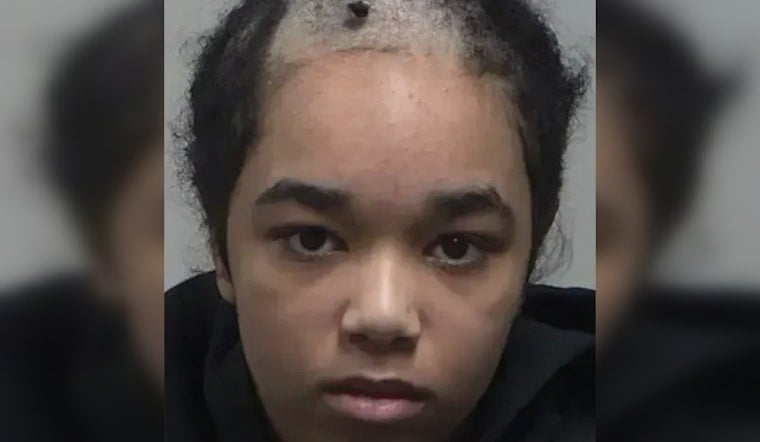
A 16-year-old Tifton girl has pleaded guilty to felony murder and aggravated assault for shooting her mother to death in November 2024, admitting in court that she had originally plotted a mass shooting at her former middle school before deciding, at the last minute, to kill her mother instead. Lilyana Rose Wagner was 14 years old at the time of the killing.
Tifton Judicial Circuit District Attorney Patrick Warren announced the plea on Monday, August 24, in Tift County Superior Court, closing out a case that first came to light after a car crash roughly 90 miles north of Tifton, according to the KATU report on the sentencing. Warren wrote that “Rachel is dead and Lilyana will spend the rest of her natural life in prison,” a statement that underscores how the case will follow the teen for decades. Investigators said Wagner had built an extensive online and social media presence tied to her fascination with mass-casualty attacks before the shooting.
A Crash Led Police Back to a Body in a Bed
The case first surfaced on November 19, 2024, when 14-year-old Wagner crashed her mother's vehicle in Crawford County, Georgia, and told responding officers she lived alone with her mother, according to the Tifton Gazette. That crash prompted Crawford County authorities to alert Tifton Police, who went to check on Rachel Suzanne Wagner, 51, after she had not shown up for work and was not answering her phone. Officers conducting the welfare check found her dead in her bed, having died from a gunshot wound to the back of her head, per the district attorney's office.
Rachel Wagner was a New Zealand native who had lived in the United States for nearly 30 years and resided with her daughter in Tifton, according to Law & Crime. At the time of the killing, Lilyana was being homeschooled rather than attending her former middle school, the outlet reported, even though that school was the original target laid out in her planning.
A Confession That Named Six Mass Shooters
In a handwritten confession, Wagner wrote that the killing of her mother was a last-minute choice, and prosecutors said she had become obsessed with school shooters and mass-casualty events. Wagner explicitly listed six previous mass shooters as inspiration for her planning, per a report from 930 WFMD. Prosecutors said anonymous people online had repeatedly encouraged her to plan and commit the killing, and that Wagner continued communicating with those anonymous users even after the shooting, while she was being treated at a local hospital following the crash.
Warren noted that the messaging applications Wagner used lacked keyword and content analysis software, meaning her online interactions encouraging violence were never automatically flagged to law enforcement before the crime, the Gazette's account of the plea proceedings states. Forensic analysis of her phone data, conducted over several months by a joint investigation from the Georgia Bureau of Investigation and Tifton Police Department Investigators Sydney Greene and Chris Knight, ultimately provided the evidence tying her online communications to the killing.
A Gun Kept in a Bedroom, and 30 Years Before Parole
Rachel Wagner had bought the firearm used in the shooting about a month before her death and had allowed her daughter to keep the pistol and ammunition in her own bedroom, according to case details cited by KATU. That access meant the teenager, who had already built an extensive online reputation around interest in mass-casualty planning, had a loaded weapon within reach the night she abandoned her original target and turned on her mother instead.
Warren said Wagner must serve at least 30 years before she becomes eligible for parole. Under Georgia law, anyone convicted of a serious violent felony such as murder committed on or after July 1, 2006 who receives a life sentence must serve that 30-year mandatory minimum before any parole review, according to the Georgia State Board of Pardons and Paroles. As of 2024, Georgia ranked third nationally in the number of people serving life with parole or virtual life sentences for crimes committed as juveniles, with more than 900 youth offenders in state custody, per the Sentencing Project. That figure has kept criminal justice reform groups scrutinizing how the state sentences young offenders convicted of violent crimes, even as Wagner's own case moves toward the decades-long parole clock now set to define much of her adult life.





