

























































A rural Massachusetts town of fewer than 2,000 people has appealed a state agency's approval of a massive battery storage facility all the way to a single justice of the Supreme Judicial Court, arguing the project threatens groundwater and wetlands connected to Boston's drinking water supply. Oakham officials say the Energy Facilities Siting Board's decision to override the town's local ban on standalone battery storage ignored serious environmental risks tied to the site's history as a decades-old auto salvage yard.
The Energy Facilities Siting Board formally approved Moraga Storage LLC's proposal in Docket EFSB 25-07 on June 26, granting the company exemptions from Oakham's zoning bylaws so it can build at 358 Coldbrook Road, according to state filings. As reported by The Boston Globe, the board attached conditions reflecting input from Oakham but ultimately found the proposal would deliver public benefits, clearing the way for construction on a 42-acre parcel roughly 15 miles west of Worcester.
What's Actually Being Built
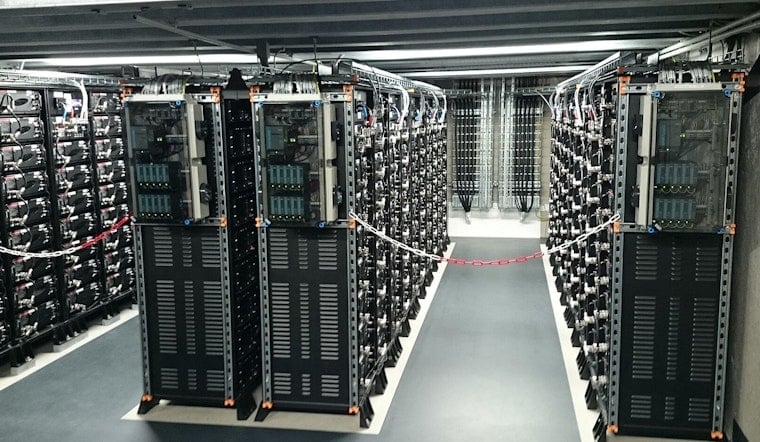
The project calls for a 180-megawatt battery energy storage system using Tesla-manufactured batteries spread across roughly six acres of the larger parcel, per the Globe's reporting, along with a new substation and switching station. Oakham has no municipal water system, and residents rely entirely on private wells, a detail that has fueled much of the local anxiety about the project. Moraga Storage has asserted in company filings, according to the same account, that the project would not impact water supply or resources.
Oakham voted to prohibit standalone battery energy storage within town limits, but the company pursued its project anyway under Massachusetts General Laws Chapter 40A, Section 3, which allows public service corporations to petition the siting board for zoning exemptions when a facility is deemed reasonably necessary for public convenience or welfare, according to state law. Regulatory filings show Moraga Storage LLC is a special-purpose entity managed by SR1 Rhynland HoldCo 1 LLC, jointly owned by New York-based developer Rhynland Energy and Segue Renewables LLC.
A Junkyard's Buried History
The property sat as a junkyard for half a century before Moraga proposed building there, and that history is central to Oakham's objection. Shawn Seeley told the Globe that moving contaminated soil during construction could cause contamination to travel, and separately said the property has vernal pools and wetlands connected to the Ware River watershed. Oakham residents have warned that construction on the former salvage yard could contaminate local groundwater.
The Ware River watershed connects to the Quabbin Reservoir, and the Massachusetts Water Resources Authority notes the watershed links to the reservoir system through the Quabbin Aqueduct at Shaft 8 in Barre, where seasonal diversions of up to 85 million gallons per day occur between October 15 and June 15. An MWRA spokesperson said the Moraga project site is located outside the Ware River watershed portion of the parcel and told the Globe that runoff from the project would not flow into the watershed or affect water quality. The Quabbin system provides drinking water to 2.5 million Massachusetts customers, while the broader MWRA serves 3.1 million people with water and sewer services.
Fire Risk and a Volunteer Department
Oakham residents cite noise, fire risk, and potential water contamination among their central concerns, worrying that a battery facility fire could disrupt wildlife and affect the watershed. State authorities have said battery storage facility fires are rare when proper safety protections are used, while acknowledging that overcharged, short-circuited, or damaged batteries can cause thermal runaway fires. Notably, thermal runaway fires can reignite days or weeks after the initial event, a risk that looms large for a town whose fire response is limited.
Stephen Wentzell said the project will change the nature of the town, while Scott Corey called building the facility on an insufficiently vetted junkyard site criminal, according to the Globe's reporting. Matthew Broderick said the response from state officials to Oakham's concerns was worse than silence. Barbara Piucci said the town and its residents will continue fighting the project regardless of the outcome so far.
A Small Town's Big Legal Bet
Oakham typically budgets just $15,000 annually for legal services, but the town has allocated $250,000 to fight the battery park, a striking figure for a municipality with only three full-time employees and an annual operating budget of about $5.2 million. By comparison, Boston operates on an annual budget of $4.9 billion. The town has now appealed the siting board's decision to a single justice of the Supreme Judicial Court, and the project still needs additional permits, including an environmental impact certificate, before construction can proceed.
The fight fits into a broader pattern playing out across Massachusetts as the state pushes an aggressive buildout of battery storage. State law now requires 5,000 megawatts of energy storage capacity by July 31, 2030, with 3,500 MW earmarked for mid-duration systems, and Governor Maura Healey signed an executive order in March capping permitting timelines at 15 months for large clean energy projects. Similar battles have played out in Tewksbury's fight against a 125MW plant and in the dispute between Revere and Saugus over a proposed battery park, underscoring a widening statewide clash between rural and suburban towns and energy developers. A July Supreme Judicial Court ruling in Sunpin Solar v. Zoning Board of Appeals of Petersham found that while state law limits local bans on clean energy facilities, municipal denials can stand if a town proves specific, localized threats to public health, safety, or welfare, a standard Oakham's appeal will likely have to meet.
State authorities maintain that battery projects meet electricity demand cleanly and efficiently while reducing greenhouse gas emissions, and that they lower costs and improve energy reliability. Moraga Storage has argued the project could help move Massachusetts from fossil-fuel power toward an electric grid that accommodates more renewable energy, framing the facility as part of the state's push toward its 2050 net-zero emissions target. Lithium-ion battery systems like the one proposed store energy for later electricity discharge, a technology state regulators are counting on as they roll out solicitations to meet the 2030 storage mandate.





