

























































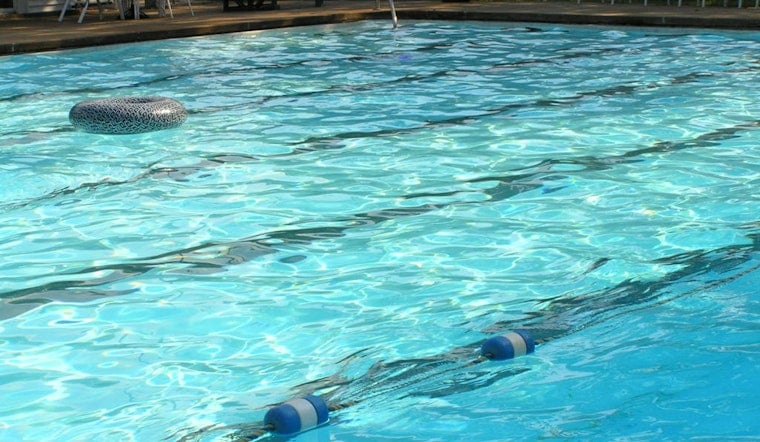
A 3-year-old boy was taken to a hospital following a water rescue at a hotel pool near Paradise Valley on Saturday, authorities said. First responders found the toddler out of the water, awake and crying, and paramedics transported him in stable condition for further evaluation as a precaution.
Phoenix Fire Department crews responded to reports of a possible drowning near 64th Street and Camelback Road, according to KTAR News. It remains unclear how long the child was underwater before he was pulled out. The intersection sits at the base of Camelback Mountain along the border of Phoenix and Paradise Valley, a corridor lined with upscale resorts that draw heavy tourism and family travel year-round, according to the City of Phoenix.
A Pattern of Close Calls Across the Valley
The scare comes roughly six weeks after a separate incident in neighboring Scottsdale, where another 3-year-old was pulled from a commercial pool and hospitalized in critical condition, a case Hoodline covered in its report, Scottsdale toddler pool rescue turns critical. Emergency crews across Maricopa County routinely field pediatric pool calls during the peak heat months, and this year has been no exception. Between January 1 and July 30, first responders in Maricopa and Pinal counties logged 104 water-related incidents, resulting in 39 deaths, per Hoodline's earlier reporting on regional drowning statistics.
Toddler drownings specifically have trended in a more hopeful direction. According to 12News, drowning deaths among children under five in Maricopa and Pinal counties fell from 18 fatalities in 2024 to 8 in 2025, even as officials tracked the numbers through the Children's Safety Zone program. Still, drowning remains the leading cause of unintentional injury death for children ages 1 to 4 both nationally and in Arizona, where pediatric drowning rates historically run nearly double the national average, according to the Arizona Department of Health Services.
Why August Draws Extra Scrutiny
Saturday's rescue landed squarely within Arizona's Drowning Impact Awareness Month, a statewide campaign observed every August to flag the seasonal surge in pediatric water emergencies tied to back-to-school distractions and lingering summer heat. The initiative, established in 2004 by Phoenix Children's Hospital, specifically targets what health officials consider the highest-risk late-summer stretch, per the health department's release.
A long-running local effort echoes that same warning. The “2 Seconds Is Too Long” campaign, launched 23 years ago by homebuilder Fulton Homes in partnership with KTAR News, reminds caregivers that drowning incidents occur silently in seconds — a message baked into KTAR's own reporting on the incident. The campaign also sponsors free swim lessons through the Valley of the Sun YMCA and promotes what it calls five layers of pool protection.
What the Law Requires of Hotel Pools
Arizona regulation lays out specific physical safeguards for pools like the one involved Saturday. Under Arizona Administrative Code § R18-5-240, semipublic pools — a category that includes hotel and resort pools — must be entirely enclosed by a fence, wall, or barrier at least 5 feet high, with self-closing, self-latching gates and latches set at least 54 inches above the ground, according to Cornell Law's regulatory database. Separately, Arizona Revised Statutes § 36-1681 mandates pool safety barriers statewide but gives first-time violators 45 days to fix barrier deficiencies and complete a safety course before facing civil penalties, per Arizona Pool Fence.
Whether the hotel's pool barrier and gate hardware were in compliance at the time of Saturday's incident has not been confirmed. It also has not been established whether a lifeguard or a bystander performed the initial rescue that brought the boy out of the water crying.
Prevention Measures Experts Recommend
Public health researchers point to a handful of interventions with outsized impact on child drowning risk. A four-sided isolation pool fence can cut a young child's drowning risk by roughly 83%, while participation in formal swim lessons can reduce that risk by up to 88%, according to CDC- and American Academy of Pediatrics-aligned research cited by Hoodline. Medical experts stress that immediate bystander CPR paired with physical barriers form key links in what they describe as the drowning chain of survival.
The boy's condition has not been updated beyond the initial stable status paramedics reported at the scene. His name, the identity of the hotel, and the circumstances that led to his entering the pool remain undisclosed.





