

























































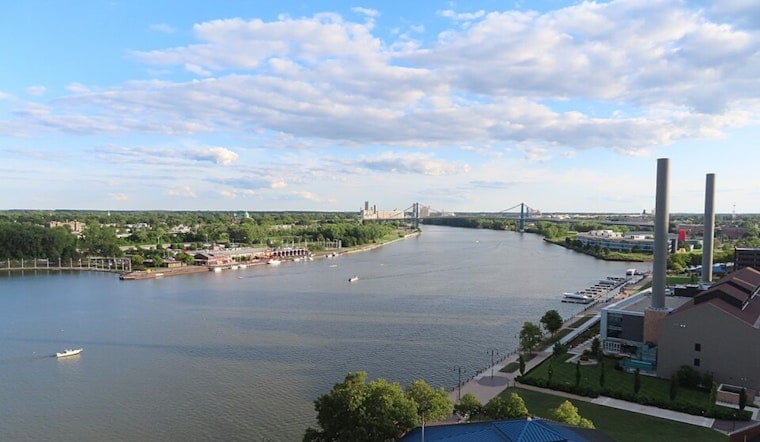
Federal officials gathered at the National Museum of the Great Lakes in Toledo to announce more than $37.6 million in new funding aimed at scrubbing decades of industrial contamination out of the Maumee River and its tributaries. The bulk of the money, $32.34 million, comes from the Great Lakes Restoration Initiative and will fund dredging, sediment disposal and fish habitat restoration across a watershed still marked by two centuries of pollution.
The announcement, reported by Cleveland.com, lays out how the money will be split. The Toledo-Lucas County Port Authority will receive funding to dredge roughly 121,000 cubic yards of contaminated sediment from a one-mile stretch of the lower Maumee River, while Ohio EPA is contributing $1.75 million toward sediment disposal costs and receiving a separate $1 million EPA award to study cleanup options for polychlorinated biphenyl contamination in the Ottawa River, located about eight miles upstream from Lake Erie. Per the same report, the funding will also complete three separate projects across the Maumee and Ottawa rivers and support fish habitat improvements including rock shoals, floating wetlands and fish shelves in the Ottawa River.
Dredging Targets Toxic Muck Near Toledo's Newest Park
The main dredging push will focus on the lower Maumee near the Sway Bridge, directly across from Toledo's new Pontiac Preserve, according to WTOL 11. Crews will place the excavated toxic sediment into the Toledo Harbor confined disposal facility once it is removed from the riverbed. Statements from U.S. Rep. Marcy Kaptur's office, reported by the same station, noted that polycyclic aromatic hydrocarbons and polychlorinated biphenyls embedded in that sediment pose serious health risks, including links to cancer, cardiovascular problems and developmental defects.
That contamination traces back to industrial pollution and untreated waste discharges that, per Cleveland.com's reporting, originally caused ten beneficial use impairments across the watershed when the Maumee Area of Concern was designated in 1987. Four of those impairments have since been adequately addressed, but six remain, including fish health and habitat, beach closings, and eutrophication driven by undesirable algae. Regulators and their partners have completed 42 of 53 planned management actions, removed more than 300,000 cubic yards of contaminated sediment, and restored more than 3,500 acres of habitat to date, the outlet reports.
A Watershed Built From 11 Smaller Ones
Part of what makes this cleanup so sprawling is the sheer scale of the Maumee Area of Concern itself. Covering 787 square miles across 11 independent watersheds in northwest Ohio, it ranks as the third-largest Great Lakes Area of Concern by land area, according to the Northeast-Midwest Institute — large enough to fit 21 of the other 26 U.S. Great Lakes Areas of Concern inside its boundary. That geography helps explain why cleanup here has required dozens of separate management actions rather than a single fix.
The scope of legacy contamination has been severe. PCB and heavy metal pollution in Toledo's Ottawa River was serious enough to keep a continuous public no-contact water advisory in place for 27 years, from 1991 through 2018, per the Northeast-Midwest Institute. Two centuries of development, industrial growth and agricultural conversion also destroyed more than 90% of northwest Ohio's native wetlands, according to the U.S. Environmental Protection Agency — a loss the current fish habitat and wetland projects are meant to begin reversing.
Progress Building Ahead of the Announcement
The new funding lands just weeks after other regulatory movement in the watershed. On July 23, the Ohio Lake Erie Commission and Ohio EPA opened a public comment period on a proposal to remove the Beach Closings beneficial use impairment from the Maumee Area of Concern, following five years of water quality monitoring that showed declining bacteria levels. That would mark the watershed's fifth impairment removed, roughly halfway toward the eventual goal of full delisting.
Local project governance runs through the Maumee AOC Advisory Committee, which split off from the Toledo Metropolitan Area Council of Governments in 2015 and is now facilitated by the regional nonprofit Partners for Clean Streams, per the group's own project materials. The first impairment cleared from the watershed, Added Costs to Industry or Agriculture, was officially removed back in 2015. It followed a major 2010 cleanup under the Great Lakes Legacy Act, in which the EPA partnered with the City of Toledo and seven private industrial firms to dredge 251,000 cubic yards of contaminated sediment from the Ottawa River, according to Great Lakes Mud.
Since its creation in 2010, the Great Lakes Restoration Initiative has funded more than 8,000 restoration projects across the region, enabling the complete delisting of seven U.S. Areas of Concern and the removal of 123 beneficial use impairments overall, per the initiative's own results tracking. Ohio's Lake Erie tributaries have seen mixed pacing toward that goal: Hoodline previously reported that Lorain's Black River is nearing full delisting, while larger systems like the Maumee continue to require extensive, multi-million dollar restoration work given their size and contamination history.
Cleveland.com's report on the funding announcement was produced by the outlet's Express Desk, which the publication says uses AI tools to assist in producing content that is then reviewed and edited by Cleveland.com staff.





.jpg)