

























































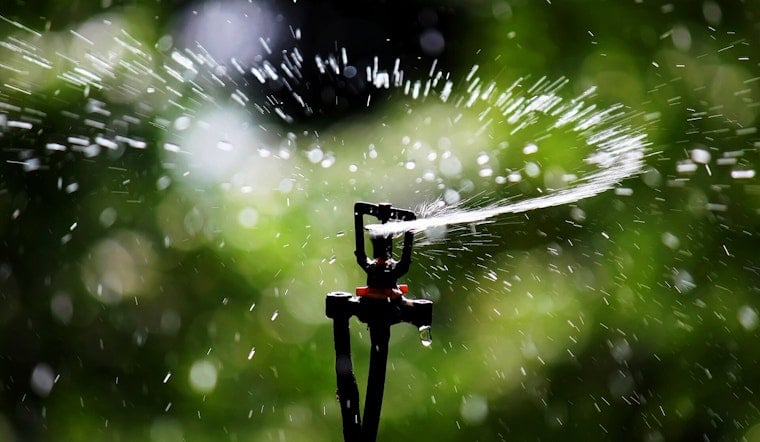
Tuttle, Oklahoma has entered Stage 2 water restrictions after a summer heat wave drained the city's water towers to 70% capacity and sent system pressure tumbling, forcing new limits on lawn sprinklers, pool refills and car washing for the roughly 7,400 residents of the fast-growing Grady County town.
According to News 9, pressure in Tuttle's system fell from a normal baseline of about 55 PSI down to 37 PSI as demand spiked. A separate alert posted by the City of Tuttle put the drop at 35 PSI from that same 55 PSI baseline, underscoring just how strained the system had become. Tuttle Public Works Director Aaron Slattery said the city hopes to lift the Stage 2 restrictions within the next several days if conditions improve, the station reports.
What Stage 2 Restrictions Actually Ban
Tuttle's conservation plan automatically triggers Stage 2 rules once tower levels reach 80% or below and continue dropping, and the city's towers were sitting at 70% and trending downward when officials pulled the trigger, per the same report. City officials say reducing outdoor watering is the most effective way to restore tower levels and pressure, blaming a summer that flipped from unusually wet to persistently dry alongside triple-digit heat that pushed water demand up across the entire Oklahoma City metro.
Under the new rules, outdoor watering with municipal sprinklers or irrigation systems is limited to one day a week, split by address: odd-numbered addresses may water on odd-numbered calendar days, and even-numbered addresses on even-numbered days, with watering only allowed before 10 a.m. or after 7 p.m. Homeowners can still use a handheld hose, soaker hose or drip irrigation to water foundations or newly planted trees and shrubs for up to two hours a day, and the restrictions do not apply to irrigation drawn from private wells or treated wastewater.
Residents Feel the Pinch at the Tap
Private vehicle washing is now restricted to a bucket or a hose fitted with a shutoff valve, though commercial car washes remain open for business. Swimming pools can't be drained and refilled or topped off through automatic fill valves, hosing down driveways, sidewalks, buildings and windows is banned, and ornamental fountains or ponds running on drinking water are prohibited with limited exceptions. Tuttle has also increased penalties for repeat violations, meaning residents who ignore the rules more than once could face fines.
Tuttle resident Lindsey McDonald said water flow in her home has slowed considerably since the restrictions took hold, and that her bathtub now takes noticeably longer to fill than normal. She told the station the situation has made her family more mindful of how much water they use day to day.
A Regional Supply Chain Stretched Thin
Tuttle isn't drawing from an independent well field alone; the city purchases additional water from Newcastle, which in turn buys most of its own supply from Oklahoma City. That regional grid is enormous by design: Oklahoma City Utilities operates seven surface reservoirs spanning 250 miles across five counties, delivering treated water to more than 1.4 million residents in 18 central Oklahoma municipalities.
Any community that buys Oklahoma City-supplied water is required to enforce conservation measures at least as strict as OKC's own program, according to the City of Oklahoma City. Moore, Norman, Yukon, El Reno, Mustang, Blanchard, Piedmont and the Deer Creek Water District all participate in the same regional conservation program, per News 9's reporting. Edmond, another participant, remains under Stage 1 rules and typically uses 10 million to 11 million gallons of water a day, a figure that can exceed 25 million gallons daily in summer, with its own odd-even watering split by address.
Oklahoma City Isn't Reaching for Reserve Reservoirs Yet
Oklahoma City requires odd-even outdoor watering year-round for itself, even when lake levels are normal, as a permanent hedge against demand spikes. City engineers and water quality staff are monitoring lake levels and will rely on a lake balance plan to decide whether further action is needed, and Oklahoma City Utilities does not currently anticipate releasing water from Canton Lake to relieve the strain.
That's notable given precedent: in October 2024, Oklahoma City Utilities carried out a scheduled 16,000-acre-foot water release from Canton Lake down 85 miles of the North Canadian River to replenish Lake Hefner, showing the region does have that lever available when reservoirs run low.
Tuttle Joins a Growing List of Stressed Oklahoma Systems
Tuttle's squeeze echoes what's already played out elsewhere in the state this summer. In the Panhandle, Guymon declared a Stage 3 water emergency and cut outdoor irrigation to just one day a week after daily demand hit 95.4% of the city's total system capacity, as Hoodline reported in its piece on Guymon's water crackdown.
Closer to Tuttle, Piedmont suffered repeated pressure drops and outages during peak demand in May, prompting state water authorities to approve $24.65 million for a new 1-million-gallon elevated storage tank and a secondary Oklahoma City main connection, according to Hoodline's coverage of Piedmont's water pressure crisis. Piedmont purchased more than 200 million gallons of treated water from Oklahoma City in 2024 alone.
Drought and Growth Collide in Grady County
The backdrop is a punishing stretch of weather: Oklahoma logged its 20th-warmest July on record with an average temperature of 83.9 degrees, and its 30th-driest July, with just 1.64 inches of rainfall statewide, 1.56 inches below normal, according to The Journal Record. Heat index values reached as high as 125.2 degrees in Oklahoma during late July. As of late July, more than 56% of Grady County residents were living under active drought conditions, part of the 44% of Oklahoma experiencing moderate to exceptional drought, per Drought.gov.
Those conditions matter because Oklahoma law leaves little margin for error: the Oklahoma Department of Environmental Quality requires all public water systems in the state to maintain a minimum of 25 PSI under all flow conditions, a floor that keeps fire hydrants functional. Tuttle's own rapid growth adds to the pressure on its towers; the city grew 23.2% from 6,010 residents in 2010 to 7,413 in the 2020 Census, according to U.S. Census Bureau figures, and sits roughly 27 miles southwest of Oklahoma City as part of the region's fast-growing Tri-City Area alongside Newcastle and Blanchard.





