

























































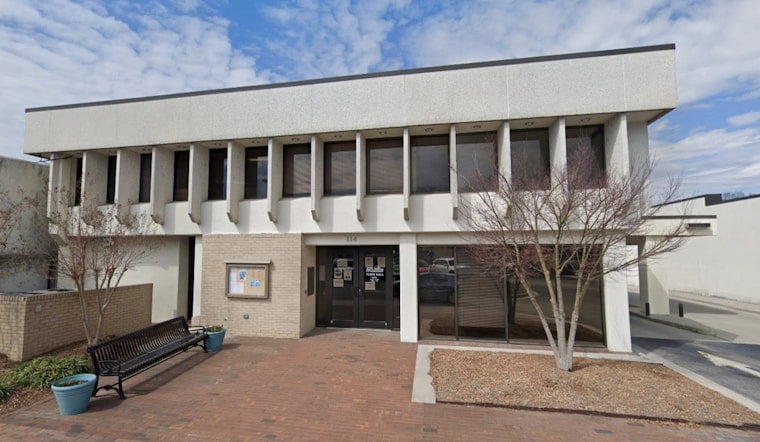
Two members of the Selma Town Council resigned within minutes of each other during a tense meeting Tuesday night, leaving the small Johnston County town with two vacant seats and a governing board reduced to its bare minimum. William Overby announced his resignation near the end of the meeting, and Susan Parrish Watson followed shortly after, with both effective immediately.
Both Overby and Watson blamed Mayor Byron McAllister for many of the problems that led to their decisions to leave office, according to The News & Observer. The pair alleged that McAllister worked with Mayor Pro Tem Joe Scarboro and another council member on town matters while excluding them from those discussions, according to the same report. The resignations capped what the paper described as a public airing of division inside town hall.
Watson, announcing her resignation minutes after Overby's, said only, “given the circumstances … on behalf of the community.” Her departure and Overby's came within minutes of one another during Tuesday's meeting, leaving the council with two vacancies to fill.
A Rift 18 Months in the Making
Overby said afterward that his frustration had been building for a year and a half, alleging that McAllister exceeded his authority and selectively shared advance details on town business with Scarboro and Councilwoman Amy West Whitley while cutting out Overby and Watson, according to JoCo Report. The dispute did not begin Tuesday. Public conflict between Watson and McAllister dates back to at least a September 2025 council meeting, when Watson publicly criticized the mayor after he told her during a meeting to stay in her lane, the outlet reported.
Tensions had already escalated into formal discipline months earlier. On February 5, the town council voted 3-1 to censure Watson and restrict her communications with town staff, with McAllister, Scarboro, and Whitley voting in favor and Overby the lone dissenting vote. That same meeting, the council also voted to remove two volunteer members from Selma's Parks and Recreation Advisory Board, a move that drew public criticism over advisory board access to town financial records, as ABC11 noted, which serves as the News & Observer's newsgathering partner.
The censure proceeding drew scrutiny beyond Selma's town limits. North Carolina Senator Benton Sawrey and Representative Larry Strickland issued a joint memorandum questioning the process and urging the council to abandon it, according to JoCo Report's coverage from that period.
Just Months After Both Won Reelection
The fracture is notable in part because of how recently voters weighed in. McAllister won reelection as mayor in November 2025 with 65.7% of the vote against challenger Adele Walker, while Watson and Whitley won council seats and were sworn in that December, according to Ballotpedia. Watson and McAllister had been reelected by voters just eight months before the council split apart.
McAllister also holds regional influence beyond Selma. He serves as Board Chair of the Central Pines Regional Council for the current fiscal year and presides over the Johnston County Mayors Association, according to a release from the Central Pines Regional Council, which represents local governments across several North Carolina counties.
What Happens to the Empty Seats
Under Selma's charter, the Town Council is made up of four council members serving staggered four-year terms and an at-large mayor serving two-year terms. With two seats now empty, the remaining three members — McAllister, Scarboro, and Whitley — still hold the minimum three-person quorum needed to conduct official town business, according to the Town of Selma.
State law spells out how those vacancies get filled. North Carolina General Statute § 160A-63 says vacancies on a municipal governing board are filled by appointment of the remaining council members, with appointees serving until the next election or the remainder of the unexpired term, per the North Carolina General Assembly. That means the three remaining members, all aligned on one side of the recent disputes, will choose who fills the two open seats rather than voters deciding through a special election.
Selma, a Johnston County town of roughly 7,621 residents chartered in 1873 as a railroad stop along what is now the North Carolina Railroad corridor and Interstate 95, still functions as a transportation junction with an active Amtrak passenger depot, according to Johnston County Government. It remains unclear when the town will formally begin the appointment process or whether the council will consider write-in candidates or past election challengers for the two vacant seats.



