

























































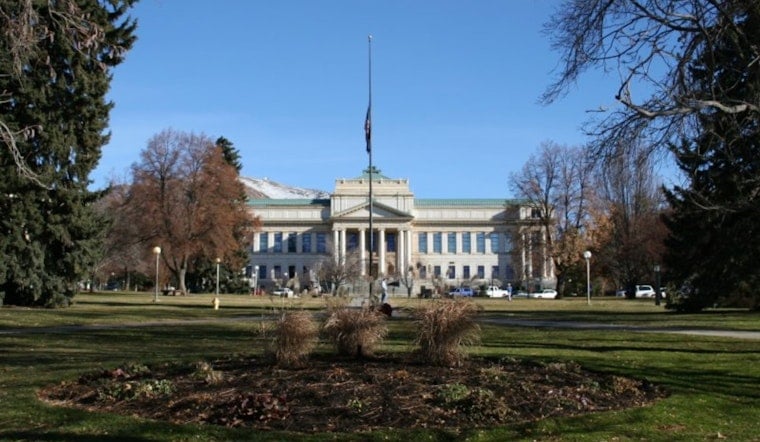
The University of Utah's newest residence hall, Trailhead, started welcoming students for early move-in on August 14, with regular move-in following on August 19 as the fall semester gets underway. The $155 million project adds 1,447 beds across two six-story buildings — the East Summit and West Ascent wings — totaling 349,342 square feet of new student housing.
The project was built through a public-private partnership between the University of Utah and American Campus Communities, according to KSL News. Under that arrangement, detailed by The Daily Utah Chronicle, the Austin-based developer will operate and maintain the building for 55 years, with options for two 10-year extensions, while the university retains ownership from day one and continues to manage student assignments through its own housing portal. American Campus Communities absorbed the project's development risk in exchange for those long-term operating rights.
Trailhead brings the university's total student housing to nearly 7,000 beds, KSL reports, part of a housing push that has added roughly 4,000 beds since 2019. Sean Grube said activating a new building creates another place for community on campus, adding that Trailhead brings a residential environment to the university and that the goal is for students to become a full part of the campus community.
Designed Around Canyons and Climbing Walls
Trailhead was designed by Salt Lake City-based MHTN Architects alongside Ayers Saint Gross and built by Okland Construction, according to University of Utah @theU. The exterior styling draws on the canyons of the Wasatch Front, and a central outdoor art installation called The Lantern anchors the grounds. Local firms MHTN Architects and Okland Construction have collaborated on multiple campus capital projects in recent years, per the same account.
Inside, the building was designed to integrate recreation directly into daily living. Residents have access to two adjustable Grasshopper climbing walls, an indoor bouldering room, a fitness center, a gaming hub, and a room dedicated to ski and snowboard storage. There's also dedicated bike parking with a repair station and an outdoor patio, according to KSL.
Room Mixes and Dining Options
The room mix at Trailhead includes 796 double clusters, 472 double units, 106 single clusters, 60 four-person single suites, and 12 single units. Each floor includes a public cooking space equipped with a stove, oven, and microwave for residents who want to prepare their own meals.
Dining options are compatible with the university's student dining plan and include a Qdoba, a pho restaurant, The Other Side Coffee and Donuts, and a grab-and-go shop, all centered around a 135-seat dining area. First-floor amenities are open not just to residents but to all University of Utah students and staff, KSL notes.
Security and Access
The building includes a 24-hour staffed service desk in its main lobby in the Ascent tower, and building entry after 11 p.m. is restricted strictly to residents carrying validated UCard keycards, according to a report from The Daily Utah Chronicle. Those access controls were built around the round-the-clock lobby presence, the outlet reported this spring.
A Bigger Push to Become a Residential Campus
Trailhead is the latest piece of University of Utah President Taylor Randall's “College Town Magic” strategy, which aims to expand total on-campus housing to between 10,000 and 12,000 beds to support an overall enrollment target of 40,000 students, according to University of Utah Housing & Dining Programs. Historically, on-campus housing served only about 10 to 12 percent of the student body, a gap that helped drive the current wave of construction. The university has described this shift as a move away from the old heads-and-beds approach to student housing, aiming instead for living-learning environments that fold academics, recreation, and dining together.
That housing crunch became acute in Fall 2022, when roughly 3,000 University of Utah students landed on housing waitlists, according to The University of Utah Magazine. The university responded with temporary stopgaps, including leasing off-campus apartments and converting Guest House rooms, while it worked on longer-term fixes. Much of the university's older housing stock in Fort Douglas dates back to conversions following the 2002 Winter Olympic Games, when the area served as the official Olympic Athletes' Village, per University of Utah @theU — facilities that are now more than two decades old and in need of ongoing modernization.
Trailhead follows a string of recent additions to that inventory. In Fall 2024, the university opened the $114 million, 284,808-square-foot Impact & Prosperity Epicenter, adding 775 beds alongside headquarters for the Sorenson Impact Institute and the Center for Business, Health, and Prosperity, a project funded through philanthropic gifts from Jim Sorenson and Bob and Lynette Gay. Before that, the university completed the final wing of Kahlert Village in September 2023 with the opening of the Katharine B. Garff Honors Tower, bringing that living-learning complex to 1,422 beds across four themed towers for under $155 million total.
Elsewhere near campus, the 536-to-621-bed Ivory University House opened in phases starting in 2023 under a 100-year ground lease with The Church of Jesus Christ of Latter-day Saints, with all net rental revenues directed into a University of Utah student scholarship endowment. That project replaced an LDS chapel that had stood at Mario Capecchi Drive. Housing expansion has coincided with other structural changes at the university: in July, the Utah System of Higher Education approved a regional reorganization under state law HB352, grouping the University of Utah with Salt Lake Community College into a shared Wasatch Central region, as Hoodline reported.
As the university adds thousands more beds to campus, questions remain about how student housing costs, long-term risk under decades-long P3 ground leases, and campus infrastructure like parking will hold up as more students live on campus full-time year-round.





