

























































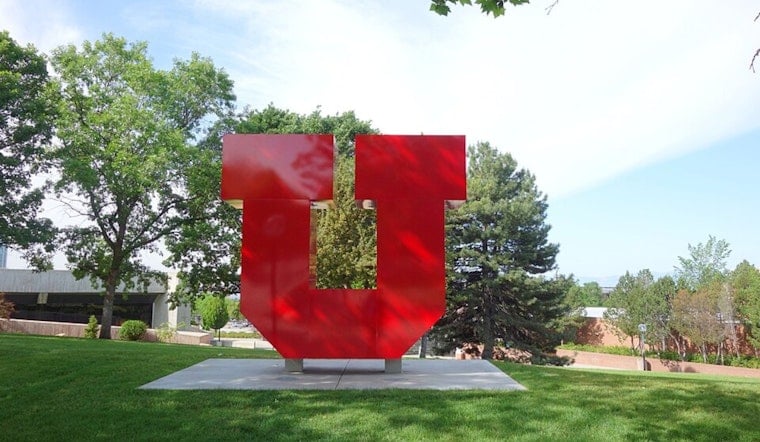
Student leaders and immigrant advocates are pressing University of Utah officials to adopt formal protections for immigrant students, bringing their sanctuary campus proposal directly to the university's Board of Trustees on Tuesday. The push comes after nearly a year of organizing by campus group Mecha de U of U, whose leaders say fear among immigrant students and workers on campus has become substantial as federal immigration enforcement has ramped up across Utah and the country.
Erica Stringham is scheduled to present Joint Resolution 10, known as JR10, to trustees, according to KSL.com. Stringham said the presentation is meant to make the board aware of issues and priorities students have raised, per the outlet's report. The resolution calls for a public statement declaring the University of Utah a sanctuary campus regardless of citizenship or immigration status, along with assurances that officials will limit cooperative interactions with federal immigration agents.
JR10 also asks the university to require court orders before immigration officials can enter private university spaces, and to boost training so immigrants on campus better understand their rights. Samantha Reagan, a leader of Mecha de U of U, told the outlet she is hopeful some sanctuary-campus changes will roll out this fall, though neither university administration nor state education officials have provided any concrete change tied to the resolution so far.
Student Government Lined Up Behind the Resolution
The proposal already has substantial backing within student government. The ASUU Senate unanimously passed a resolution supporting JR10 on April 18, according to reporting from The Daily Utah Chronicle. Three days later, the ASUU Assembly followed suit, passing its own version with only three dissenting votes, the student paper reported, with dissenting representatives citing concerns over state law compliance and institutional political neutrality.
Before bringing the resolution to student legislative bodies, organizers with Mecha de U of U gathered more than 4,000 petition signatures supporting the sanctuary campus proposal, the Chronicle reported, using the tally during public forums to demonstrate wide community backing. Mecha de U of U representatives have also teamed up with a Communications Workers of America local and student government leaders to press university officials directly. The sanctuary campus initiative is formally backed by United Campus Workers of Utah, CWA Local 7765, which folded the demands into its broader “U for Who?” campaign launched in February, linking immigration protections to workplace safety, staffing ratios and patient privacy at U of U Health.
Trustees Say Their Hands Are Tied
University officials have signaled that Tuesday's meeting is unlikely to produce a vote. Christopher Nelson said questions of immigration-enforcement policy exceed the delegated authority of the university's Board of Trustees, according to KSL.com, pointing instead to the Utah Board of Higher Education and the Office of the Commissioner of Higher Education as the appropriate system-level bodies to weigh in on such policy.
That jurisdictional caution has roots in state law. Following the 2024 passage of House Bill 261, the Utah System of Higher Education issued institutional neutrality guidance directing public colleges to refrain from taking official administrative positions on political and social controversies, according to the Utah House of Representatives. The same 2024 law required public universities to eliminate dedicated diversity, equity and inclusion offices, prompting the U to fold its Dream Center into general Student Affairs, as detailed in earlier Chronicle reporting.
The university has previously said its position is not one of hostility toward immigrant students. As of a March statement, the University of Utah had not entered a formal agreement with ICE related to immigration-law enforcement on campus, and Keith Squires expressed reticence about such a formal enforcement agreement on March 10. University officials clarified last April that while federal agents retain authority to execute warrants or make arrests in public campus spaces, federal law does not prohibit higher education institutions from establishing sanctuary campus principles, a point student advocates cited during this spring's legislative debates.
Legal Guardrails Already in Place
Some of what JR10 asks for already exists in practice. Law enforcement agencies typically must present a judicial subpoena, warrant, or another court order to enter a private university space or obtain private university information, and the university has provided general guidance to faculty and staff on possible immigration enforcement actions on campus. In January, the University of Utah established a centralized Information Privacy Office and appointed its first chief information privacy officer to manage state data privacy laws like the Utah Government Data Privacy Act, as Hoodline previously reported — infrastructure that intersects directly with JR10's request to restrict how student and employee data is shared with federal agencies.
Utah has a longer history of accommodating undocumented students than the current fight might suggest. Since 2002, state House Bill 144 has allowed eligible undocumented students to pay in-state tuition at public universities if they attended a Utah high school for at least three years and promise to seek legal status when eligible, according to University of Utah admissions guidance. In March 2021, the Utah Board of Higher Education unanimously passed a resolution affirming support for undocumented and DACA-eligible students across all state higher education institutions, per the Higher Ed Immigration Portal.
A Statewide Crackdown Looms
Any momentum toward sanctuary status on campus runs against a broader legislative current. During the 2026 session, state lawmakers introduced House Bill 571, an attempt at a broad statewide crackdown that would explicitly outlaw sanctuary policies across government and public entities in Utah, according to the Chronicle's February report, while also imposing stricter E-Verify and law enforcement rules statewide. That bill underscores the difficult position trustees find themselves in: caught between student and worker demands for protection and a state legislature actively working to foreclose the very policies JR10 seeks.
For now, the sanctuary-campus push — which organizers trace back to at least spring — will get its hearing before trustees Tuesday without an expected vote. Immigration and Customs Enforcement agents have increased efforts across Utah and beyond to detain and deport immigrants in the country illegally, and Reagan said that reality has left substantial fear among immigrant students and workers on campus. Whether that fear translates into policy change will depend on bodies well beyond the University of Utah's own Board of Trustees.





