

























































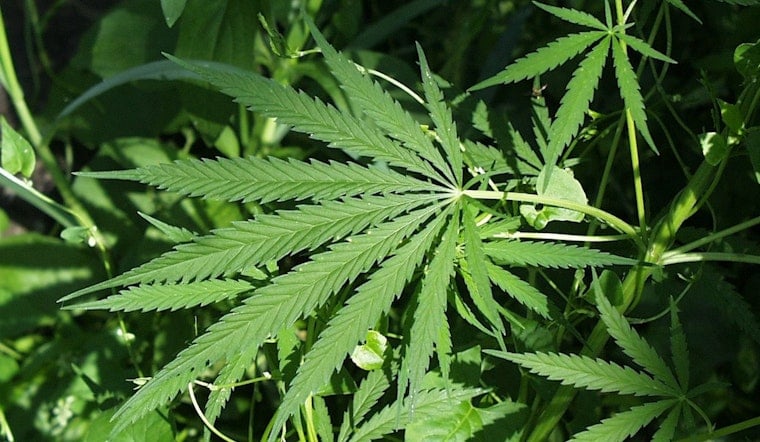
Georgia employees with legal access to medical marijuana are calling in sick noticeably less often, according to a new University of Georgia study that found health-related workplace absences dropped by roughly seven percent in states with medical cannabis laws on the books. The findings come from a University of Georgia study suggesting that legal access to medical marijuana may reduce the number of sick days employees take, and they land just weeks after Georgia's own medical cannabis program underwent its biggest overhaul in years.
The research, published in the Journal of Workplace Behavioral Health in June 2026, was co-authored by Patryk Babiarz, an associate professor in UGA's College of Family and Consumer Sciences who specializes in personal finance and health economics, along with researchers from the University of Southern Maine. Babiarz is the study's corresponding author, and he spoke with FOX 5 Atlanta about what the data shows. Researchers found that health-related absences were about seven percent lower in states with medical cannabis laws, according to the university's findings.
To reach that conclusion, the team examined a dataset of more than 20 million working adults ages 18 to 61 pulled from the Current Population Survey, a monthly labor survey run by the U.S. Census Bureau and U.S. Bureau of Labor Statistics, covering data collected from January 1990 through March 2025. The study's report notes researchers applied a flexible difference-in-differences economic model, an approach designed to isolate the effect of state policy changes over time, according to the paper.
Manual Laborers Saw the Steepest Drop in Sick Days
The attendance gains were not spread evenly across the workforce. As reported by Marijuana Moment, manual laborers experienced a 39 percent drop in health-related absences, the largest of any occupation studied, while industrial machine operators saw a 33 percent decline.
Other trade and service sectors also posted notable improvements. The outlet's report indicates sickness-related absences fell 32 percent among health-service workers, 18 percent among farm workers, and 10 percent each among construction and food preparation workers. Those are jobs where chronic musculoskeletal pain and repetitive strain are common contributors to missed shifts, and the pattern suggests symptom management may play a role in keeping workers on the clock.
Recreational Cannabis Showed No Such Effect
One of the study's sharpest distinctions involves the difference between medical and recreational cannabis policy. Per WSB-TV, adult-use recreational cannabis laws had no statistically significant impact on workplace health absenteeism, regardless of whether recreational sales were legal or possession was merely decriminalized.
The station's report also notes that medical cannabis decriminalization laws — which remove criminal penalties for possession — had a larger and more statistically significant impact on reducing absenteeism than the actual opening of regulated commercial dispensaries. In other words, the legal protection itself appears to matter to patients even before storefronts start selling product.
A Costly Problem for Employers Nationwide
The economic stakes behind the research are substantial. According to CDC Foundation estimates cited in the study's economic context, employee illness and injury cost U.S. employers $225.8 billion annually in lost productivity, or roughly $1,685 per employee, underscoring why even a single-digit drop in sick days could carry outsized financial weight for businesses.
Babiarz was careful to note the limits of what the data can prove. As GreenState reports, the study's co-author noted that while the macroeconomic findings are statistically significant, the underlying federal dataset tracks overall population attendance rather than individual medical records, meaning it cannot confirm whether specific absent workers actually used cannabis or evaluate potential negative health side effects.
Timing Lines Up With Georgia's Overhauled Cannabis Law
The study's release comes as Georgia's own medical cannabis framework has just undergone a major expansion. Senate Bill 220, known as the Putting Georgia's Patients First Act, took effect July 1 and eliminated the state's 5% THC potency cap while expanding patient enrollment to more than 46,000 residents, according to CBS News.
Hoodline previously explained the buffer zone debate tied to that same law, and earlier reported on Atlanta drugstores dispensing state-approved cannabis oil to registered patients as the state's program grew. Georgia veterans have also pushed state officials for years to widen qualifying conditions, while lawmakers have separately debated reining in hemp and THC-infused drinks even as the medical program expanded.
Taken together, the UGA findings offer a data point in that ongoing policy conversation, even as researchers caution that correlation between state law and workplace attendance is not the same as proof of individual cause and effect. What remains unresolved, per Babiarz's own caveat, is how any of this translates into workplace drug-testing policy or long-term health outcomes for the patients using their state-legal access.





