

























































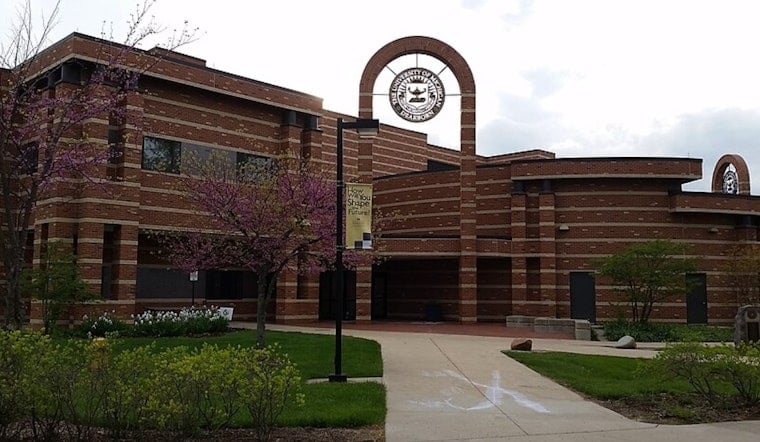
The University of Michigan-Dearborn has launched the nation's first bachelor's degree program in research administration, a new major built to train students for a career most people have never heard of but that keeps billions of dollars in university research funding on track. The program pairs coursework in finance, ethics, and legal frameworks with mandatory internships, and it's already landing graduates in real jobs handling the paperwork behind federally funded science.
One of those graduates is Evan Webb, who earned his degree from UM-Dearborn in behavioral and biological sciences in 2026 but found his professional footing through an internship with the University of Michigan's Office of Research and Sponsored Projects, according to MLive. Webb spent his internship analyzing thousands of spreadsheet lines as the office moved its database — which processes information on thousands of faculty research grants — onto a new platform, the outlet reports. He has since accepted a position as a policy consultant with the Wayne County Department of Health, Human and Veteran Services, and his former manager still wants his help troubleshooting the new system.
A Major Built Around a Real Workforce Gap
The research administration major was created to address a growing workforce need, and it was developed in partnership with the University of Michigan's Office of Vice President for Research. Shandra White, UM's associate vice president for research-sponsored projects, spearheaded creation of the degree program, and the university says principal investigators increasingly rely on research administrators to handle the administrative tasks that come with federal grants. That reliance isn't abstract: a Federal Demonstration Partnership faculty workload survey found that principal investigators estimated spending an average of 44.3% of their active research time on administrative compliance work rather than research itself, a figure detailed by the university's own reporting in The University Record.
That burden has been building for years. The federal government has added or revised more than 200 research compliance requirements over the past decade, according to a report from Ithaka S+R citing Council on Governmental Relations data. Those new rules have made grant administration a full-time specialty rather than a side task for scientists, and universities nationwide are now competing to hire people trained specifically to navigate them.
Curriculum Mixes Ethics, Finance, and Real Internships
The Bachelor of Arts in Research Administration is housed within the Department of Social Sciences in UM-Dearborn's College of Arts, Sciences, and Letters, per the university's own program description. Coursework spans communication, ethics, organizational development, accounting and finance, legal and regulatory frameworks, and project management. Classes are currently offered in a hybrid format, with the university's website noting plans for a fully online option by fall 2027.
Every student must complete at least one internship before graduating, and the program brings in guest speakers from the field to round out the classroom work, according to MLive's reporting. Vadym Pyrozhenko, an associate professor of public policy at UM-Dearborn, oversees the program. The internship requirement has already pulled in students from outside the major itself — Martina Vucinic, a UM-Dearborn senior majoring in mathematics, discovered research administration as a career path through an internship posting and ended up interning with the Office of Vice President for Research this year, per the same MLive account.
From Spreadsheets to AI Tools
Vucinic's internship work included analyzing peer institution data for a national research fellowship aimed at early-career scientists, and she built an artificial intelligence tool designed to identify U-M faculty who might qualify for research awards. Her work illustrates the range of tasks that fall under the research administration umbrella — employees in the field may research and write grant proposals, manage budgets, and oversee grant compliance and reporting, spanning accounting, research, writing, and project management functions.
Faculty research grants are often awarded by agencies like the National Science Foundation and the National Institutes of Health, both of which come with their own layers of reporting requirements. The University of Michigan alone employs about 1,100 research administrators across its three campuses and Michigan Medicine, according to university officials, and that infrastructure supports a research enterprise that hit more than $2 billion in total annual research expenditures in fiscal year 2025, per the university's Office for Research Administration Strategy. That office, established within the Office of the Vice President for Research, now coordinates strategic planning, AI integration, and workforce development for research administrators across the university.
Job Prospects Despite Federal Funding Uncertainty
White said research administration job prospects remain promising despite recent federal research funding cutbacks, according to MLive's reporting, and she noted that research administration expertise will remain in demand as funding models continue to evolve. Research administrators aren't hired only by universities — private companies in the automotive, aerospace, and energy sectors also employ them, alongside health systems, nonprofits, and public utilities. Nationally, there are tens of thousands of open positions in the field, and in Michigan specifically, universities and businesses spend more than $22 billion annually on research and development.
The national numbers back up the optimism. Project management specialists, a primary career path for research administration graduates, earned a median annual wage of $100,750 in May 2024, with employment in the field projected to grow 6% from 2024 to 2034, according to the U.S. Bureau of Labor Statistics. Graduates who want a formal credential later in their careers can pursue the Certified Research Administrator designation through the Research Administrator Certification Council, an organization established in 1993 that requires a bachelor's degree, three years of professional experience, and a passing score on a national exam covering information collection, legal requirements, financial management, and general management, per the SUNY Research Foundation.
A Campus in Transition
The new major arrives as UM-Dearborn navigates its own institutional changes. The University of Michigan Board of Regents approved the campus's $180 million general fund operating budget for fiscal year 2027 at its June 2026 meeting, and the campus is also settling into new leadership: U-M President Domenico Grasso recommended interim leader Gabriella Scarlatta to serve as UM-Dearborn's seventh permanent chancellor in May 2026, following nearly three decades of service at the Dearborn campus. Compliance demands are also evolving in real time: in August 2026, UM-Dearborn's Office of Research issued updated directives under the university's Program for the Education and Evaluation of Responsible Research and Scholarship, mandating research security and sensitive data training for all externally funded proposal submissions.
Taken together, the pieces point to a career field that university officials say plays a crucial role in scientific advancement — one that UM-Dearborn is now betting it can formally train students for, rather than leaving them to learn on the job the way most current research administrators, including Webb and Vucinic, effectively have.




