

























































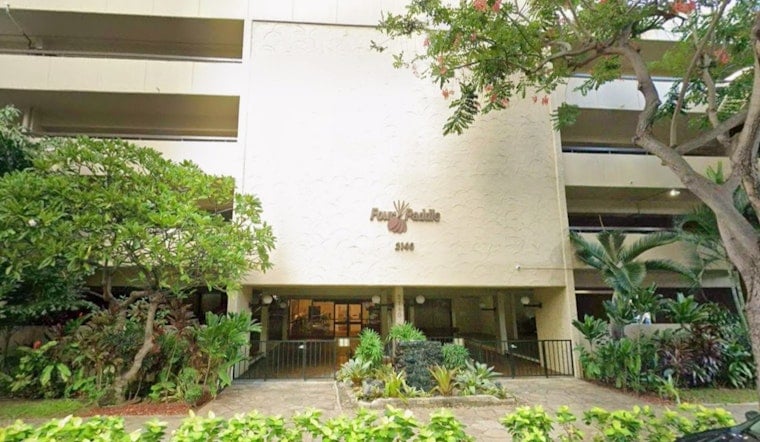
Rainwater from Tropical Storm Lala short-circuited the main electrical control panel at Four Paddle Condos in Waikiki, leaving hundreds of residents in the 25-story building without power or running water for six days. Residents were notified about the outage the Wednesday before power was finally restored on Friday afternoon, forcing many to haul water up dozens of flights of stairs and improvise their way through a sweltering, dark week.
The panel, which delivers power to the entire building at 2140 Kuhio Avenue, failed after the storm's rain intruded into the building's electrical systems, according to Hawaii News Now. Pam Cohen, a resident on the building's 20th floor, told the station she brought up all her water and food and tried not to use the bathroom during the outage, eventually opting to stay at a hotel instead. She said she felt especially for people unable to use the stairs, since the building's elevators were also affected by the outage.
Why the Water Went Out Too
The loss of running water alongside electricity was not a coincidence. In Hawaii high-rise buildings, municipal water reaches upper floors only through electrically powered booster pumps, meaning outages lasting more than six to eight hours typically knock out running water once a building's storage tanks empty, according to Hawaiʻi Public Radio. That mechanical link meant Four Paddle's six-day power failure became, almost immediately, a six-day water failure as well.
Built in 1974, the Four Paddle Condos tower contains 250 studio and one-bedroom units, according to HIcondos.com. Thomas Hall, who works for Submeter Hawaii, said property managers should check and seal potential leaks near power sources, noting that building openings near electrical equipment can cause water intrusion and catastrophic failure. Hall also advised buildings to prepare for changing weather and another approaching storm.
Residents Say Communication Fell Short
Summer Richardson said the power outage made digital communication difficult because the building's management systems were down along with everything else, and residents broadly felt that management's communication during the crisis was insufficient. Cohen said property managers should communicate contingency plans clearly to residents before the next hurricane, and that property managers should review those plans before storm season returns.
Stephanie Shinno, who works for Guardian Management and recently became the new property manager for Four Paddle Condos, arranged emergency repairs with an electrical contractor to get the building back online. Guardian Management, a Honolulu-based firm founded in 2019 that handles site management and maintenance for Association of Apartment Owners properties, told residents it was working as quickly as possible given the circumstances, per Hawaii News Now.
Part of a Wider Waikiki Pattern
Four Paddle was not the only Waikiki tower knocked offline by Lala. At Canterbury Place, a 41-story building on Ena Road, a backup generator failure left residents without electricity, running water, or working elevators for days, as Hoodline previously reported. Both incidents unfolded against a backdrop of severe storm damage across the island; Tropical Storm Lala left more than 200,000 utility customers statewide without power, including roughly 130,000 in Honolulu County alone, according to the Hindustan Times.
The scale of the outages strained repair crews across Oahu, complicating efforts to dispatch specialized electrical contractors to individual high-rises. The Hawaiʻi Department of Transportation reported road washouts on Māmalahoa Highway in Pāhala and extensive flooding that downed utility lines across Oahu, Maui, and Hawaiʻi Island. The City and County of Honolulu had fully activated its Emergency Operations Center and opened eight hurricane refuge centers as the storm brought damaging winds and flood threats to the island, according to the Office of the Mayor.
Aging Towers Face Mounting Pressure
Four Paddle's struggles also point to broader challenges facing Waikiki's older residential stock. Under Honolulu Ordinances 18-14 and 19-4, residential high-rises built on Oahu before 1975 must undergo Life Safety Evaluation assessments and implement fire sprinkler retrofits or alternative safety upgrades, with roughly 80% to 90% of eligible buildings requiring upgrades under initial municipal assessments, per the Honolulu City Council. That regulatory and financial pressure sits alongside the kind of routine maintenance failures that left Four Paddle's residents in the dark.
Hawaii's hurricane season runs from June 1 through November 30, and high-rise safety guidance calls for multi-story residents to clear lanais 48 hours before storms and keep 14-day emergency kits on hand, given the elevated risks upper-floor occupants face from stairwell reliance and heat buildup during extended outages. For residents like Cohen, the six days without power at Four Paddle offered a preview of exactly those risks — and a reminder that, with more storms still possible this season, building management's next contingency plan may be put to the test again.





