

























































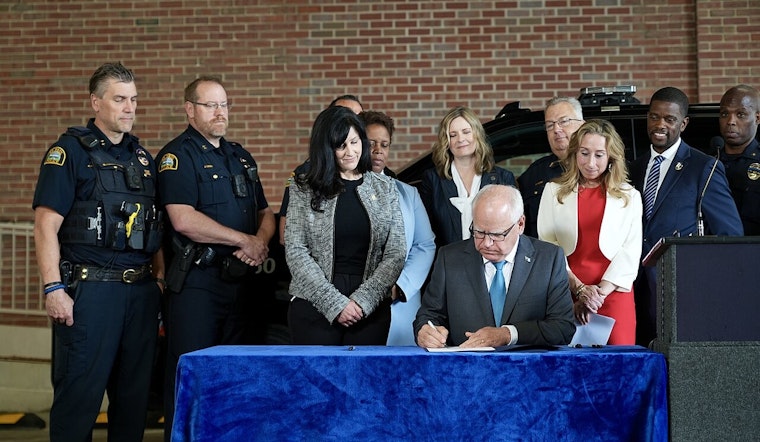
Minnesota Governor Tim Walz signed an executive order Tuesday halting all environmental reviews, permits, and new state mineral leases for nonferrous mining across roughly 350 square miles of the Rainy River Headwaters Watershed, the drainage basin that feeds the Boundary Waters Canoe Area Wilderness. The move effectively freezes the path forward for a copper-nickel mine that has been in the works for more than a decade, at least for now.
The order, signed the same day it was announced, directs the Minnesota Department of Natural Resources and the Minnesota Pollution Control Agency to stop all permitting and environmental review for nonferrous mining projects in the watershed until a pending lawsuit is resolved, according to KNSI. That lawsuit, Northeastern Minnesotans for Wilderness v. DNR, was originally filed in June 2020 to challenge the state's nonferrous mining rules and remains unresolved, according to WTIP. As part of the order, Minnesota will also decline to serve as a cooperating agency on any federal reviews of mining projects within the watershed, and the state's Department of Natural Resources is required to review existing leases there.
The watershed covers about 1.89 million acres surrounding the wilderness area, according to reporting cited by Bring Me The News. Because Minnesota law requires state-issued permits and environmental approvals before any mining project can begin operations, the governor's order can block development even on federal public lands within the Superior National Forest, since federal mining authorizations cannot override the state's own permitting requirements.
Twin Metals and the Reopened Federal Door
The mining venture most directly affected is Twin Metals Minnesota, a subsidiary of Chilean conglomerate Antofagasta PLC, which has spent over a decade trying to build an underground copper-nickel mine along Birch Lake, about three miles from the wilderness boundary. Twin Metals holds a combination of state and federal mineral leases in the targeted watershed, and the company's federal leases were previously canceled by the Biden administration in January 2022 after officials found they had been improperly renewed — though the Department of the Interior later moved to restore them under the second Trump administration, according to Earthjustice.
That volatility reflects a broader back-and-forth stretching across presidential administrations. In January 2023, then-Interior Secretary Deb Haaland withdrew 225,504 acres of Superior National Forest land from mineral leasing for 20 years, under Public Land Order 7917, after a U.S. Forest Service environmental assessment concluded that sulfide-ore copper mining posed unacceptable risks of irreversible pollution to the wilderness ecosystem, per the U.S. Department of the Interior. Congress voted to overturn that ban this year, reopening the possibility of copper and nickel mining proposals in the wilderness area, when President Trump signed House Joint Resolution 140 into law on April 27, invalidating the order under the Congressional Review Act after the resolution passed the House in January and cleared the Senate by a 50-49 vote.
U.S. Representative Pete Stauber led the effort in the Eighth Congressional District to overturn the federal ban, as Hoodline previously reported in its coverage of Stauber's reelection challenge. Mining supporters point to the Duluth Complex, the geological formation underlying the region, which contains the world's largest undeveloped copper-nickel deposit, holding roughly 95% of U.S. nickel, 88% of cobalt, and 75% of platinum reserves, according to the House Committee on Natural Resources. Supporters argue domestic production of those minerals is essential for clean energy and technology manufacturing.
Walz Frames the Order as Protecting a Statewide Asset
Walz said the Boundary Waters has deep statewide significance and that he intends to protect it for future generations, according to KNSI's reporting. Becky Rom, national chair of Save the Boundary Waters, said copper mining and the wilderness area cannot safely coexist, per the same report.
Environmental advocates note that the Boundary Waters Canoe Area Wilderness draws up to 180,000 permit visitors annually, making it the nation's most visited wilderness area and a key piece of Minnesota's $13.5 billion statewide outdoor economy, according to The Conservation Alliance. Critics of mining proposals in the watershed argue that copper and nickel projects put nearly $1 billion in outdoor recreation economy activity, along with the region's wilderness and water, at risk.
Republicans Call the Order a Blow to Northern Minnesota
The reaction from northern Minnesota Republicans was swift. House GOP Floor Leader Harry Niska, from Ramsey, criticized the executive order, saying it ignores the interests of northern Minnesota, according to KNSI's report.
Spencer Igo, a Republican representative from Wabana Township, also criticized the order, arguing it harms communities that depend on mining and prevents state agencies from using existing mining regulations. Igo said the state already has strong mining regulations in place, contending the executive order sidesteps that framework rather than relying on it.
What Comes Next
Beyond the immediate permitting freeze, the order requires the Minnesota Department of Natural Resources to draft legislation aimed at permanently banning nonferrous mining in the Rainy River Headwaters Watershed — a step that would still require approval from the Minnesota Legislature in St. Paul to become permanent law. That sets up a legislative fight layered on top of the pending court case, with the ultimate fate of Twin Metals' proposal likely to hinge on both.
The dispute follows a related fight earlier this year over state funding, when disputes over mining policy stalled trust-fund grants for youth wilderness trips run by Friends of the Boundary Waters. For now, the executive order leaves the Twin Metals project stalled at the state line even as its federal leases remain intact, with the outcome of the Northeastern Minnesotans for Wilderness lawsuit and any future legislative action likely to determine what happens next.





