

























































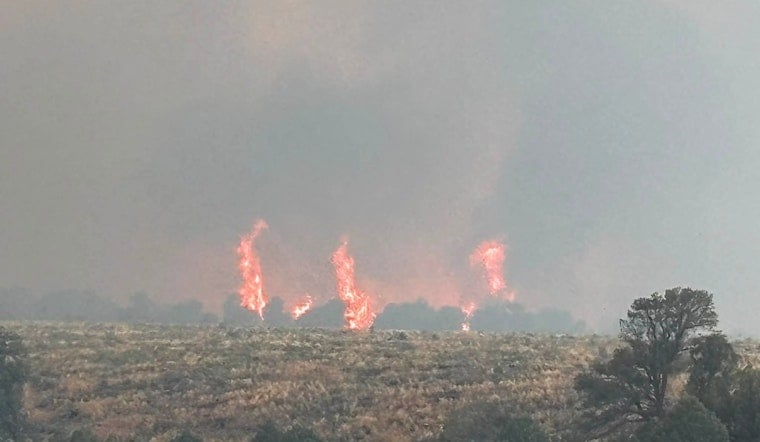
The Ward Fire in eastern Nevada has ballooned to roughly 3,770 acres with zero containment, turning the Ward Mountain area southwest of Ely into a full-scale firefighting operation as crews race to build a defensible foothold.
By Sunday, 193 personnel were assigned to the blaze, along with 17 engines, two hand crews, four water tenders, 11 helicopters, five dozers and a local Type 3 incident management team, according to KSNV. Officials said the response is being stretched by several other major fires burning across the West.
The Humboldt-Toiyabe National Forest is posting continuing updates through its official InciWeb page, where residents and visitors can check the latest incident information as conditions change.
Crews Dig In On The Fire’s East Side
Firefighters worked overnight to take advantage of cooler temperatures and lower humidity. The immediate strategy includes establishing an anchor point on the east side, extending dozer lines and adding handlines where conditions allow.
Burnout operations along the eastern edge were reported to be holding, while helicopters equipped for bucket drops worked with ground crews to knock down fire intensity. KSNV reported that the aerial effort is intended to give firefighters a stronger foothold for continued suppression.
The fire is burning near Ward Mountain, a recreation area the Bureau of Land Management places about six miles southwest of Ely. That proximity makes the operation particularly significant for a region where mountain recreation, nearby communities and access roads all converge around the range.
Officials Ask Public To Stay Away
Officials are asking people to avoid the fire area so crews can work without additional traffic or safety complications. The cause remains under investigation, and public and firefighter safety is still the top priority, according to KSNV.
The broader fire environment remains unforgiving: Nevada State Parks says fire restrictions are in effect across the state park system. For the latest information on the Ward Fire, officials are directing the public to Humboldt-Toiyabe and InciWeb rather than relying on unofficial reports.



