

























































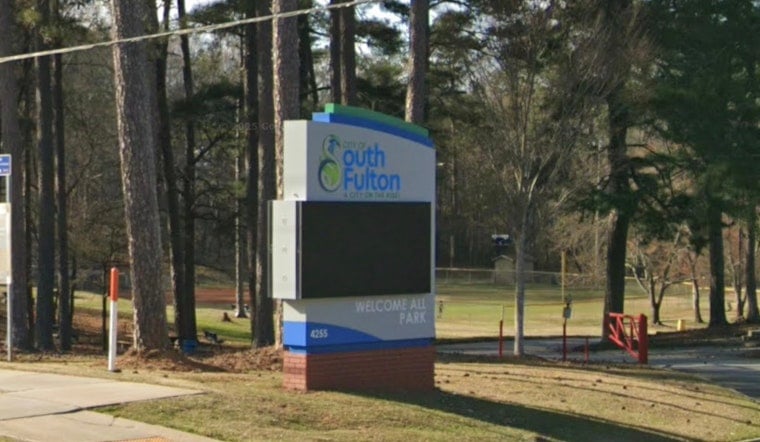
A mosquito trap at Welcome All Park in South Fulton tested positive for West Nile virus, prompting city crews to spray a targeted quarter-mile radius around the park on Wednesday and Thursday while keeping the popular recreation hub open to visitors. Signs are being posted around the park to alert the public to the positive finding and the ongoing spraying activity, and officials say follow-up testing will determine whether further treatment is needed.
The City of South Fulton contracted Vector Disease Control International to carry out the fogging, according to FOX 5 Atlanta. As reported by WSB-TV, Welcome All Park is now the second South Fulton location affected this summer, and city officials say neighbors near the park will receive additional outreach about eliminating mosquito breeding sites around their homes. Officials also plan to share steps residents can take to reduce their risk of mosquito bites in the coming days.
A Different Response Than Old National Park
The approach at Welcome All Park stands in contrast to how South Fulton handled a similar finding two weeks earlier. On August 12, the city indefinitely closed Old National Park and suspended all outdoor activities there after mosquitoes at the youth sports complex, which houses four Little League fields, tested positive for the virus — a closure Hoodline covered in its earlier report on the shutdown. Welcome All Park, by comparison, remains fully accessible during treatment and testing.
Welcome All Park's footprint may explain the different calculus. Located at 4255 Will Lee Road, the park serves as one of South Fulton's main recreational hubs, with an indoor walking track, gymnasium, athletic fields, and the city's only municipal indoor pool, the Welcome All Natatorium, which reopened in December 2024 after a multi-year renovation, according to the City of South Fulton. The same multipurpose facility hosted public assistance sessions for South Fulton seniors seeking home repair funds, as Hoodline reported in its coverage of the $25,000 repair program.
Four Fulton County Sites Now Flagged
Welcome All Park is one of four Fulton County locations where mosquito traps have recently tested positive for West Nile virus, per the City of South Fulton. Orme Park, Adamsville Regional Health Center, and Frankie Allen Park were categorized as repeat-positive sites, while Welcome All Park was flagged as a newly positive location requiring the neighborhood door-to-door outreach. The city's alert did not indicate whether any of the other three sites have prompted spraying similar to what is underway at Welcome All Park.
The virus has been circulating in Fulton County's mosquito population since early summer. County health staff recovered the season's first positive sample from a trap in Atlanta's Grant Park neighborhood on July 8, according to the Fulton County Board of Health. The activity has not stayed confined to Fulton County either — neighboring DeKalb County health officials confirmed their own positive traps during the same week in mid-August, as reported by The Atlanta Journal-Constitution.
Human Cases Remain Rare So Far in 2026
Despite the string of positive traps, actual human infections remain uncommon this year. As of August 18, the Georgia Department of Public Health had confirmed just two human cases of West Nile virus statewide, compared with 18 total confirmed infections among Georgia residents across all of 2025, according to the Coastal Health District. Fulton County has historically been a hotspot in surge years, however — CDC data compiled for 2024 showed Georgia recorded 53 human cases statewide, up sharply from 19 in 2023, with Fulton County logging the highest county total in the state at 18 infections, according to reporting by Axios Atlanta.
Most people who contract West Nile virus never know it. Roughly 80% of infected individuals show no symptoms at all, and 20% experience mild fever and flu-like symptoms such as headache, body aches, vomiting, or a rash, per CDC guidance. But about 1 in 150 infected people develop severe neuroinvasive illness, including encephalitis or meningitis, with adults over 60 and immunocompromised individuals facing the highest risk of serious complications.
What Residents Can Do
The Fulton County Board of Health is urging residents to follow its long-standing “5Ds” framework: avoiding outdoor activity at dusk and dawn when mosquitoes are most active, dressing in long sleeves and pants when possible, using DEET-based insect repellent, draining standing water, and repairing damaged window and door screens. Mosquitoes can breed in surprisingly small amounts of standing water, including buckets, flowerpot saucers, children's toys, and clogged gutters, so officials say eliminating those sources around homes is one of the most effective ways residents can lower their own risk. Health officials are encouraging residents near affected parks to remain vigilant as mosquito activity continues through the late-summer season.





