

























































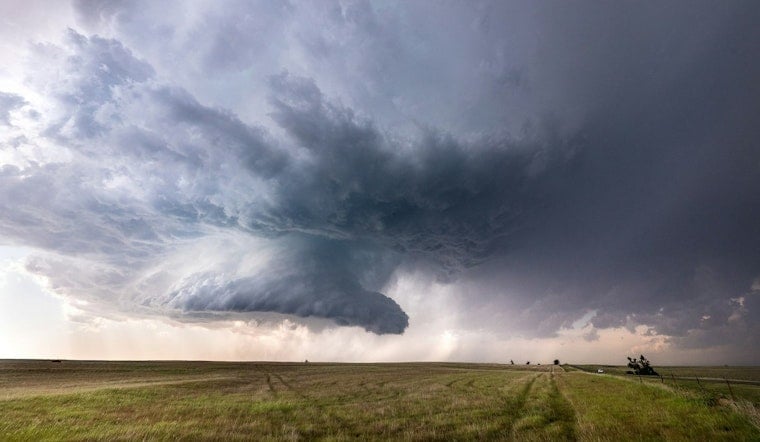
Western Kentucky residents woke up to a rare double dose of nature's fury overnight: a magnitude 2.3 earthquake rattled the ground just as tornado warnings and severe thunderstorms tore through the region. A tornado was confirmed on the ground in the area as the National Weather Service issued multiple warnings while the storms moved through, according to seed facts tied to the event.
The tremor and the tornado touched down within the same overnight window, according to WZTV, which reported that Fox 17 News was monitoring both the severe weather and the seismic activity across Middle Tennessee and southern Kentucky as the storms rolled through. Fox 17 News meteorologist Greg Bobos confirmed that severe storms moved through western Kentucky as the overnight system intensified. The outlet described the earthquake and severe weather as unrelated, with coincidental timing rather than a causal connection.
Why Storms Can't Trigger Earthquakes
It's a natural assumption when a tremor and a tornado hit the same night, but the science doesn't support a link between the two. The U.S. Geological Survey has stated flatly that there is no scientific validity to the idea of “earthquake weather.”
Even large-scale atmospheric systems rarely move the needle on tectonic activity. According to NASA Science, massive low-pressure systems like major hurricanes can occasionally trigger non-damaging “slow earthquakes,” a form of gradual fault creep that produces no shaking at all — but the comparison does not establish such an effect for a local thunderstorm or tornado. Earthquakes themselves are caused by movement within the Earth's crust, not by what's happening in the sky above it.
A Fault Zone That Rumbles Quietly, All the Time
Part of why this coincidence happened at all comes down to geography. Western Kentucky sits within the New Madrid Seismic Zone, a system of faults beneath parts of the central Mississippi Valley that includes areas near western Tennessee and western Kentucky and stretches through portions of the central United States. The U.S. Geological Survey has said the New Madrid region is the most seismically active area in the United States east of the Rocky Mountains, spanning parts of five states.
Small earthquakes are practically routine there. Hundreds of small earthquakes occur annually, though the vast majority are micro-earthquakes too faint for residents to feel and are picked up only by sensitive seismographs. The zone continues to experience small modern tremors.
Echoes of a Much Bigger Disaster
That older sequence remains the benchmark for how bad things can get here. Between December 1811 and February 1812, the New Madrid zone produced three earthquakes estimated between magnitude 7 and 8 — powerful enough to temporarily reverse the flow of the Mississippi River and cause structural damage across hundreds of miles, according to USGS. The sequence remains a major part of the region's seismic history.
Kentucky has felt smaller but still damaging shocks more recently. People typically report earthquakes larger than about magnitude 3.0.
Building for the Next Big One
Regional planners aren't waiting around for another 1811-style event. A major infrastructure project announced in 2025 to replace the Interstate 55 Mississippi River bridge near the New Madrid zone — renamed Kings' Crossing — was specifically engineered to meet modern seismic standards, at a cost of nearly $400 million. That project reflects an effort to address seismic risk on a major transit corridor.
Not everyone living above the fault line is as prepared. Earlier coverage examined earthquake risk among Missouri residents along the New Madrid zone, even as the fault continues its quiet, near-constant rumbling. For now, overnight events like this one serve mostly as a reminder that western Kentucky sits atop ground that never fully stops moving — even if, this time, the storm overhead had nothing to do with it.





