

























































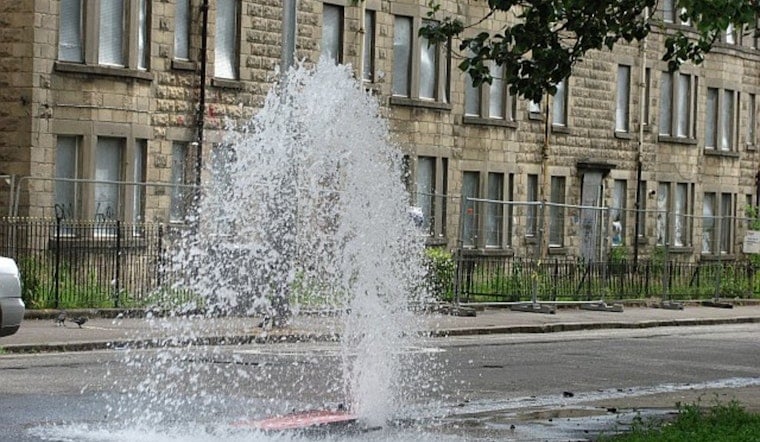
A water main break flooded a homeless encampment in Los Angeles' Westlake neighborhood before dawn, submerging tents, cots and personal belongings while partially swamping parked cars along the street. The break was reported shortly before 4 a.m. near Third Street and North Occidental Boulevard, catching people sleeping along the sidewalk as water rushed through the area.
According to KTLA, flooding surrounded tents, furniture and other belongings as it spread through the surrounding area near North Occidental Boulevard and Beverly Boulevard. One person was seen carrying what appeared to be a mattress or cot through the rushing water, while parked vehicles were caught in the flooding along the block. Motorists were detoured around the affected streets as crews responded to the scene.
By around 7 a.m., water had begun to recede, though the outlet's report noted that significant flooding remained in portions of the neighborhood. The cause of the break is still unclear, and it remains unknown how long repairs will take or how many customers lost service. The station said it had reached out to the Los Angeles Department of Water and Power for additional information; the story was described as still developing at the time of publication.
A Familiar Scene Across Central LA
Westlake's early-morning flooding follows a stretch of high-profile pipe failures across Los Angeles this summer. Just weeks earlier, a burst main in neighboring Echo Park cut water to dozens of customers and knocked out a fire hydrant, forcing early-morning excavation work. In July, a 110-year-old pipe rupture in West Hollywood flooded Sunset Boulevard and required 16 continuous hours of welding to fix, as reported by FOX 11. Similar blowouts hit Studio City's Coldwater Canyon and the Hollywood Hills earlier this summer, part of a rapid cluster of major ruptures across central Los Angeles.
These failures are not isolated. The Los Angeles Department of Water and Power manages more than 7,300 miles of water mains and averages three to four breaks per day citywide, according to CityWatch LA, adding up to between 1,000 and 1,400 leaks and ruptures a year. The same outlet notes that LADWP's leak rate of 16.1 to 16.8 leaks per 100 miles of pipe runs roughly 36% below the national industry average of 25 leaks per 100 miles, a figure utility officials point to as evidence the system performs better than most.
Aging Pipes Behind the Pattern
Still, the underlying infrastructure is old. Cast-iron pipes account for roughly 77% of all water-main leaks in LADWP's system, and more than 28% of its mainlines are over 80 years old, per the California Public Utilities Commission. LADWP replaced 240,800 feet of mainline during the 2024–2025 fiscal year, meeting its annual goal tied to a 150-year pipe replacement cycle — a pace that, given the scale of the network, leaves much of the aging system still in the ground.
Under the city's Urban Flooding hazard plan, the Los Angeles Fire Department serves as lead agency for swift-water rescue and perimeter control during sudden flood events, while the LAPD and LADOT handle security and traffic detours, according to the City of Los Angeles Emergency Management Department. When floods displace residents or unhoused individuals, the department coordinates with the American Red Cross and the Department of Recreation and Parks to open emergency shelter sites, per the same city plan.
Unhoused Residents Face Outsized Risk
Breaks like the one in Westlake carry particular danger for the city's growing unsheltered population. Unsheltered homelessness in the City of Los Angeles rose 7.9% year-over-year in 2026 to 29,115 people living in tents, vehicles and makeshift outdoor shelters, according to LAist. The Los Angeles Homeless Services Authority reported in July that regional rehousing progress had stalled after funding cuts forced a pause on Time-Limited Subsidies, with permanent housing placements dropping from 28,625 in 2024 to 23,532 in 2025 — a bottleneck that leaves more people exposed on sidewalks when infrastructure fails without warning, as it did before dawn in Westlake.





