

























































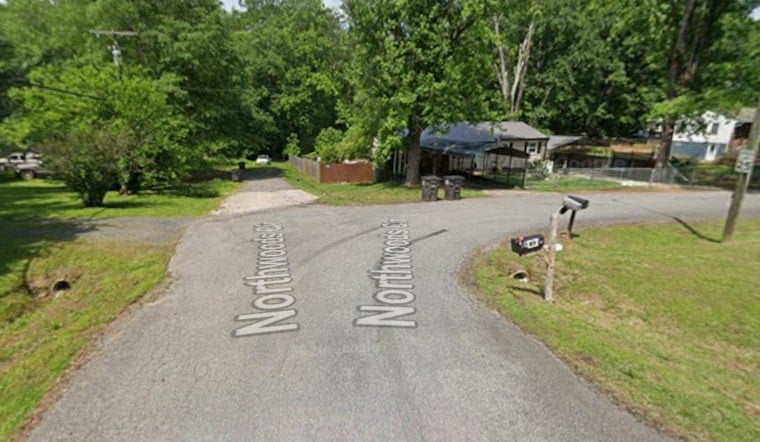
A grandmother living near the 100 block of Northwoods Circle in Winston-Salem placed a container of concentrated nitric acid beside her front door on Saturday, hoping it would ward off spirits she believed were lingering in her home. Instead, the move brought a fire engine and a specialized hazardous materials crew to her doorstep.
The Winston-Salem Fire Department responded to reports of the acid container placed beside the residence door, according to Queen City News. The woman reportedly bought the 68% concentrated nitric acid from Amazon after also purchasing a book on psychic home safety practices, per the outlet's reporting. She believed the acid would help ward off haints — a term in Southern and Appalachian folklore for ghosts or troubled spirits that, according to that tradition, remain in the living world instead of dying.
A Hazardous Twist on an Old Superstition
The folk concept she was drawing on runs deep in the region. Appalachian and Southern households have long used protective measures at doorways and windows — most famously the pale “haint blue” paint applied to porch ceilings — believing spirits cannot cross barriers resembling water or sky, according to Appalachian folklore documentation. Other regional customs, such as avoiding sweeping after dark or placing charms at thresholds, reflect similar oral traditions meant to keep bad luck or evil spirits from entering a home, according to Grover Bentley. In this case, though, the chosen deterrent was not paint or a charm but a highly corrosive industrial chemical.
Commercial-grade 68% nitric acid is a strong oxidizer capable of causing severe chemical burns on contact, turning skin yellow through reactions with keratin, and releasing toxic nitrogen oxide vapors that can cause serious lung damage, according to safety data compiled by Fisher Scientific. That concentration represents roughly the maximum commercial nitric acid reaches due to limits inherent to its chemical distillation process. Placed in an open container near a home's entryway, the acid posed a real physical danger to anyone who might have brushed against it, regardless of its intended spiritual purpose.
Engine 9 and HazMat 1 Neutralize the Acid on Scene
Firefighters from Engine 9 and the department's HazMat 1 unit were photographed neutralizing the acid at the scene, according to a Winston-Salem Fire Department Facebook post. Rather than attempt to transport the open corrosive liquid, crews applied a basic neutralizing agent directly on Northwoods Circle, a standard emergency procedure that converts strong nitric acid into harmless water and a non-reactive nitrate salt. Engine 9 operates out of Station 9 on Country Club Road, which serves as a primary dispatch point for western Winston-Salem neighborhoods, per RadioReference's local emergency radio documentation.
The department fielding the call has deep roots in the city, tracing its institutional origins back to the Salem Rough & Ready Company No. 1, formed in 1785 — making it one of the oldest organized fire services in North Carolina, according to the City of Winston-Salem. Today the department operates 20 fire stations across four battalions covering 133 square miles, with a citywide average emergency response time of 5 minutes and 36 seconds, per the city's own statistics.
How Did the Acid Reach a Residential Doorstep?
The bigger unresolved question is how the acid reached a residential address in the first place. Amazon's Seller Central policies explicitly prohibit marketplace sellers from listing or distributing nitric acid and other high-hazard industrial chemicals to general consumers, maintaining strict dangerous goods gating meant to block that kind of access. Separately, federal regulations under 49 CFR require that shipments of Class 8 corrosive liquids like nitric acid use UN-rated outer packaging, inner absorbent materials, and diamond-shaped hazard labeling, according to guidance published by Seller Essentials — with unapproved commercial delivery of hazardous materials carrying potential federal civil penalties. It remains unclear whether any shipping or merchant policy violations occurred in this case, and no citations or ordinance actions related to the incident have been reported.
This is not the first time Winston-Salem responders have handled a residential hazmat call. In September 2024, emergency crews handled another residential hazardous materials emergency that required temporary neighborhood evacuations before the area was cleared, according to WFMY News 2. Those calls typically trigger the same kind of specialized hazmat protocols and safety cordons deployed on Northwoods Circle this time. No injuries have been reported from this incident, and it's not known whether the resident faces any further review from local authorities.





