

























































Winter Garden has officially sent its long-range vision for the next three decades to state regulators, kicking off a review process that will determine how the city handles a population expected to swell to as many as 66,306 residents by 2050. The Winter Garden City Commission unanimously approved an ordinance addressing state statute changes to the comprehensive plan on Aug. 13, with commissioners Iliana Ramos and Lisa Bennett absent from the meeting.
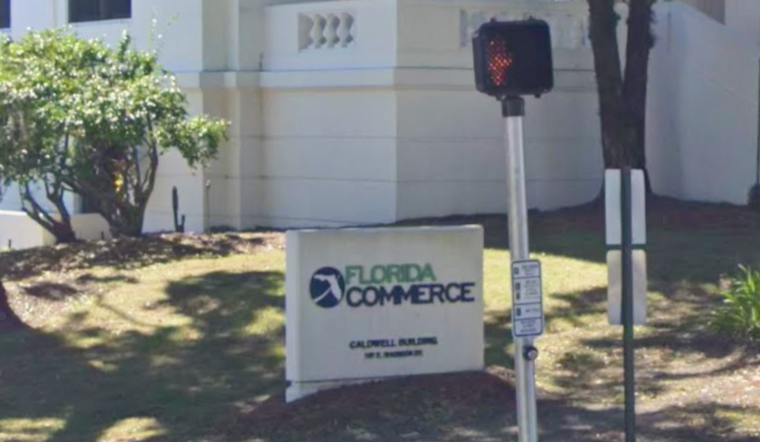
The vote formally transmitted the city's 2050 Comprehensive Plan to the Florida Department of Commerce for review, according to the West Orange Times & Observer. That state agency will now distribute the plan to various state agencies for evaluation, and under Florida Statute 163.3184(4), the transmittal triggers a 60-day review period during which the state must compile a letter identifying objections, recommendations, or comments, per the Florida Department of Commerce. Once Winter Garden receives that letter, it will have 180 days to hold a final adoption hearing, and the city commission will then consider the plan for adoption after any needed revisions.
A 60-Year-Old Plan Gets Its Biggest Rewrite Yet
Winter Garden's comprehensive plan dates back to 1991 and last received a major update in 2010, when its horizon year was set at 2020. The new version pushes that horizon to 2050 and was developed with help from consulting firm Inspire Placemaking Collective, working alongside city staff, according to the same report. Eric Roesch, quoted in that coverage, said the plan belongs to the community.
The stakes behind the rewrite are demographic. Winter Garden counted just under 47,000 residents in the 2020 census and is expected to see 26% population growth between 2023 and 2050, the West Orange Times & Observer reported. That growth pressure lands atop a city where the median household income has reached $106,495 and the homeownership rate sits at 65.7%, according to Cubit Planning's analysis of Census Bureau survey data — figures that underscore the market pressure facing workforce and affordable housing in the city.
Housing, Density and East Winter Garden Take Center Stage
The updated plan develops an affordable-housing incentive program, increases residential densities, and streamlines policies across the document, while also removing duplicative language and creating tables and titles for every goal, objective, and policy to improve readability. It also expands references to accessory dwelling units in the land development code, building on Ordinance 26-17, which Winter Garden adopted in July to permit accessory dwelling units across multiple residential zoning districts while barring their use as short-term rentals, as Hoodline previously reported.
East Winter Garden, the city's historic Black neighborhood, gets specific attention in the new plan, which adds new land-use categories and policies aimed at that area. The neighborhood's revitalization traces back to a 2018 blueprint that town planning firm Dover, Kohl & Partners designed after running multi-day community charrettes with more than 170 residents in 2017, according to the firm. Under a 2019 city commission directive and a 10-year extension approved with Orange County in 2022, Winter Garden's Community Redevelopment Agency commits 75% of its Tax Increment Financing revenues — estimated at $20 million to $30 million over the agency's lifespan — specifically to East Winter Garden, the West Orange Times & Observer reported in 2024.
Mobility, Height Limits and Environmental Policy Changes
The plan incorporates the city's Vision Zero traffic-safety initiative, enhances complete-street policies, revises mobility standards, adjusts traffic impact study requirements, and develops an interim mobility plan. It also adds two new activity centers where buildings up to seven stories are allowed, though the South Beltway Center future land use classification saw its maximum commercial building height reduced from seven stories to five stories.
On the environmental side, the plan adds policies addressing risks associated with per- and polyfluoroalkyl substances, reflecting federal drinking water rules the U.S. Environmental Protection Agency finalized in April 2024 that set enforceable Maximum Contaminant Levels of 4 parts per trillion for PFOA and PFOS, according to Holland & Knight. The plan also incentivizes water-efficient development, prioritizes wetland banking and mitigation near or within city limits, expands tree canopy protection with incentives to protect existing live oaks, updates provisions regarding Lulu Creek, and adds policies to increase resiliency. It incorporates Florida native landscaping, integrated pest management, and green infrastructure standards, along with the city's 2024 wastewater facility plan.
Trails, Recycling and a New Property Rights Mandate
A new trail level-of-service standard draws on the Healthy West Orange Trails Initiative, an August 2021 report developed by the West Orange Healthcare District alongside local municipalities to guide trail activation and target health interventions in communities near Lake Apopka. The plan also adds a policy to evaluate re-establishing a recycling program in the city.
Separately, the plan adds a property-rights element required by state statute, establishing property-rights policies the city already administers. That requirement stems from House Bill 59, which created Florida Statute 163.3177(6)(i) in 2021, mandating that all local governments adopt language affirming property owners' rights to maintain, sell, lease, and develop private land, per the Florida Department of Commerce. The plan also removes a financial feasibility requirement covered separately by the interlocal agreement with Orange County Public Schools, while emphasizing continued coordination with that school district and with Orange County and other West Orange municipalities. Other revisions address compatibility and buffering standards, ADA access and accessibility, historic-preservation policies and property-preservation incentives, updated language on substandard housing remedies, continued efforts to remove enclaves, and waterfront access.
What Happens Next, and Why the Timing Matters
Winter Garden's transmittal arrives amid heightened friction between Central Florida municipalities and state planning authorities. Orange County recently joined a multi-city lawsuit challenging Florida Senate Bill 180 after state regulators declared the county's own Vision 2050 comprehensive plan null and void under retroactive disaster-recovery land regulation preemption provisions, Hoodline reported earlier this month.
Winter Garden also faces its own budget uncertainty as it works to fund the plan's long-range goals. The city recently launched an interactive budget portal letting residents simulate service cuts to prepare for a potential $5.2 million annual deficit if Florida voters approve Amendment 3 later this year, according to Hoodline's prior reporting. City officials say they will review the Florida Department of Commerce's forthcoming letter once the 60-day state review concludes, after which the city commission will consider the comprehensive plan for final adoption following any required revisions.




