

























































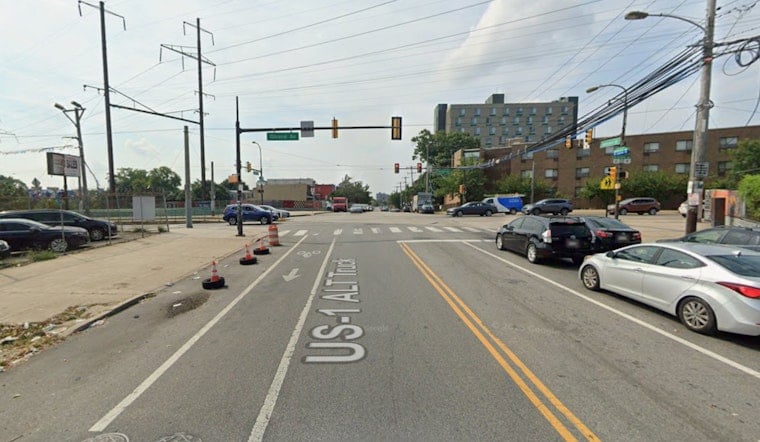
A worker trapped in a seven-foot-deep hole in Philadelphia's Parkside section was freed by rescuers Monday, following an emergency response to the 1200 block of Belmont Avenue that began around 11:40 a.m.
The rescue operation was first reported by 6abc Philadelphia, which detailed how crews descended on the Belmont Avenue location to free the trapped worker. Few additional details about the worker's identity, the nature of the excavation project, or the cause of the entrapment have been released.
A Familiar Danger Beneath Philadelphia's Streets
Trench and excavation entrapments carry serious physical risk even at shallow depths. According to OSHA safety guidance, just two cubic yards of dry soil can weigh approximately 6,000 pounds — about the weight of a compact car — meaning a wall collapse can exert crushing force on anyone caught beneath it. Under federal standard 29 CFR 1926 Subpart P, protective systems such as sloping, shoring, or trench shields are required for any excavation five feet deep or greater unless the cut is made entirely in stable rock, according to OSHA.
Whether the Belmont Avenue excavation had shoring or other protective measures in place has not been reported. OSHA regulations also require a designated “competent person” trained to recognize soil hazards and authorized to halt work to inspect trenches daily and after any change in weather conditions before employees enter, per the agency's standards. It remains unclear who employed the trapped worker, whether such an inspector was on site, or whether federal safety investigators have opened any inquiry into Monday's incident.
Philadelphia's Rescue Crews Have Faced This Before
Monday's rescue adds to a run of underground emergencies Philadelphia crews have handled in recent months. Just last month, firefighters, medics, and Water Department crews spent over 30 minutes freeing a man trapped under a manhole cover on the 8500 block of Bustleton Avenue after he entered the sewer system, as reported by CBS News. In June, Hoodline reported on a worker buried in a nine-foot trench elsewhere in the region as crews raced to save him.
Philadelphia has seen similar technical rescues before. In June 2023, Philadelphia Fire Department technical rescue crews responded to the 1200 block of North American Street in North Philadelphia after a trench collapsed and trapped a construction worker up to his knees for about 35 minutes, according to CBS News. And in January 2016, emergency responders in the city's Old City neighborhood used a rope harness to hoist a worker out of a four-foot-wide, 14-foot-deep sewer repair hole after collapsing dirt and boulders pinned his legs, per AP News.
The department's ability to handle these scenarios stems from specialized training. Firefighters assigned to the Philadelphia Fire Department's technical rescue companies, including Rescue 1 and Squad units, complete nearly 500 hours of specialized instruction across seven modules covering trench rescue, confined space operations, and structural collapse, according to the City of Philadelphia.
What Happens To The Street Now
Once the immediate emergency is resolved, the site itself often remains disrupted for weeks. Under City of Philadelphia Streets Department policy, permanent street restorations following cave-ins or trench failures can take up to 45 business days because of the multi-agency inspections and underground utility work required before repaving, Hoodline previously reported in coverage of a Port Richmond sinkhole.
Nationally, federal oversight of trench safety has intensified in recent years. U.S. Department of Labor data published in November 2024 showed a nearly 70 percent reduction in federal and state OSHA trench collapse fatality investigations following targeted oversight under the agency's National Emphasis Program. For excavations reaching 20 feet or more, OSHA regulations further require that shoring and support systems be custom-designed or approved by a registered professional engineer — underscoring how depth alone can dramatically raise the legal and safety stakes on a job site.
It is not yet known whether Monday's incident on Belmont Avenue will prompt a similar federal review, or whether the worker sustained any injuries during the ordeal. Hoodline will update this story as more information becomes available.



