

























































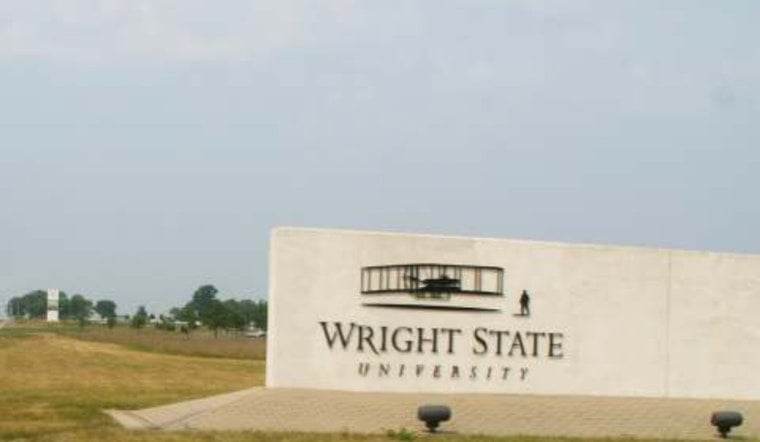
More than 2,400 students hauled boxes and mini-fridges into Wright State University dorms this week, but they did not drive through the campus's main entrance to do it. Construction crews were still finishing up a $4.5 million overhaul of the front of campus, so move-in was rerouted through the Nutter Center parking lot in Fairborn instead, according to reporting from the Springfield News-Sun.
The detour was not a last-minute scramble so much as a planned workaround. Wright State changed the student move-in location specifically because of construction at the front of campus, the Springfield News-Sun reports, with freshmen dorms conveniently located closer to the Nutter Center anyway. University President Sue Edwards told the outlet that the shift paid off, saying move-in went smoothly with less traffic and fewer issues than in years past. She added that campus feels different once students return, describing it as vibrant.
A Roundabout Finished Just in Time
The timing was tight. Wright State completed a new roundabout near the Student Union on August 17, according to the university, connecting University Boulevard to a new road leading toward the Raider Row development — just days before residential move-in week began. University leadership has referred to the broader entrance overhaul as the campus's ‘Big Dig,’ an effort aimed at eliminating traffic back-ups near the Student Union, per the university's own announcement.
Getting there cost more than originally planned. In June, Wright State's Board of Trustees approved an additional $2 million for the roundabout project, pushing its total budget from $2.5 million to $4.5 million, according to the Wright State Guardian. Facility leadership attributed the overrun to unexpected subsoil defects, which added roughly $360,000 in remediation costs, and unbudgeted electrical infrastructure work that added another $461,000, the student paper reported.
Raider Row Takes Shape Next Door
Just beyond the new roundabout, construction is underway on a Chick-fil-A that will anchor Raider Row, a commercial corridor rising on the former 4A parking lot, per the Springfield News-Sun's on-the-ground reporting. Wright State officials say the remaining work in that area is expected to wrap up next spring. The Beavercreek City Council approved plans in April for the 5,200-square-foot restaurant, which is set to include 92 indoor seats, 16 outdoor seats, 76 parking spaces and a dual-lane drive-thru, according to WHIO-TV.
The project is notable for crossing municipal lines. Raider Row is being built by Dayton-based Woodard Development LLC across nearly 9 acres of former university parking space that straddles the boundary between Beavercreek and Fairborn, WHIO-TV reports. Beavercreek rezoned 8.9 acres for the project earlier in the year while Fairborn coordinated zoning on an adjacent 5.25-acre parcel, requiring the two cities to align their approvals for anchor tenants like Chick-fil-A.
New Faces, Familiar Excitement
Among the students settling into dorms this week was James North, a freshman from Centerville who plans to study finance. He told the Springfield News-Sun he is excited to meet new people and wanted to experience college firsthand. Ryun Konicki, a freshman from West Chester, said he is interested in following in his father's footsteps and plans to study criminal justice. Classes begin Monday, and the university has a freshman kick-off weekend planned to welcome the incoming class.
Enrollment Growth Behind the Construction Push
The scramble to accommodate over 2,400 residential students is tied to a broader enrollment rebound that Wright State officials project will continue. Undergraduate enrollment grew 4.7% in fall 2025 to 7,963 students, contributing to a 10% total enrollment increase across the Dayton and Lake campuses since 2022, reaching 11,924 total students, according to WHIO-TV. That growth was fueled in part by 2,700 new undergraduate first-time and transfer students, the station reported, and university leadership has pointed to Wright State's comparatively low tuition rates as a major driver. The Wall Street Journal ranked Wright State the top public university in Ohio for social mobility in its 2025 America's Best Colleges rankings, per the same WHIO-TV report.
The construction spending has come as Wright State's finances have improved markedly after years of austerity. The university's Board of Trustees unanimously approved a $371 million balanced budget for fiscal year 2027 in June, backed by cash reserves that reached $188 million at the end of fiscal year 2025 — up from a low of $16.9 million in fiscal year 2017 — according to the Dayton Business Journal. Wright State also posted a perfect composite score of 5.0 for three consecutive years through fiscal year 2025 under Ohio's Senate Bill 6 financial health framework, the outlet noted, a benchmark well clear of the 1.75 threshold that triggers state fiscal watch for public universities. In July, Moody's Investors Service revised the university's credit outlook from stable to positive while affirming its A2 issuer rating — the fourth positive ratings action Wright State has received from Moody's in five years.



